Love this? Save it for later!
Share the inspiration with your friends
The first time I made this creamy butternut squash pasta carbonara, it was purely out of desperation. I had a single butternut squash sitting on my counter, a half-used pack of bacon in the fridge, and absolutely no desire to brave the cold for groceries. It was one of those nights where you just want something warm, filling, and a little bit indulgent without actually trying that hard. I remember staring at the squash and thinking, “You’re going to have to become dinner.”
I had some spaghetti and eggs, which felt like the start of something. The idea of a carbonara popped into my head—not the traditional version, but something softer, sweeter, and more suited to a chilly evening. I roasted the squash until it was caramelized and tender, then mashed it right into the pan with the crispy bacon fat. When I tossed the hot pasta in, the whole thing turned into this velvety, golden sauce that clung to every strand. Honestly, I was shocked at how good it was.
That night, I ate a bowl on the couch with a blanket over my legs and a glass of white wine nearby. It felt like a hug in food form. Since then, this creamy butternut squash pasta carbonara has become my go-to for those nights when I need something cozy without spending hours in the kitchen. It’s not trying to be fancy—it’s just trying to make you feel good.
Why You’ll Love This Recipe
This isn’t your typical carbonara, and that’s exactly the point. By swapping out some of the heavy cream for roasted butternut squash, you get a sauce that is naturally creamy, slightly sweet, and absolutely packed with flavor. It’s a trick I picked up after testing a dozen different ways to make a lighter pasta sauce that doesn’t taste like a compromise.
- Quick & Easy: From start to finish, this comes together in about 40 minutes. Most of that time is hands-off while the squash roasts.
- Simple Ingredients: You probably already have eggs, bacon, Parmesan, and pasta in your kitchen. The squash is the only special guest.
- Perfect for Cozy Nights: This is the kind of meal you want when the wind is howling and you just need something warm and satisfying.
- Crowd-Pleaser: Even picky eaters go back for seconds. The squash blends in so smoothly, no one will guess it’s not a traditional cream sauce.
- Unbelievably Delicious: The combination of salty bacon, nutty Parmesan, and sweet roasted squash is next-level comfort food. It’s the kind of dish that makes you close your eyes after the first bite.
What makes this recipe different from the rest? It’s the technique. Instead of boiling the squash and pureeing it, I roast it first. This concentrates the natural sugars and gives the sauce a deeper, almost caramelized flavor. Plus, by using the egg yolk and pasta water method from classic carbonara, you get that silky, emulsified texture without any heavy cream. It’s comfort food reimagined—healthier, faster, but with the same soul-soothing satisfaction.
What Ingredients You Will Need
This recipe uses simple, wholesome ingredients to deliver bold flavor and satisfying texture without the fuss. Most of these are pantry staples, and the squash does the heavy lifting when it comes to creaminess.
- Butternut Squash (1 medium, about 2 pounds): Look for one that feels heavy for its size. You’ll peel, seed, and cube it into 1-inch pieces. Roasting brings out its natural sweetness.
- Bacon (6 slices, chopped): I prefer thick-cut bacon for more chew and flavor. The rendered fat is key for building the sauce.
- Spaghetti or Fettuccine (12 ounces): Any long pasta works here. The sauce clings beautifully to the strands.
- Egg Yolks (3 large): These are the secret to the silky, carbonara-style texture. Make sure they are at room temperature so they mix in smoothly.
- Parmesan Cheese (1 cup, finely grated): Freshly grated is non-negotiable. Pre-shredded won’t melt the same way.
- Garlic (3 cloves, minced): Adds a subtle warmth without overpowering the squash.
- Fresh Sage (6-8 leaves, chopped): Sage and butternut squash are a classic pairing. It adds an earthy, aromatic note.
- Olive Oil (2 tablespoons): For roasting the squash. Use a good quality one for best flavor.
- Salt and Black Pepper (to taste): Go easy on the salt since the bacon and Parmesan are already salty.
- Pasta Water (1 cup, reserved): This starchy water is the magic ingredient that helps emulsify the sauce.
Substitution Notes: If you want to make this vegetarian, skip the bacon and roast the squash with a bit of smoked paprika for a similar smoky flavor. For a gluten-free version, use your favorite gluten-free pasta. I’ve also made this with pancetta instead of bacon, and it was fantastic.
Equipment Needed
You don’t need anything fancy for this recipe, which is part of its charm. Here’s what you’ll need:
- Baking Sheet: For roasting the squash. A rimmed sheet works best to catch any juices.
- Large Pot: For boiling the pasta. Make sure it’s big enough to give the noodles room to move.
- Large Skillet or Dutch Oven: This is where the magic happens. A wide skillet gives you plenty of surface area to toss the pasta.
- Chef’s Knife: For cutting the squash. A sharp knife makes the job much safer and easier.
- Vegetable Peeler: For peeling the butternut squash.
- Box Grater or Microplane: For grating the Parmesan. A microplane gives you that fine, fluffy texture.
- Tongs: For tossing the pasta with the sauce. They give you better control than a spoon.
If you don’t have a Dutch oven, a deep non-stick skillet works perfectly. I’ve even used a cast-iron skillet in a pinch—it holds heat well and gives the bacon a nice crisp.
Preparation Method
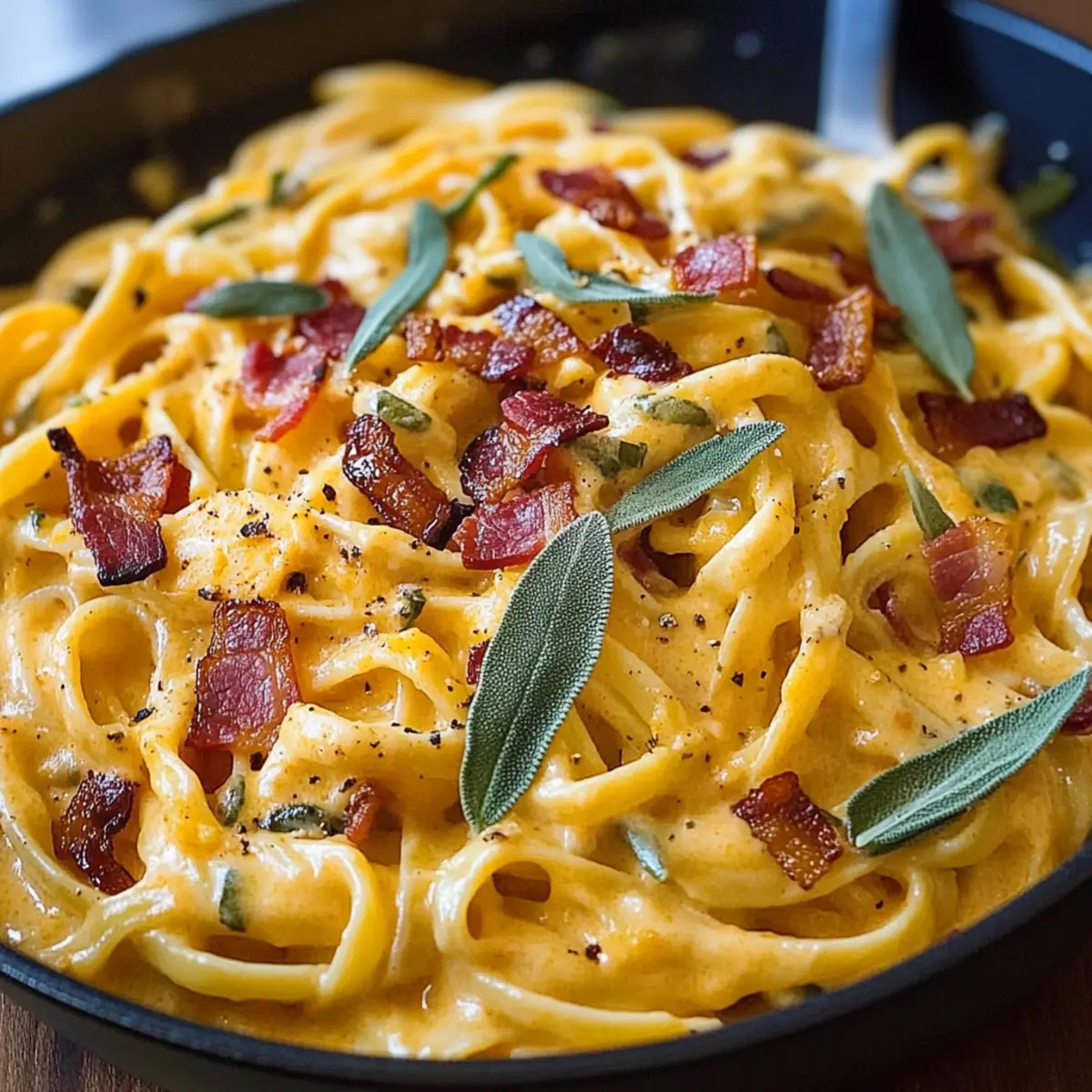
Let’s get cooking. This recipe moves quickly once you start, so I recommend having everything prepped and ready to go before you turn on the stove.
- Roast the Squash: Preheat your oven to 400°F (200°C). Peel the butternut squash, cut it in half lengthwise, and scoop out the seeds. Cut it into 1-inch cubes. Toss the cubes with 2 tablespoons of olive oil, a pinch of salt, and a few cracks of black pepper. Spread them in a single layer on a baking sheet. Roast for 25-30 minutes, flipping halfway through, until the edges are golden and the squash is fork-tender. The smell in your kitchen will be incredible.
- Cook the Bacon: While the squash roasts, place the chopped bacon in a cold large skillet. Turn the heat to medium and cook, stirring occasionally, until the bacon is crispy and the fat has rendered, about 8-10 minutes. Use a slotted spoon to transfer the bacon to a paper towel-lined plate, leaving the rendered fat in the pan. Resist the urge to eat all the bacon now—you’ll need it for the pasta.
- Start the Pasta: Bring a large pot of generously salted water to a boil. Add the spaghetti and cook according to the package directions until al dente. Before draining, reserve 1 cup of the starchy pasta water. Drain the pasta but do not rinse it—you want that starch on the noodles to help the sauce stick.
- Make the Sauce Base: In the same skillet with the bacon fat, add the minced garlic and chopped sage. Cook over medium heat for about 30 seconds until fragrant. Add the roasted butternut squash cubes to the skillet and use a wooden spoon or potato masher to mash them into a chunky puree. Don’t worry if it’s not perfectly smooth—some texture is nice.
- Combine Everything: Reduce the heat to low. Add the drained pasta to the skillet with the mashed squash. Toss well to coat every strand. In a small bowl, whisk together the egg yolks and half of the grated Parmesan. Slowly drizzle in about 1/4 cup of the reserved pasta water while whisking constantly—this tempers the eggs so they don’t scramble when added to the hot pasta.
- Finish the Carbonara: Pour the egg mixture over the pasta and toss vigorously with tongs for about 1 minute. The heat from the pasta will cook the eggs into a silky sauce. If the sauce seems too thick, add more pasta water a tablespoon at a time until it reaches a creamy consistency. Add the crispy bacon back to the pan and toss to distribute.
- Serve Immediately: Divide the pasta among warm bowls. Top with the remaining grated Parmesan, a few extra sage leaves if you have them, and a generous crack of black pepper. The sauce will continue to thicken as it cools, so eat it right away for the best texture.
Cooking Tips & Techniques
I’ve made this creamy butternut squash pasta carbonara at least a dozen times, and I’ve learned a few things along the way. Here are my best tips for getting it perfect every time.
Don’t Skip Roasting the Squash: I tried boiling the squash once to save time, and the sauce turned out watery and bland. Roasting concentrates the flavor and removes excess moisture, which is crucial for a creamy sauce. Trust me on this one.
Temperature Matters: Make sure your egg yolks are at room temperature before you whisk them in. Cold eggs can cause the sauce to seize up or become grainy. I usually take my eggs out of the fridge when I start roasting the squash.
Reserve More Pasta Water Than You Think You Need: It’s better to have extra than to run out. The starchy water is your secret weapon for adjusting the sauce consistency. I always save a full cup, even if I only end up using half.
Work Quickly at the End: The carbonara method relies on residual heat to cook the eggs. Once you add the egg mixture, keep tossing. If the pan seems too hot, take it off the burner while you toss. The goal is a silky sauce, not scrambled eggs.
My Biggest Failure: The first time I tried this, I added the egg yolks directly to the hot pan without tempering them. It turned into a lumpy, curdled mess. Now I always whisk the yolks with the Parmesan and a splash of pasta water first. It takes an extra 30 seconds and saves the whole dish.
Variations & Adaptations
This recipe is wonderfully flexible. Here are a few ways to change it up depending on what you have on hand or what you’re craving.
- Vegetarian Version: Skip the bacon and roast the squash with a teaspoon of smoked paprika and a pinch of cayenne. The smokiness mimics the bacon flavor beautifully. You can also add a tablespoon of olive oil to the pan in place of the bacon fat.
- Add Greens: Stir in a handful of fresh spinach or kale during the last minute of cooking. The heat from the pasta will wilt them perfectly. It adds color and a nutritional boost without changing the flavor much.
- Make It Spicy: Add a pinch of red pepper flakes along with the garlic and sage. The heat cuts through the richness of the sauce and adds a lovely warmth. I do this on nights when I want a little extra kick.
- Try Different Pasta Shapes: While long pasta is traditional, this sauce works beautifully with short shapes like rigatoni or penne. The sauce gets trapped inside the tubes, making every bite delicious.
- Nut-Free Option: Some carbonara recipes call for a sprinkle of toasted walnuts or pine nuts. If you have nut allergies, just skip them or substitute with roasted pumpkin seeds for a similar crunch.
I once made this with leftover roasted sweet potatoes instead of butternut squash, and it was surprisingly good. The sweet potatoes made the sauce even creamier, though slightly less sweet. It’s a great option if you already have them on hand.
Serving & Storage Suggestions
This dish is best served immediately, while the sauce is still silky and warm. I like to plate it in shallow bowls with a generous sprinkle of Parmesan and a few cracks of black pepper on top. A side of crusty bread is perfect for sopping up any extra sauce left in the bowl.
For a complete cozy dinner, serve this pasta alongside a simple green salad with a tangy vinaigrette. The acidity cuts through the richness of the carbonara. If you’re looking for a vegetable side, try my easy balsamic glazed roasted vegetables—the sweet and tangy flavors complement the squash beautifully.
Storing Leftovers: If you have any leftovers, store them in an airtight container in the refrigerator for up to 3 days. The sauce will thicken as it cools, so don’t be alarmed.
Reheating: The best way to reheat this pasta is in a skillet over medium-low heat with a splash of milk or water. Stir gently until the sauce loosens up and the pasta is heated through. Avoid the microwave if you can—it tends to make the sauce grainy and uneven. I’ve also reheated it in a covered dish in a 350°F oven for about 10 minutes, and it worked well.
Flavor Development: Honestly, the flavors actually deepen overnight. The squash and sage meld together even more, and the bacon flavor permeates the whole dish. It’s not quite as silky as fresh, but it’s still incredibly satisfying. I sometimes make a double batch just for the leftovers.
Nutritional Information & Benefits
This creamy butternut squash pasta carbonara is a more nutrient-dense take on the classic. While it’s still indulgent, the squash adds a healthy dose of vitamins and fiber.
- Estimated per serving (based on 4 servings): Approximately 520 calories, 22g protein, 58g carbohydrates, 24g fat, and 8g fiber.
- Vitamin A Powerhouse: Butternut squash is loaded with beta-carotene, which your body converts into vitamin A. This supports eye health and immune function.
- Good Source of Protein: Between the eggs, bacon, and Parmesan, this dish provides a solid amount of protein to keep you full and satisfied.
- Dietary Considerations: This recipe is naturally nut-free. For a gluten-free version, simply use gluten-free pasta. To reduce the fat content, you can use turkey bacon and reduce the Parmesan by half.
- Potential Allergens: Contains eggs, dairy (Parmesan), and gluten (pasta). Please adjust accordingly for your dietary needs.
I love that this dish feels decadent but secretly has a vegetable doing most of the heavy lifting. It’s the kind of meal that makes you feel good both while you’re eating it and after.
Conclusion
This creamy butternut squash pasta carbonara is proof that comfort food doesn’t have to be complicated. With just a handful of simple ingredients and a little bit of roasting, you can create a dinner that feels special enough for a weekend meal but easy enough for a busy Tuesday night. The sweet, nutty squash paired with salty bacon and a silky egg-based sauce is a combination that never gets old.
I hope you give this recipe a try and make it your own. Maybe you’ll add a little extra sage, toss in some spinach, or use pancetta instead of bacon. That’s the beauty of a recipe like this—it’s a starting point for your own cozy creation. If you do make it, I’d love to hear how it turned out. Leave a comment below or tag me in your photos. And if you’re looking for another comforting bowl to warm you up, you might enjoy this cozy creamy chickpea soup for another easy weeknight win.
Happy cooking, and stay warm out there!
Frequently Asked Questions
Can I use frozen butternut squash for this recipe?
Yes, you can use frozen butternut squash, but I recommend thawing it first and patting it very dry with paper towels. Frozen squash releases a lot of water as it cooks, which can make your sauce watery. Roasting it at a high temperature (425°F) for a little longer will help evaporate the excess moisture.
Why did my sauce turn out grainy?
A grainy sauce usually happens when the eggs are cooked too quickly or at too high a temperature. To avoid this, always temper the egg yolks by whisking them with the Parmesan and a splash of pasta water before adding them to the hot pasta. Also, make sure your skillet is on low heat when you add the egg mixture, and toss constantly.
Can I make this recipe dairy-free?
Absolutely. Use a dairy-free Parmesan-style cheese (many brands work well) and skip the butter if you use it. The sauce will still be creamy from the squash and eggs. Just be aware that dairy-free cheese may not melt as smoothly, so the texture will be slightly different.
How do I prevent the pasta from sticking together?
The key is to toss the pasta immediately after draining it with a little bit of olive oil or directly into the sauce. Don’t let it sit in the colander for more than a few seconds. Also, make sure you reserve plenty of pasta water before draining—it helps keep everything moving in the pan.
Can I add chicken or shrimp to make it heartier?
Definitely. If you want to add protein, cook diced chicken breast or peeled shrimp in the skillet before you cook the bacon. Remove them and set aside, then add them back in at the end with the bacon. This turns the dish into a complete one-pot meal that’s even more filling.
Pin This Recipe!
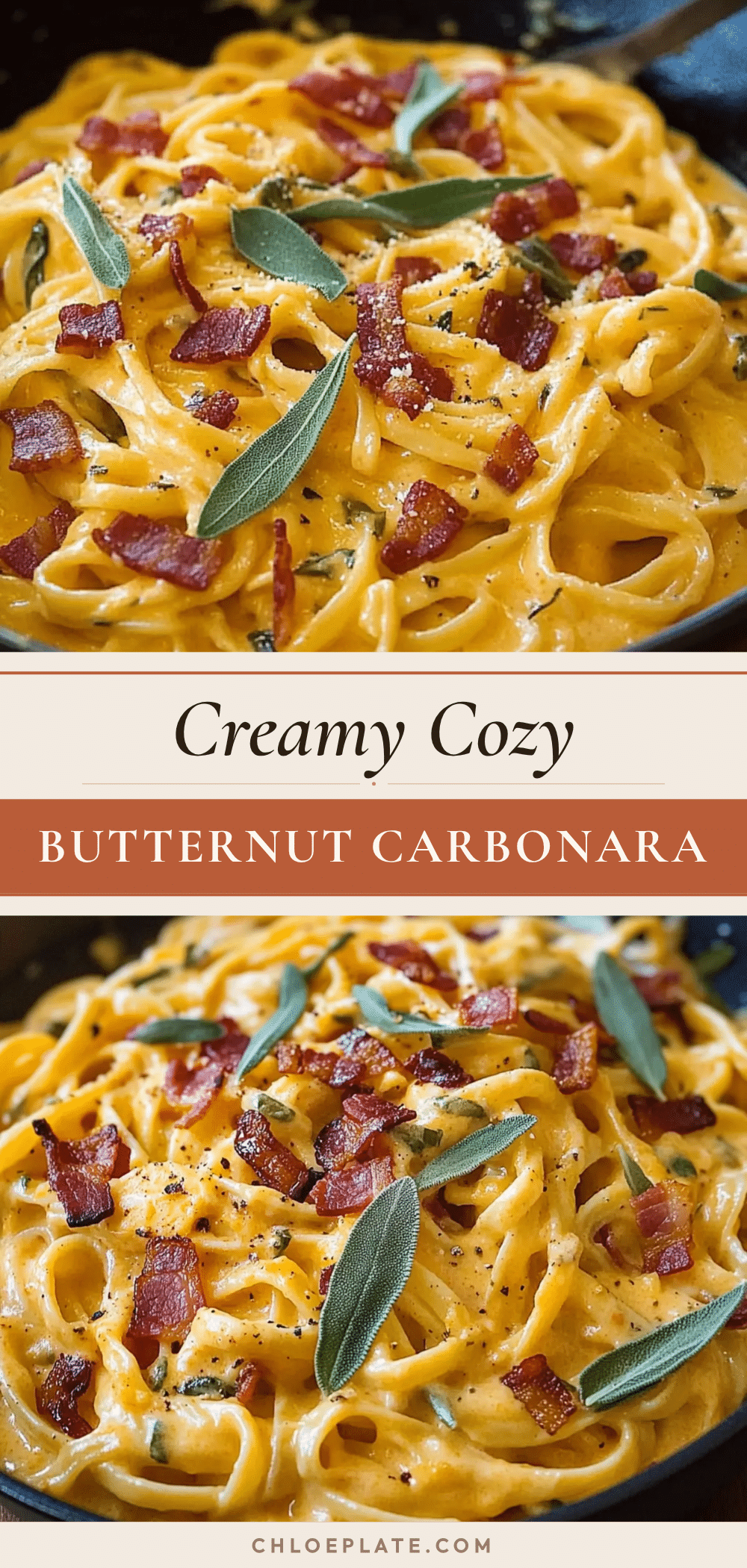
Creamy Butternut Squash Pasta Carbonara – Easy Cozy Dinner
A cozy twist on classic carbonara, this creamy butternut squash pasta carbonara combines roasted squash, crispy bacon, and a silky egg-based sauce for a comforting, quick dinner that feels indulgent without being heavy.
- Prep Time: 15 minutes
- Cook Time: 30 minutes
- Total Time: 45 minutes
- Yield: 4 servings 1x
- Category: Main Course
- Cuisine: Italian-American
Ingredients
- 1 medium butternut squash (about 2 pounds), peeled, seeded, and cut into 1-inch cubes
- 6 slices thick-cut bacon, chopped
- 12 ounces spaghetti or fettuccine
- 3 large egg yolks, at room temperature
- 1 cup finely grated Parmesan cheese
- 3 cloves garlic, minced
- 6–8 fresh sage leaves, chopped
- 2 tablespoons olive oil
- Salt and black pepper to taste
- 1 cup reserved pasta water
Instructions
- Preheat oven to 400°F (200°C). Toss cubed butternut squash with olive oil, salt, and pepper. Spread on a baking sheet and roast for 25-30 minutes, flipping halfway, until golden and fork-tender.
- While squash roasts, cook chopped bacon in a cold large skillet over medium heat until crispy, about 8-10 minutes. Transfer bacon to a paper towel-lined plate, leaving rendered fat in the pan.
- Bring a large pot of salted water to a boil. Cook pasta according to package directions until al dente. Reserve 1 cup pasta water before draining. Do not rinse pasta.
- In the same skillet with bacon fat, cook minced garlic and chopped sage over medium heat for 30 seconds until fragrant. Add roasted squash and mash into a chunky puree using a wooden spoon or potato masher.
- Reduce heat to low. Add drained pasta to the skillet and toss to coat. In a small bowl, whisk together egg yolks and half the Parmesan. Slowly drizzle in 1/4 cup reserved pasta water while whisking constantly to temper the eggs.
- Pour egg mixture over pasta and toss vigorously with tongs for about 1 minute until sauce is silky. Add more pasta water a tablespoon at a time if needed. Stir in crispy bacon.
- Serve immediately in warm bowls, topped with remaining Parmesan, extra sage leaves, and black pepper.
Notes
For best results, do not skip roasting the squash—it concentrates flavor and removes excess moisture. Ensure egg yolks are at room temperature to prevent graininess. Reserve more pasta water than you think you need; it’s key for adjusting sauce consistency. Work quickly when adding the egg mixture to avoid scrambling.
Nutrition
- Serving Size: 1 serving
- Calories: 520
- Sugar: 6
- Sodium: 680
- Fat: 24
- Saturated Fat: 8
- Carbohydrates: 58
- Fiber: 8
- Protein: 22
Keywords: butternut squash pasta, carbonara, creamy pasta, easy dinner, cozy dinner, bacon pasta, fall recipe