Love this? Save it for later!
Share the inspiration with your friends
“You really have to try these pickled eggs,” my coworker said, sliding a small jar across the breakroom table. It was one of those random lunch breaks where nothing was quite going right—emails piling up, deadlines looming, and my stomach rumbling for a snack that wasn’t just another sad granola bar. I eyed the jar skeptically at first. Pickled eggs? Honestly, I’d only ever seen them in old diners or at a holiday buffet, usually a little too vinegary for my taste. But curiosity won out.
That first bite was a revelation. The eggs were not just sour; they were zesty, tangy, with a peppery kick that made my taste buds come alive after a dull morning. The flavor was punchy but balanced, with a hint of sweetness that kept things interesting. I couldn’t help but go back for a second—and then a third. Turns out, this wasn’t some dusty old recipe from the past but a vibrant, flavorful pickled eggs recipe that’s perfect for a quick, satisfying snack.
Since that day, I’ve been on a bit of an obsession phase, making batch after batch of these pickled eggs, tweaking the spices here and there, and sharing jars with friends (who, by the way, always ask for the recipe). There’s something quietly comforting about cracking open a jar of these zesty pickled eggs, especially when the day feels like it’s spinning too fast. It’s a simple, bold snack that always seems to hit the right spot, whether it’s a quick nibble between meals or part of a laid-back gathering.
So here’s the deal: this pickled eggs recipe isn’t just your average pickle. It’s the kind of snack that wakes up your palate, brings a little zing to your day, and honestly, gets you thinking about all the fun ways to enjoy eggs beyond the usual scramble or salad. Let’s get into why this recipe stuck with me—and why it might just become your new go-to snack too.
Why You’ll Love This Recipe
After many attempts and a few happy accidents, this flavorful pickled eggs recipe truly stands out. Here’s why it keeps coming back to my kitchen, meal after meal:
- Quick & Easy: You can have the pickling brine ready in less than 15 minutes, and then it’s mostly hands-off waiting while the eggs soak up all that zesty flavor.
- Simple Ingredients: No hunting for weird spices or specialty items—most of these ingredients are pantry staples you probably already have on hand.
- Perfect for Snack Time: Whether you’re craving something salty and tangy mid-afternoon or need a protein-packed nibble after a workout, these eggs fit the bill.
- Crowd-Pleaser: At casual get-togethers or potlucks, these eggs always spark curiosity and get rave reviews—even from folks who weren’t sure about pickled eggs at first.
- Unbelievably Delicious: The combination of vinegar, spices, and a touch of sweetness creates a bite that’s both tart and savory, with just enough heat to keep things interesting.
What really sets this pickled eggs recipe apart is the layering of spices—think mustard seeds, peppercorns, and a little smoked paprika—that work together to give depth without overpowering the eggs. Plus, the brine is perfectly balanced, so it’s not just sour but has a subtle sweetness that makes you close your eyes after the first bite. Honestly, it’s comfort food reimagined: simple, bold, and satisfying.
And just between us, this recipe has come in handy more than once when I needed a snack that felt a bit special but didn’t demand hours in the kitchen—kind of like those times when I’ve whipped up quick treats like mini lemon blueberry cheesecakes. It’s a no-fuss way to bring something different to the table without stress, and that’s why it’s stayed in my rotation.
What Ingredients You Will Need
This pickled eggs recipe uses simple, wholesome ingredients to deliver bold flavor and satisfying texture without the fuss. Most are pantry staples, and a few spices bring that zesty punch.
- Hard-boiled eggs: 12 large eggs, peeled (use farm-fresh if possible for best flavor and texture)
- White vinegar: 2 cups (480 ml) – the base of the brine, providing that classic tang
- Water: 1 cup (240 ml) – to mellow the vinegar and keep the eggs tender
- Granulated sugar: 2 tablespoons – balances the acidity with a hint of sweetness
- Salt: 1 tablespoon (preferably kosher salt) – enhances all the flavors
- Mustard seeds: 1 tablespoon (adds a warm, slightly spicy note)
- Black peppercorns: 1 teaspoon (whole, for subtle heat and aroma)
- Smoked paprika: 1 teaspoon (gives a gentle smoky depth)
- Garlic cloves: 2, smashed (for savory pungency)
- Dried chili flakes: ¼ teaspoon (optional, for a subtle kick)
- Fresh dill sprigs: A few (adds brightness and herbal notes; optional but recommended)
For the best results, I usually go for a trusted brand like Heinz for the vinegar and use fresh, organic eggs when I can find them. If you want a gluten-free version, this recipe is naturally gluten-free, and you can swap out the sugar for honey or maple syrup for a different sweetness profile.
Seasonal variations are fun too: in warmer months, adding a few slices of fresh cucumber or some sliced red onion to the jar brings a crisp contrast. If you want to experiment, try adding a cinnamon stick or star anise for a warm, aromatic twist.
Equipment Needed
- Large pot for boiling eggs
- Bowl with ice water for cooling eggs quickly
- Glass jar or airtight container (at least 1-quart capacity) for pickling
- Measuring cups and spoons for precise brine ingredients
- Small saucepan to heat the brine
- Slotted spoon or tongs to transfer eggs
If you don’t have a dedicated pickling jar, a clean mason jar or any glass container with a tight lid works perfectly. I’ve also used old jam jars in a pinch, just make sure they’re well sterilized. For boiling eggs, I like using a pot with a lid that fits snugly to help the eggs cook evenly.
Pro tip: keeping your eggs chilled in an ice water bath right after boiling helps the shells peel off cleanly, which makes the whole pickling experience much less frustrating. Also, if you plan to make pickled eggs regularly, investing in a good set of glass jars with airtight seals will save you some hassle and keep flavors fresh longer.
Preparation Method
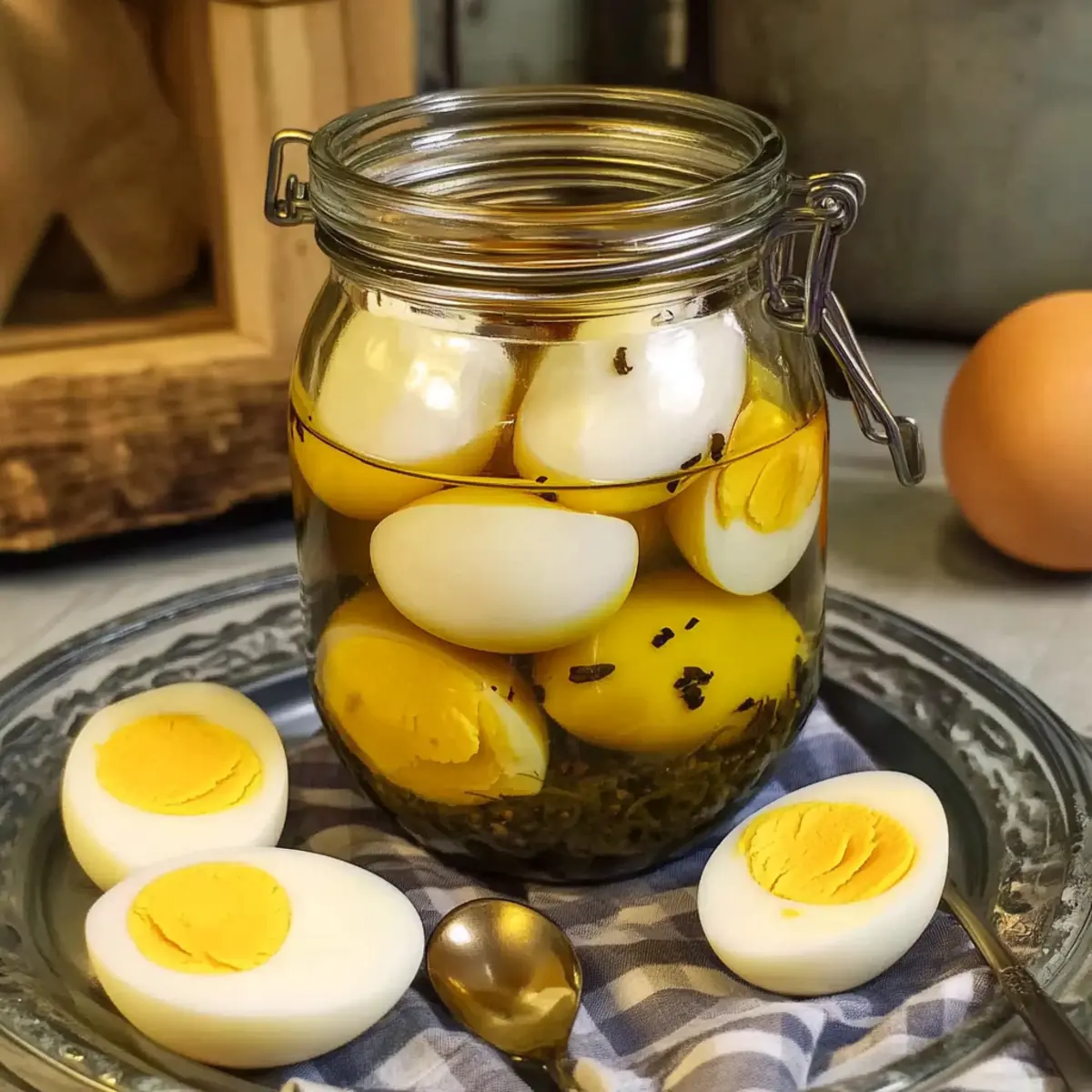
- Hard-boil the eggs: Place 12 large eggs in a single layer in a large pot. Cover with cold water by about 1 inch (2.5 cm). Bring to a gentle boil over medium-high heat, then cover and remove from heat. Let eggs sit for 10-12 minutes. This method yields creamy-yolked eggs without overcooking.
- Cool and peel the eggs: Transfer eggs to a bowl of ice water to stop cooking and chill for at least 5 minutes. Gently tap and peel under running water to remove shells easily.
- Prepare the brine: In a small saucepan, combine 2 cups (480 ml) white vinegar, 1 cup (240 ml) water, 2 tablespoons sugar, and 1 tablespoon salt. Add 1 tablespoon mustard seeds, 1 teaspoon black peppercorns, 1 teaspoon smoked paprika, 2 smashed garlic cloves, and ¼ teaspoon dried chili flakes if using. Heat over medium, stirring until sugar and salt dissolve. Remove from heat and let cool to room temperature.
- Pack the eggs into the jar: Place peeled eggs snugly into the glass jar along with a few fresh dill sprigs for aroma.
- Pour the brine over the eggs: Carefully pour the cooled brine into the jar, covering the eggs completely. If needed, add a little extra water or vinegar to fully submerge the eggs.
- Seal and refrigerate: Cover the jar tightly and refrigerate for at least 48 hours before eating. The flavor improves the longer they marinate, up to 2 weeks.
- Enjoy and store: Use a clean fork or tongs to remove eggs for snacking. Keep refrigerated and consume within 2 weeks for best flavor and safety.
When I first made these, I noticed the eggs tasted best after about 3 days. Before that, the flavor is there but a bit mild. Also, if you find the brine too sharp, a quick rinse under cold water before eating softens the acidity without losing the flavor. The smoked paprika is a subtle but important touch that I learned from a chef friend who swears by it for adding depth to pickles.
Cooking Tips & Techniques
Pickling eggs might sound intimidating, but honestly, it’s one of the easiest ways to add serious flavor to a simple ingredient. Here are some tips I picked up along the way:
- Peeling Eggs Without Frustration: Fresh eggs can be hard to peel. Using eggs that are a few days old makes peeling easier because the membrane separates better from the shell.
- Brine Temperature Matters: Always let the brine cool before pouring it over the eggs. Hot brine can cause the eggs to become rubbery or develop an off flavor.
- Spice Balance: Don’t skip the mustard seeds and smoked paprika — they give the brine a complexity that’s far from your average vinegar soak.
- Patience Pays Off: The eggs taste best after at least 48 hours in the brine. I often wait 3-4 days before digging in, which gives the flavors time to really meld.
- Storage Safety: Always keep pickled eggs refrigerated and consume within two weeks. The acidity helps preserve them but doesn’t replace refrigeration.
One time, I rushed the process and ate the eggs after just one day—they were good but a little too sharp and one-dimensional. Waiting those extra days made all the difference. Also, when I first experimented with adding fresh herbs, I learned that dill is king here—parsley and thyme are nice but don’t quite bring the same brightness.
Variations & Adaptations
This flavorful pickled eggs recipe is a great base that you can adapt to your tastes or dietary needs. Here are a few variations I’ve tried and enjoyed:
- Spicy Kick: Add more dried chili flakes or a splash of hot sauce to the brine for a fiery version. Perfect if you like your snacks with some heat.
- Asian-Inspired: Swap the white vinegar for rice vinegar and add a few slices of ginger and a splash of soy sauce to the brine for a tangy-salty twist.
- Herbal Twist: Try fresh tarragon or thyme instead of dill for a different herbal note. I once made a batch with rosemary that was surprisingly good with a hint of piney flavor.
- Low-Sodium Option: Reduce the salt by half and add a teaspoon of celery seed for flavor. Keep in mind the eggs won’t keep as long without the full salt amount.
- Vegan Pickled “Eggs” Alternative: If you want to try a plant-based version, firm tofu cubes work well when pickled using the same brine and spices.
For a twist on presentation, I’ve also sliced the eggs lengthwise and served them on crackers with a dollop of mustard or a sprinkle of smoked paprika for a quick appetizer. It’s one of those easy upgrades that impress guests without extra work, similar to how I like to keep things simple but tasty in my kitchen.
Serving & Storage Suggestions
Pickled eggs are best served chilled straight from the fridge. They make a zesty snack on their own but also pair beautifully with other simple bites.
- Enjoy them halved with a sprinkle of fresh herbs or a dash of hot sauce.
- Add sliced pickled eggs to salads or sandwiches for a tangy protein boost.
- Serve alongside pickled vegetables or charcuterie boards as a flavorful contrast.
- Pair with cold beers or crisp white wines for casual get-togethers.
Store pickled eggs in their brine in a sealed glass jar in the refrigerator. They keep well for up to two weeks, but always check for any off smells or textures before eating. The flavor actually deepens over time, becoming more complex and mellow after a few days.
If you want to reheat them (though I usually prefer cold), briefly warming them in the brine on the stove can soften the texture, but be careful not to overheat or they’ll get rubbery. Personally, I like to keep a jar handy for quick snacking or unexpected guests—it’s a reliable, flavorful option that’s easy to grab.
Nutritional Information & Benefits
Pickled eggs are a surprisingly nutritious snack, offering a solid source of protein and essential nutrients with relatively low calories. Here’s a rough estimate per egg:
| Nutrient | Amount |
|---|---|
| Calories | 70 kcal |
| Protein | 6 grams |
| Fat | 5 grams |
| Carbohydrates | 1 gram (from brine sugar) |
| Sodium | High (due to salt in brine) |
Eggs provide essential amino acids, vitamin D, and choline, which supports brain health. The vinegar and spices in the brine may aid digestion and add antioxidants. However, because of the salt content, it’s best to enjoy these in moderation if you’re watching sodium intake.
This recipe is naturally gluten-free and low-carb, making it a good fit for many dietary preferences. For a dairy-free snack, it’s a winner, and the protein content helps keep you full between meals without added sugars or processed ingredients.
Conclusion
This flavorful pickled eggs recipe is one of those simple pleasures that surprises you with how much zing and satisfaction it can pack. It’s easy enough for a quick snack but special enough to share with friends when you want something a little different on the table. I love how adaptable it is—whether you want to keep it classic or add your own spicy or herbal twists, it’s a recipe that makes eggs feel fresh and exciting again.
Give it a try, tweak it to your taste, and don’t be shy about sharing your variations. After all, food is best when it’s a little personalized. And if you’re looking for other easy-to-make, delicious recipes, the recipe collection on this site has plenty of inspiration to keep your kitchen lively.
Here’s to snacking with a little more flavor and a lot more fun.
FAQs
How long do pickled eggs last in the fridge?
Pickled eggs keep well for up to two weeks when stored in an airtight container in the refrigerator. Always check for any off odors or texture changes before eating.
Can I use brown vinegar instead of white vinegar?
Yes, you can use brown vinegar or apple cider vinegar for a slightly different flavor profile, but white vinegar provides the classic sharp tang preferred in this recipe.
Do I have to peel the eggs before pickling?
Yes, peeling the eggs before placing them in the brine helps the flavors penetrate the egg whites better and makes them easier to eat.
Why are my pickled eggs rubbery?
This usually happens if the brine is too hot when poured over the eggs or if the eggs are overcooked. Let the brine cool completely and use the recommended boiling method for tender eggs.
Can I add other flavors or vegetables to the jar?
Absolutely! Fresh herbs, sliced onions, cucumbers, or even beets can be added to customize the flavor and appearance of your pickled eggs.
Pin This Recipe!
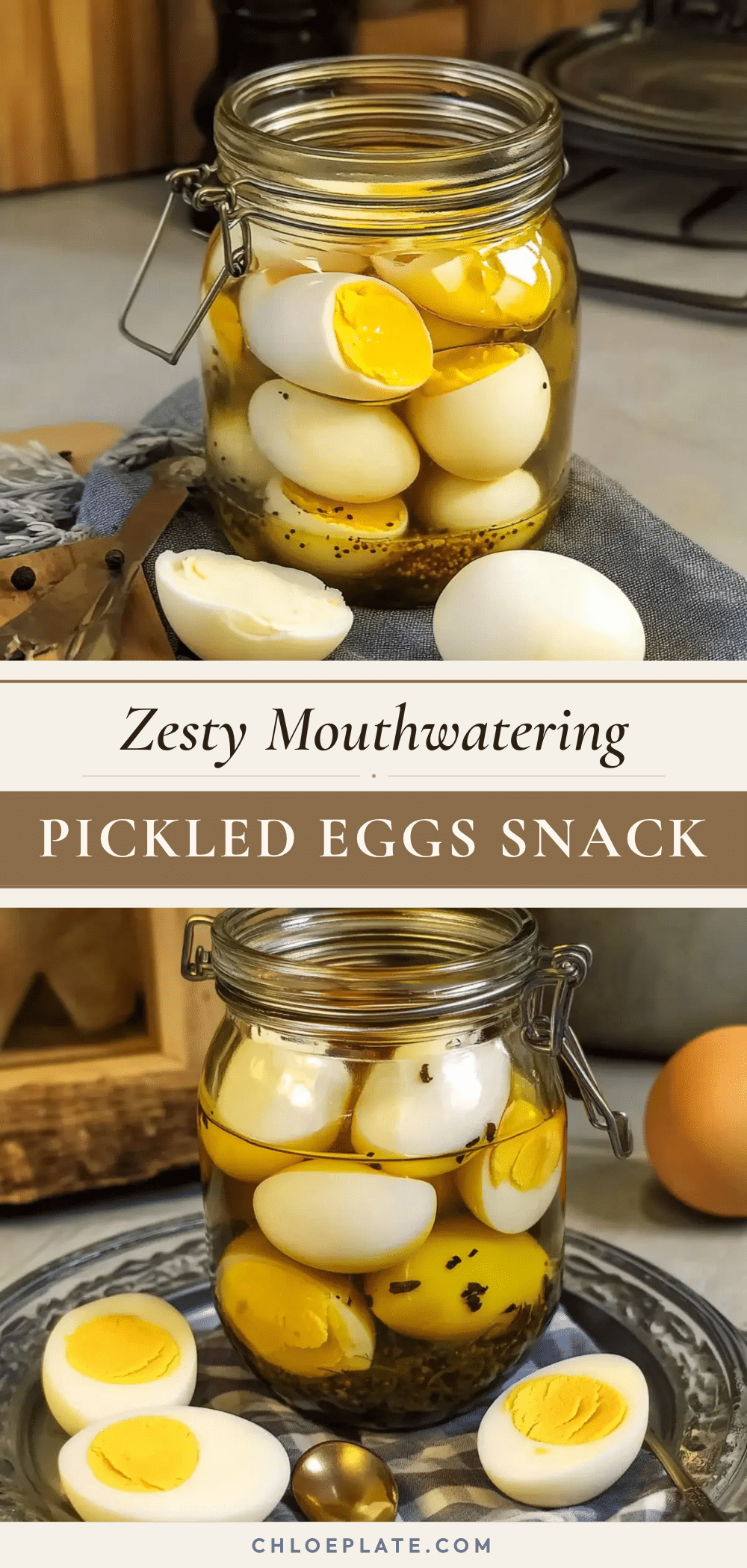
Flavorful Pickled Eggs Recipe
A zesty and tangy pickled eggs recipe that makes a quick, satisfying snack with a perfect balance of vinegar, spices, and a hint of sweetness.
- Prep Time: 15 minutes
- Cook Time: 12 minutes
- Total Time: 2 days 27 minutes
- Yield: 12 servings 1x
- Category: Snack
- Cuisine: American
Ingredients
- 12 large hard-boiled eggs, peeled
- 2 cups (480 ml) white vinegar
- 1 cup (240 ml) water
- 2 tablespoons granulated sugar
- 1 tablespoon kosher salt
- 1 tablespoon mustard seeds
- 1 teaspoon black peppercorns
- 1 teaspoon smoked paprika
- 2 garlic cloves, smashed
- 1/4 teaspoon dried chili flakes (optional)
- A few fresh dill sprigs (optional but recommended)
Instructions
- Place 12 large eggs in a single layer in a large pot. Cover with cold water by about 1 inch (2.5 cm). Bring to a gentle boil over medium-high heat, then cover and remove from heat. Let eggs sit for 10-12 minutes.
- Transfer eggs to a bowl of ice water to stop cooking and chill for at least 5 minutes. Gently tap and peel under running water to remove shells easily.
- In a small saucepan, combine 2 cups (480 ml) white vinegar, 1 cup (240 ml) water, 2 tablespoons sugar, and 1 tablespoon salt. Add 1 tablespoon mustard seeds, 1 teaspoon black peppercorns, 1 teaspoon smoked paprika, 2 smashed garlic cloves, and 1/4 teaspoon dried chili flakes if using. Heat over medium, stirring until sugar and salt dissolve. Remove from heat and let cool to room temperature.
- Place peeled eggs snugly into a glass jar along with a few fresh dill sprigs for aroma.
- Carefully pour the cooled brine into the jar, covering the eggs completely. Add extra water or vinegar if needed to fully submerge the eggs.
- Cover the jar tightly and refrigerate for at least 48 hours before eating. The flavor improves the longer they marinate, up to 2 weeks.
- Use a clean fork or tongs to remove eggs for snacking. Keep refrigerated and consume within 2 weeks for best flavor and safety.
Notes
Use eggs that are a few days old for easier peeling. Always let the brine cool before pouring over eggs to avoid rubbery texture. Flavor is best after 3 days of pickling. Store refrigerated and consume within 2 weeks. Rinse eggs briefly under cold water before eating if brine is too sharp. Smoked paprika adds important depth to the flavor.
Nutrition
- Serving Size: 1 pickled egg
- Calories: 70
- Fat: 5
- Carbohydrates: 1
- Protein: 6
Keywords: pickled eggs, zesty snack, easy pickled eggs, tangy eggs, protein snack, pickling recipe