Love this? Save it for later!
Share the inspiration with your friends
The butter had just started to brown in the pan when I realized I’d forgotten to pat the fillets dry. That was my third mistake of the night, and dinner wasn’t even on the table yet. I was trying to impress a friend who’d just moved back to town—someone who’d spent years eating at tiny seafood spots along the coast of Maine. And here I was, standing in my kitchen, holding a spatula and hoping for the best.
I’d picked up a couple of flounder fillets on a whim, thinking, how hard can this be? But flounder is delicate. It practically begs you to treat it gently. The first fillet I touched fell apart before it even hit the flour. I almost gave up and ordered pizza. But then I remembered a quick trick a chef once told me about—keeping the fish cold until the very last second. So I popped the fillets back in the fridge, took a breath, and started over.
That night, I didn’t just salvage dinner. I accidentally discovered my go-to recipe for when I want to feel like I’ve got it all together—even when I clearly don’t. The flounder came out golden, with a nutty butter sauce that smelled like a fancy restaurant kitchen. My friend took one bite and said, “You made this?” And honestly, that moment was better than any compliment I’ve ever gotten on a blog post.
This Perfect Elegant Flounder Meunière is that kind of recipe. It looks like you spent an hour in the kitchen, but it comes together in about 15 minutes. It’s the dish you make when you want to feel like a pro, even if you’re just cooking for yourself on a Tuesday night.
Why You’ll Love This Recipe
Let me tell you why this one’s a keeper. I’ve tested this method at least a dozen times, tweaking the butter temperature and the flour ratio until everything clicked. And honestly, this version is the one I keep coming back to.
- Quick & Easy: From start to finish, you’re looking at about 15 minutes. No marinating, no complicated steps. Just you, a pan, and some seriously good fish.
- Simple Ingredients: You probably already have everything you need. Butter, lemon, parsley, flour, salt, and pepper. That’s it. No fancy grocery runs required.
- Perfect for Weeknight Elegance: This is the kind of meal that makes a regular Tuesday feel special. Serve it with a simple salad or some roasted asparagus, and you’ve got a dinner that looks like it took way more effort than it did.
- Crowd-Pleaser: Even people who think they don’t like fish tend to love this one. The butter sauce is rich without being heavy, and the lemon cuts through everything beautifully.
- Unbelievably Delicious: The texture here is what gets me every time. The outside gets this delicate, golden crust, while the inside stays flaky and tender. And that sauce—nutty, tangy, a little bit salty—it’s the kind of thing you’ll want to spoon over everything on your plate.
What makes this recipe different from the rest? It’s the technique. Most versions of meunière call for clarified butter, but I’ve found that using whole butter and letting it brown just slightly gives you a deeper, nuttier flavor. Plus, keeping the fish cold before cooking ensures that perfect crust every single time. I’ve also tested this with other white fish like sole and cod, and it works beautifully—so you can adapt it to what’s available.
This isn’t just another fish recipe. It’s the one that makes you close your eyes after the first bite. It’s comfort food, reimagined—lighter, faster, but with the same soul-soothing satisfaction. Perfect for impressing guests without stress, or turning a simple meal into something memorable.
What Ingredients You Will Need
This recipe uses simple, wholesome ingredients to deliver bold flavor and satisfying texture without the fuss. Most of these are pantry staples, so you can whip this up anytime the craving strikes.
- Flounder fillets (4 fillets, about 6 ounces each) – Look for fresh fillets that are firm to the touch and smell like the ocean, not fishy. If flounder isn’t available, sole or tilapia work great too. (I’ve used both, and they’re equally delicious.)
- All-purpose flour (1/2 cup) – This creates that light, golden crust. For a gluten-free option, swap in almond flour or a gluten-free all-purpose blend. (I’ve tested both, and the texture holds up well.)
- Unsalted butter (4 tablespoons) – The star of the show. Using unsalted butter lets you control the salt level. I recommend a good-quality brand like Kerrygold for the richest flavor.
- Fresh lemon juice (2 tablespoons) – Always use fresh lemons here. Bottled juice just doesn’t have the same brightness. (Roll the lemon on the counter before juicing to get the most out of it.)
- Fresh parsley (2 tablespoons, chopped) – Adds a pop of color and freshness. Flat-leaf parsley is my go-to, but curly works fine too.
- Salt (1/2 teaspoon, or to taste) – I prefer kosher salt for its clean flavor. Adjust based on your preference.
- Black pepper (1/4 teaspoon, freshly ground) – Freshly ground pepper makes a difference here. It adds a subtle warmth that complements the butter sauce.
- Lemon wedges (for serving) – Optional but highly recommended. A final squeeze of lemon right before eating brightens everything up.
If you’re looking to swap out the flounder, crispy pistachio herb crusted cod is another fantastic option that uses a similar quick-cooking method. The nutty crust adds a whole different dimension, but the timing is almost identical.
Equipment Needed
You don’t need a lot of fancy tools for this one. Here’s what I use:
- Large non-stick skillet or cast-iron pan – A 12-inch skillet works best. Non-stick makes cleanup easier, but cast iron gives you a better crust. (I’ve used both, and honestly, I prefer cast iron for the even heat distribution.)
- Fish spatula or thin metal spatula – This is key for flipping delicate fillets without breaking them. A regular spatula can work, but you’ll need to be extra gentle.
- Shallow dish for flour – A pie plate or wide bowl works perfectly for dredging the fish.
- Paper towels – For patting the fillets dry. This step is non-negotiable for a good crust.
- Measuring spoons and cups – For accuracy, especially with the flour and lemon juice.
- Cutting board and knife – For chopping parsley and slicing lemon wedges.
If you don’t have a fish spatula, don’t stress. Just use a thin metal spatula and be patient when flipping. And if you’re using a non-stick pan, avoid metal utensils to protect the coating.
Preparation Method
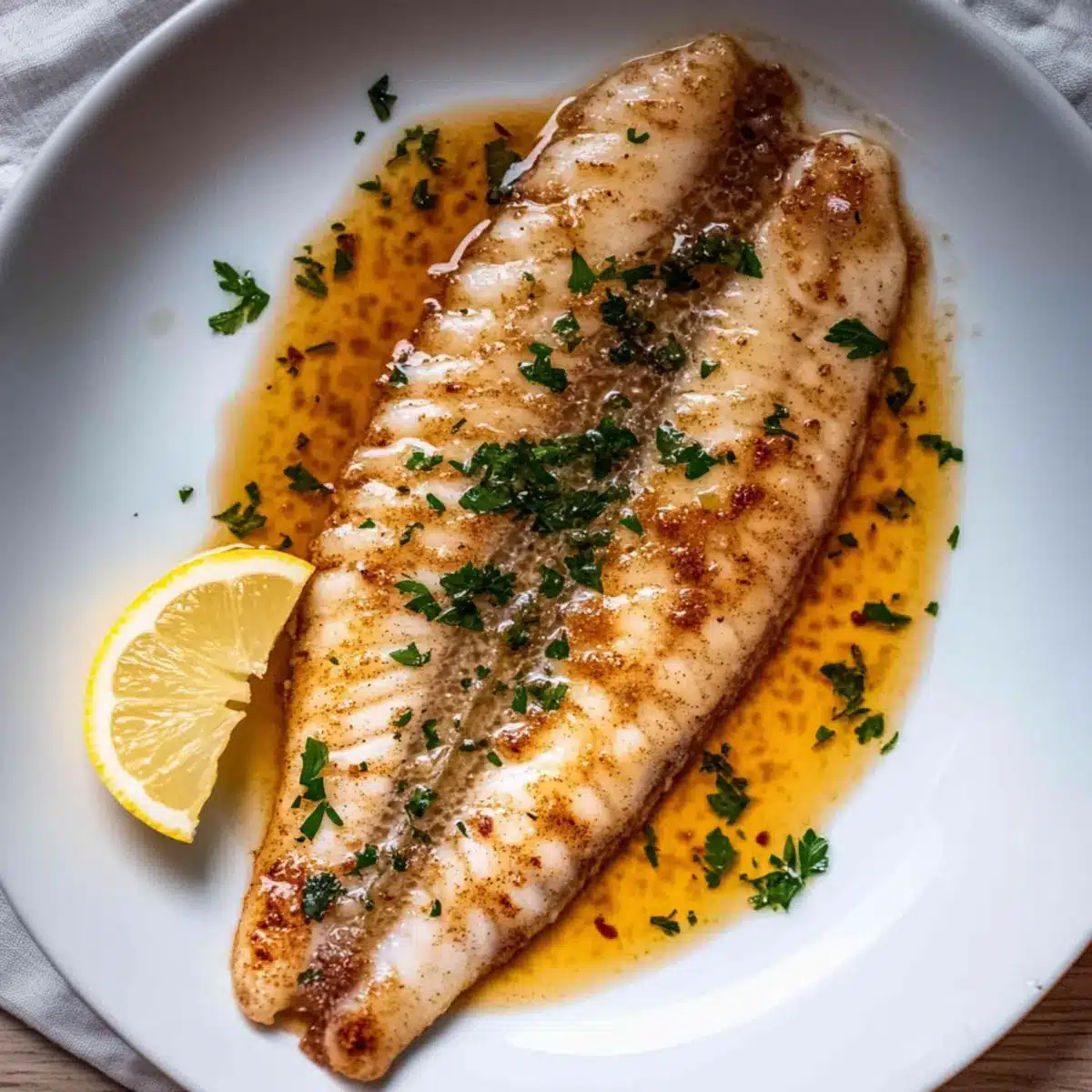
Let’s get cooking. This whole process takes about 15 minutes, so have everything ready before you start.
- Prep the fish: Pat the flounder fillets dry with paper towels. This is crucial—moisture is the enemy of a good crust. Season both sides with salt and pepper. Place the fillets in the fridge while you prepare the flour. (Cold fish holds together better during cooking.)
- Set up your dredging station: Spread the 1/2 cup of all-purpose flour in a shallow dish. Add a pinch of salt and pepper to the flour and whisk to combine. (I like to use a fork for this—it’s quick and easy.)
- Heat the pan: Place your skillet over medium-high heat. Add 2 tablespoons of the unsalted butter and let it melt. Swirl the pan occasionally. You want the butter to foam, then start to turn a light golden brown. This takes about 2-3 minutes. (Watch it closely—burnt butter will ruin the sauce.)
- Dredge the fillets: Remove the fish from the fridge. Working quickly, dredge each fillet in the flour, shaking off any excess. You want a thin, even coating. (Too much flour will make the fish gummy.)
- Cook the fish: Carefully place the fillets in the hot pan, presentation side down first. Cook for 2-3 minutes without moving them. You’ll know they’re ready to flip when the edges look golden and the fish releases easily from the pan. (If it sticks, give it another 30 seconds.)
- Flip and finish: Using your fish spatula, gently flip each fillet. Cook for another 1-2 minutes, until the fish is opaque and flakes easily with a fork. Transfer the fillets to a warm plate. (I like to keep them in a low oven—around 200°F—while I finish the sauce.)
- Make the sauce: Pour out any excess butter from the pan (leave about 1 tablespoon). Add the remaining 2 tablespoons of butter and let it melt over medium heat. Once it starts to foam, add the 2 tablespoons of fresh lemon juice. Stir and scrape up any browned bits from the bottom of the pan. This takes about 30 seconds.
- Finish and serve: Pour the sauce over the fish. Sprinkle with the chopped parsley and serve immediately with lemon wedges on the side.
One thing I learned the hard way—don’t overcrowd the pan. If you’re cooking for a crowd, work in batches. The fish needs space to get that golden crust, and crowding it will steam it instead.
Cooking Tips & Techniques
Over the years, I’ve made every mistake you can imagine with this dish. Here’s what I’ve learned:
- Keep the fish cold: This is my number one tip. Cold fillets hold their shape better and develop a nicer crust. Pop them in the fridge for 10 minutes before cooking if you have time.
- Don’t skip the drying step: Moisture is the enemy of browning. Pat those fillets dry like you mean it. (I use two paper towels per fillet and press gently.)
- Watch the butter: Brown butter can go from perfect to burnt in seconds. Keep your heat at medium-high and swirl the pan constantly. The butter should smell nutty, not acrid.
- Use a thin spatula: Flounder is delicate. A thick spatula will break the fillet. A fish spatula or thin metal one is your best friend here.
- Don’t over-flip: Flip the fish once. That’s it. Flipping multiple times will break it apart and mess up the crust.
- Timing is everything: This dish comes together fast. Have your sides ready before you start cooking. (I usually make a quick salad or some roasted veggies while the fish rests.)
If you’re looking for another quick seafood option that’s just as forgiving, creamy dill salmon sauce perfect 10 minute recipe is a fantastic alternative. The sauce is a little different, but the cooking method is just as fast.
Variations & Adaptations
This recipe is incredibly versatile. Here are a few ways to mix it up:
- Dietary Adaptations: For a gluten-free version, swap the all-purpose flour with almond flour or a gluten-free blend. For a dairy-free option, use ghee or a high-quality vegan butter. (I’ve tried both, and ghee gives you the closest flavor to the original.)
- Seasonal Twists: In the summer, add a handful of cherry tomatoes to the pan after flipping the fish. They’ll burst and create a sweet, tangy sauce. In the winter, try adding a pinch of smoked paprika to the flour for a warm, smoky note.
- Flavor Variations: Add a clove of minced garlic to the butter sauce for extra depth. Or swap the parsley for fresh dill or chives. (I’ve done a dill version with a squeeze of lime, and it’s incredible.)
- Different Fish: This method works beautifully with sole, tilapia, cod, or even thin-cut salmon. Adjust cooking times based on thickness—thicker fillets need an extra minute or two per side.
- Personal Variation: One time, I added a splash of white wine to the sauce along with the lemon juice. It added a subtle acidity that paired perfectly with the butter. (Just let it cook for an extra 30 seconds to burn off the alcohol.)
For a completely different take on seafood, best easy baked pistachio parmesan crusted salmon recipe is a crowd-pleaser that’s just as simple but has a totally different flavor profile.
Serving & Storage Suggestions
This dish is best enjoyed fresh, but here’s how to make the most of it:
- Serving Temperature: Serve immediately while the fish is warm and the sauce is still bubbling. The butter sauce will start to solidify as it cools, so don’t wait around.
- Presentation: Place the fillets on a warm plate, spoon the sauce over the top, and garnish with fresh parsley and lemon wedges. A simple side of steamed green beans or a light arugula salad rounds out the meal beautifully.
- Complementary Dishes: This pairs wonderfully with roasted asparagus, garlic mashed potatoes, or a simple fresh strawberry spinach salad with easy balsamic vinaigrette. The bright, tangy flavors balance the richness of the butter sauce.
- Storage: Store leftovers in an airtight container in the refrigerator for up to 2 days. The fish will lose some of its texture, but the flavor will still be good.
- Reheating: Reheat gently in a skillet over low heat with a splash of water or lemon juice. Avoid the microwave—it will make the fish rubbery. (I’ve learned this the hard way.)
- Flavor Development: The sauce will thicken as it sits, so if you’re reheating, add a little extra lemon juice or water to loosen it up. The flavors actually meld nicely overnight, but the texture is best fresh.
Nutritional Information & Benefits
Here’s a rough estimate per serving (based on 4 servings):
- Calories: 320
- Protein: 28g
- Fat: 18g
- Carbohydrates: 12g
- Fiber: 0g
- Sugar: 1g
Flounder is a lean, high-protein fish that’s rich in omega-3 fatty acids, which support heart and brain health. It’s also a good source of vitamin B12 and selenium. The butter adds healthy fats, but you can reduce the amount if you’re watching your intake. This recipe is naturally low-carb and can be made gluten-free with a simple flour swap. It’s also free of common allergens like nuts and soy, making it a great option for most diets.
Personally, I love that this dish feels indulgent without being heavy. It’s the kind of meal that satisfies a craving for comfort food while still feeling light and fresh. Perfect for a balanced lifestyle.
Conclusion
This Perfect Elegant Flounder Meunière is proof that you don’t need hours in the kitchen to create something truly special. It’s quick, simple, and uses ingredients you probably already have. But more than that, it’s the kind of dish that makes you feel like you’ve got it all together—even on days when you definitely don’t.
I love this recipe because it’s forgiving. You can mess up the timing, forget to pat the fish dry, or let the butter brown a little too much, and it still turns out delicious. It’s become my go-to for busy weeknights, last-minute dinner guests, and those days when I just need a little culinary win.
So go ahead and give it a try. Customize it with your favorite herbs, swap in a different fish, or add a splash of wine to the sauce. Make it your own. And when you do, come back and let me know how it turned out. I’d love to hear about your version—share your tweaks, your successes, and even your happy accidents in the comments below. Happy cooking!
Frequently Asked Questions
Can I use frozen flounder for this recipe?
Yes, you can. Just thaw the fillets completely in the refrigerator overnight, then pat them very dry before cooking. Frozen fish tends to release more moisture, so drying is extra important here.
What if I don’t have a fish spatula?
No problem. Use a thin metal spatula or even a wide turner. Just be gentle when flipping, and make sure the fish releases easily from the pan before you try to move it.
Can I make the sauce ahead of time?
I don’t recommend it. The butter sauce is best fresh, right after it’s made. It will separate and lose its texture if you try to reheat it. But you can prep the lemon juice and parsley ahead of time to save a few minutes.
How do I know when the fish is done?
The fish should be opaque and flake easily with a fork. A good rule of thumb is to cook it for about 2-3 minutes per side for thin fillets. If it’s thicker, add a minute or two. The internal temperature should reach 145°F.
Can I double this recipe?
Absolutely. Just work in batches to avoid overcrowding the pan. Keep the cooked fillets warm in a low oven (around 200°F) while you finish the rest. Make a fresh batch of sauce for each batch of fish for the best flavor.
Pin This Recipe!
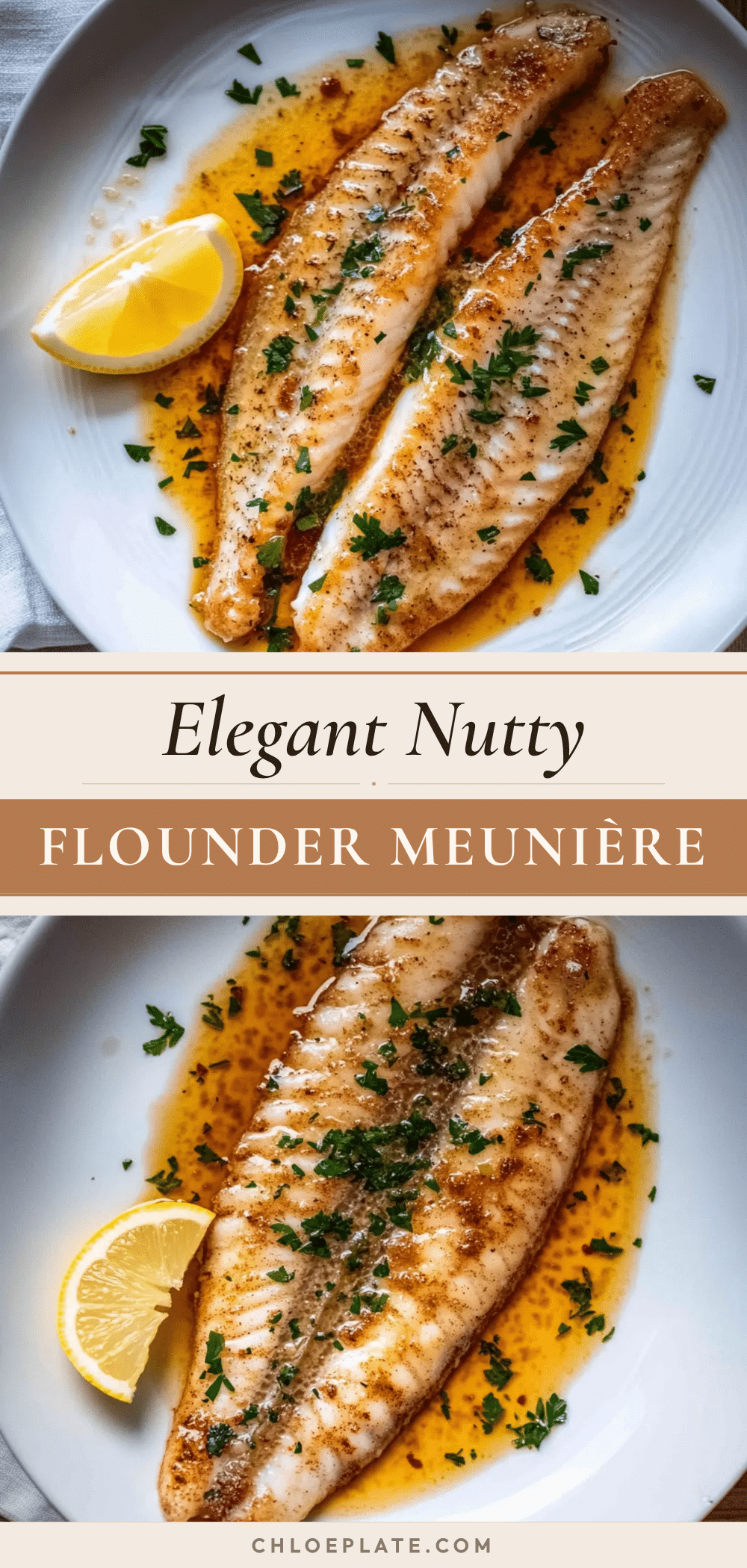
Perfect Elegant Flounder Meunière: Easy 15-Minute Recipe
This Perfect Elegant Flounder Meunière is a quick and easy 15-minute recipe that looks like you spent an hour in the kitchen. It features delicate flounder fillets with a nutty brown butter sauce, perfect for impressing guests or a special weeknight dinner.
- Prep Time: 5 minutes
- Cook Time: 10 minutes
- Total Time: 15 minutes
- Yield: 4 servings 1x
- Category: Main Course
- Cuisine: French
Ingredients
- 4 flounder fillets (about 6 ounces each)
- 1/2 cup all-purpose flour
- 4 tablespoons unsalted butter
- 2 tablespoons fresh lemon juice
- 2 tablespoons fresh parsley, chopped
- 1/2 teaspoon salt (or to taste)
- 1/4 teaspoon black pepper, freshly ground
- Lemon wedges (for serving)
Instructions
- Pat the flounder fillets dry with paper towels. Season both sides with salt and pepper. Place the fillets in the fridge while you prepare the flour.
- Spread the 1/2 cup of all-purpose flour in a shallow dish. Add a pinch of salt and pepper to the flour and whisk to combine.
- Place your skillet over medium-high heat. Add 2 tablespoons of the unsalted butter and let it melt. Swirl the pan occasionally. You want the butter to foam, then start to turn a light golden brown. This takes about 2-3 minutes.
- Remove the fish from the fridge. Working quickly, dredge each fillet in the flour, shaking off any excess.
- Carefully place the fillets in the hot pan, presentation side down first. Cook for 2-3 minutes without moving them. You’ll know they’re ready to flip when the edges look golden and the fish releases easily from the pan.
- Using your fish spatula, gently flip each fillet. Cook for another 1-2 minutes, until the fish is opaque and flakes easily with a fork. Transfer the fillets to a warm plate.
- Pour out any excess butter from the pan (leave about 1 tablespoon). Add the remaining 2 tablespoons of butter and let it melt over medium heat. Once it starts to foam, add the 2 tablespoons of fresh lemon juice. Stir and scrape up any browned bits from the bottom of the pan. This takes about 30 seconds.
- Pour the sauce over the fish. Sprinkle with the chopped parsley and serve immediately with lemon wedges on the side.
Notes
Keep the fish cold until the last second for a better crust. Don’t overcrowd the pan; work in batches if needed. Watch the butter closely to avoid burning. Use a thin spatula for flipping delicate fillets. Serve immediately for best texture.
Nutrition
- Serving Size: 1 fillet with sauce
- Calories: 320
- Sugar: 1
- Sodium: 450
- Fat: 18
- Saturated Fat: 10
- Carbohydrates: 12
- Protein: 28
Keywords: flounder meunière, easy fish recipe, 15-minute dinner, brown butter fish, quick seafood, weeknight dinner, elegant fish