Love this? Save it for later!
Share the inspiration with your friends
I was standing in my kitchen staring at a bunch of basil that was about two hours away from wilting into oblivion. You know that feeling when you buy fresh herbs with the best intentions, and then life happens? I had planned a fancy pasta dinner that week but between work and everything else, the basil just sat there. Looking sad. Judging me from the cutting board.
I grabbed my food processor almost out of obligation, not inspiration. I figured I’d just throw everything in and see what happened. Honestly, I wasn’t expecting much. But then that smell hit me—that sharp, garlicky, piney aroma that fills the whole house and makes everything feel a little more intentional. Suddenly, I wasn’t just saving leftover herbs. I was making something I actually craved.
That first batch of fresh homemade pesto in minutes changed how I looked at weeknight cooking. It was so much brighter than the jarred stuff I’d been buying. Brighter, greener, and honestly, way more satisfying. I ended up tossing it with some warm pasta and a handful of cherry tomatoes, and I sat there eating straight from the bowl like I hadn’t eaten in days.
This isn’t some complicated chef recipe. It’s the kind of thing you make when you need dinner to come together fast but still want it to feel like you actually tried. The kind of pesto that makes you wonder why you ever bought the store-bought version in the first place.
Why You’ll Love This Recipe
After testing this recipe about seven times in two weeks (my neighbors started asking if I was opening a restaurant), I can tell you exactly why it works. It’s not just another pesto recipe—it’s the one that actually delivers on flavor without the hassle.
- Quick & Easy: From fridge to finished in under 10 minutes. No cooking required. Just chop, pulse, and eat.
- Simple Ingredients: You probably already have most of these in your kitchen right now. No fancy grocery store runs needed.
- Perfect for Busy Nights: This is my go-to when I need dinner on the table fast but still want it to taste like I spent an hour cooking.
- Crowd-Pleaser: I’ve brought this to potlucks and family dinners, and it disappears every single time. Kids love it. Adults love it. Everyone loves it.
- Unbelievably Fresh: The flavor is completely different from anything you’ll find in a jar. It’s vibrant, herbaceous, and just the right amount of garlicky.
What makes this pesto different from the rest? It’s all about the technique. I toast the pine nuts just slightly before blending—not enough to brown them, just enough to wake up their natural oils. That little step makes the pesto taste deeper and nuttier without being overwhelming. Plus, I use a mix of Parmesan and Pecorino Romano for that perfect salty, funky balance that store-bought versions just can’t replicate.
This is the kind of pesto that makes you close your eyes after the first bite. It’s comfort food reimagined—fresher, faster, but with the same soul-soothing satisfaction. Perfect for impressing guests without stress, or turning a simple bowl of pasta into something memorable.
What Ingredients You Will Need
This recipe uses simple, wholesome ingredients to deliver bold flavor and satisfying texture without the fuss. Most of these are pantry staples for anyone who loves to cook, but I’ve included some notes to help you pick the best options.
For the Pesto Base
- 2 cups fresh basil leaves, packed (look for bright green leaves without dark spots; the fresher the basil, the brighter your pesto will taste)
- 1/3 cup pine nuts (I prefer Trader Joe’s pine nuts for consistent quality; toast them lightly in a dry pan for about 2 minutes until fragrant)
- 1/2 cup freshly grated Parmesan cheese (please don’t use the pre-shredded stuff—it has anti-caking agents that make the pesto grainy)
- 1/4 cup freshly grated Pecorino Romano cheese (adds that extra salty kick that makes pesto addictive)
- 2-3 cloves fresh garlic, peeled (start with 2 if you’re sensitive to raw garlic; I always use 3 because I love the punch)
- 1/2 cup extra virgin olive oil (use a good quality one here—it makes a huge difference in flavor)
- 1/2 teaspoon sea salt (adjust to taste depending on how salty your cheese is)
- 1/4 teaspoon black pepper, freshly ground
- 1 tablespoon fresh lemon juice (optional but recommended—it keeps the pesto bright and prevents browning)
Optional Add-Ins
- 1/4 cup fresh parsley or spinach (if you want a milder flavor or need to stretch your basil)
- 1 tablespoon nutritional yeast (for a dairy-free version with that cheesy flavor)
- 1/4 cup toasted walnuts or almonds (as a budget-friendly substitute for pine nuts)
I always recommend using the freshest basil you can find. If you grow your own (lucky you!), pick the leaves in the morning when they’re most vibrant. For the olive oil, I’ve tested this with both California Olive Ranch and Bertolli, and both work beautifully—just make sure it’s not an ultra-light or flavored oil.
If you’re out of pine nuts (it happens to the best of us), you can swap in walnuts or even sunflower seeds. The flavor changes slightly, but it’s still delicious. I’ve made a walnut version for a friend with a tree nut allergy, and she said it was the best pesto she’d ever had.
Equipment Needed
You don’t need a fancy kitchen to make this pesto. Here’s what I use:
- Food processor (a standard 7-cup or larger works best; I use my Cuisinart and it handles everything perfectly)
- Chef’s knife (for rough chopping the garlic and any optional add-ins)
- Cutting board
- Measuring cups and spoons
- Rubber spatula (for scraping down the sides of the bowl)
- Small dry skillet (for toasting pine nuts if you choose to do so)
- Airtight glass jar or container (for storing leftover pesto)
If you don’t have a food processor, a high-speed blender works too—just be prepared to scrape down the sides more often. I’ve also made this with a mortar and pestle when I wanted to feel extra rustic, but honestly, that takes about 20 minutes of arm work. The food processor is your friend here.
For the storage container, I recommend a small glass jar with a tight-fitting lid. Mason jars work great. Just make sure it’s clean and dry before you add the pesto.
Preparation Method
Making this fresh homemade pesto in minutes is almost embarrassingly easy. Here’s how I do it every time.
- Toast the pine nuts (optional but recommended): Place the pine nuts in a dry small skillet over medium heat. Shake the pan frequently and cook for 2-3 minutes until they become fragrant and just barely golden. Watch them carefully—they burn fast. Immediately transfer to a plate to cool. (I learned this the hard way after burning my first batch and having to start over.)
- Prep your ingredients: Wash and thoroughly dry the basil leaves. Peel the garlic cloves. Grate your cheeses if you haven’t already. Having everything ready makes the process much smoother.
- Combine the dry ingredients: Add the cooled pine nuts, garlic cloves, and salt to the food processor bowl. Pulse 5-6 times until everything is roughly chopped. This ensures the garlic doesn’t end up in big chunks later.
- Add the basil: Add the packed basil leaves on top of the nut mixture. Don’t pack them down too hard—just let them sit loosely. Pulse another 5-6 times until the basil is finely chopped and starting to look like a coarse paste.
- Add the cheeses: Sprinkle the Parmesan and Pecorino Romano over the basil mixture. Pulse 3-4 times to combine. Don’t overdo it here; you want the cheese to be incorporated but not completely broken down.
- Stream in the olive oil: With the food processor running on low, slowly drizzle in the olive oil through the feed tube. Let it run for about 20-30 seconds until the pesto is smooth and emulsified. You’re looking for a thick, spreadable consistency—not too runny, not too stiff.
- Finish with lemon juice and pepper: Add the lemon juice and black pepper. Pulse once or twice just to combine. Taste and adjust seasoning—you might want a pinch more salt or an extra squeeze of lemon.
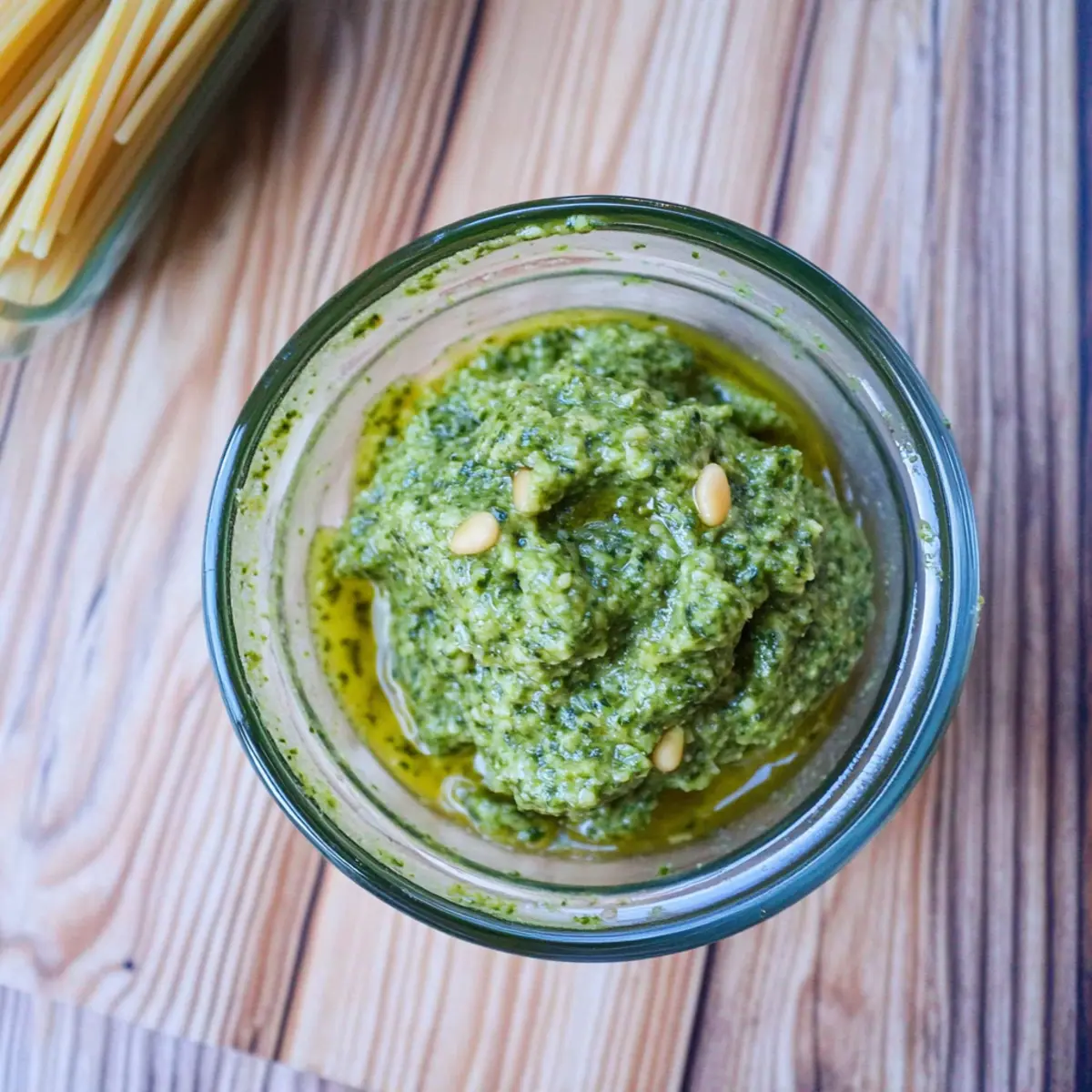
- Scrape and serve: Use your rubber spatula to scrape every last bit of pesto out of the bowl. Serve immediately over pasta, spread on sandwiches, or use as a dip. The pesto will look beautifully bright green and smell absolutely incredible.
One thing I’ve learned: don’t over-process the pesto. You want some texture left—tiny bits of pine nuts and basil leaves that give it that homemade feel. If you blend it too much, it turns into a smooth paste that loses some of its rustic charm.
If the pesto seems too thick, add another tablespoon of olive oil and pulse. If it’s too thin, add a few more basil leaves or a tablespoon of extra cheese. Adjust as you go.
Cooking Tips & Techniques
After making this recipe more times than I can count, I’ve picked up a few tricks that make a real difference.
Don’t skip the toasting step. I know it adds an extra two minutes, but toasting the pine nuts completely transforms the flavor. They go from bland and waxy to warm and nutty. It’s the difference between good pesto and great pesto.
Dry your basil thoroughly. Wet basil leaves will make your pesto watery and dull. After washing, spin them in a salad spinner or pat them dry with paper towels. Trust me on this one—I’ve made watery pesto before, and it’s just sad.
Use room temperature ingredients. Cold olive oil can make the pesto seize up and become thick. If your olive oil is refrigerated (some people do this), let it sit out for 15 minutes before using. Same goes for the cheese.
Make extra and freeze it. This pesto freezes beautifully. Spoon it into an ice cube tray, freeze until solid, then pop the cubes into a freezer bag. You’ll have individual portions ready to go for pasta, soups, or marinades. I always keep a stash in my freezer for those nights when I need dinner in a hurry.
Don’t add all the oil at once. Streaming it in slowly while the processor runs creates a better emulsion. The pesto comes together smoother and holds its texture longer. If you dump it all in at once, you might end up with a separated mess.
One mistake I made early on: adding too much garlic. Raw garlic is potent, and it can overpower everything else. Start with 2 cloves, taste, and add more if you want. You can always add, but you can’t take away.
Variations & Adaptations
This recipe is incredibly flexible. Here are some of my favorite ways to switch it up.
Dairy-Free Pesto
Swap the Parmesan and Pecorino Romano for 3 tablespoons of nutritional yeast. It gives you that savory, cheesy flavor without any dairy. I’ve made this for friends who are lactose intolerant, and they couldn’t tell the difference.
Nut-Free Pesto
Replace the pine nuts with toasted sunflower seeds or pumpkin seeds. Both options are nut-free and add a lovely earthy flavor. Sunflower seeds make the pesto slightly creamier, while pumpkin seeds give it a bit more crunch.
Spicy Pesto
Add 1/2 teaspoon of red pepper flakes or one small dried chili pepper to the food processor along with the garlic. The heat builds as you eat, so it’s not overwhelming—just a nice warm kick at the end.
Vegan Pesto
Combine the dairy-free swap above with a nut-free option if needed. Use 1/4 cup of olive oil and 1/4 cup of water to keep it light. This version is perfect for anyone following a whole-food plant-based diet.
Herb Blend Pesto
Replace half the basil with fresh parsley, cilantro, or mint. Each herb brings its own personality. Parsley makes it milder, cilantro gives it a fresh kick, and mint makes it perfect for summer dishes. I’ve made a basil-mint version that was incredible on grilled lamb chops.
My personal favorite variation? I add a handful of fresh spinach and swap the pine nuts for toasted walnuts. The spinach makes the pesto even greener (and adds a little extra nutrition), while the walnuts give it a slightly bitter, earthy note that pairs beautifully with roasted vegetables.
Serving & Storage Suggestions
This pesto is incredibly versatile. Here’s how I use and store it.
Serving: Serve at room temperature for the best flavor. If you’ve refrigerated it, let it sit out for 15-20 minutes before using. Toss with hot pasta (reserve some pasta water to thin it out), spread on crusty bread for bruschetta, dollop over grilled chicken or fish, or use as a dip for fresh vegetables. It’s also amazing on a fresh panzanella bread and tomato salad for a burst of herby goodness.
Storage: Transfer leftover pesto to an airtight glass jar. Press a piece of plastic wrap directly onto the surface of the pesto (this prevents oxidation and keeps it green). Seal the jar and refrigerate for up to 5 days. The pesto will darken slightly over time, but the flavor stays bright.
Freezing: Spoon pesto into an ice cube tray, cover with plastic wrap, and freeze. Once solid, pop the cubes into a freezer-safe bag. They’ll keep for up to 3 months. To use, just drop a cube into hot pasta or let it thaw in the fridge overnight.
Reheating: Don’t microwave pesto—it can separate and become oily. Instead, toss it with hot pasta or warm it gently in a skillet over low heat. Add a splash of pasta water or olive oil if it seems thick.
One thing I’ve noticed: the pesto actually tastes better the next day. The flavors meld together overnight, and the garlic mellows out just a bit. If you can resist eating it all on day one, you’re in for a treat.
Nutritional Information & Benefits
This pesto is packed with healthy fats and nutrients. Here’s the approximate breakdown per 2-tablespoon serving:
- Calories: 180
- Fat: 18g (mostly from olive oil and pine nuts—the good kind)
- Carbohydrates: 2g
- Protein: 4g
- Fiber: 1g
- Sodium: 220mg
Health Benefits: Basil is rich in antioxidants and has anti-inflammatory properties. Olive oil is loaded with heart-healthy monounsaturated fats. Pine nuts provide magnesium and vitamin E. And garlic? It’s a natural immune booster. This pesto isn’t just delicious—it’s actually good for you.
Dietary Considerations: This recipe is naturally gluten-free and low-carb. For a dairy-free or vegan version, use the substitutions listed above. It’s also vegetarian-friendly as written.
Potential Allergens: Contains tree nuts (pine nuts) and dairy (cheese). Can be adapted to be nut-free or dairy-free.
I love that this pesto lets me enjoy something indulgent-tasting without feeling guilty. It’s a small way to add more greens and healthy fats to my meals without much effort.
Conclusion
This fresh homemade pesto in minutes is proof that you don’t need hours in the kitchen to make something truly special. It’s bright, herbaceous, and packed with flavor—everything you want from a classic pesto, but faster and fresher than anything you’ll find in a store.
I love that this recipe is so forgiving. You can tweak it based on what you have on hand, adjust the garlic to your taste, or swap in different nuts and herbs. It’s the kind of recipe that invites experimentation, and every version turns out delicious.
Whether you toss it with pasta, spread it on a sandwich, or use it as a dip for fresh veggies, this pesto will become a staple in your kitchen. I promise you’ll never go back to the jarred stuff.
Try it this week and let me know how it turns out! Leave a comment below with your favorite way to use pesto, or tag me in your photos on social media. I’d love to see your creations.
Frequently Asked Questions
Can I make pesto without a food processor?
Absolutely! You can use a high-speed blender or even a mortar and pestle. A blender works well but you’ll need to scrape down the sides frequently. Using a mortar and pestle takes more time and effort, but it gives you a wonderfully rustic texture.
How long does homemade pesto last in the fridge?
Homemade pesto stays fresh in an airtight container in the refrigerator for up to 5 days. To keep it from turning brown, press a piece of plastic wrap directly onto the surface before sealing the lid.
Can I freeze pesto?
Yes! Freezing is one of the best ways to preserve pesto. Spoon it into an ice cube tray, freeze until solid, then transfer the cubes to a freezer bag. They’ll keep for up to 3 months. Just thaw a cube or two whenever you need a quick flavor boost.
What can I substitute for pine nuts?
Walnuts, almonds, or sunflower seeds all work beautifully. Each brings its own unique flavor—walnuts add earthiness, almonds give a mild sweetness, and sunflower seeds create a creamy texture. Toasting them first is still recommended.
Why did my pesto turn brown?
Pesto turns brown when the basil oxidizes from exposure to air. To prevent this, press plastic wrap directly onto the surface before storing, or add a squeeze of lemon juice—the acidity helps slow down oxidation. It’s still perfectly safe to eat, just not as pretty.
Pin This Recipe!
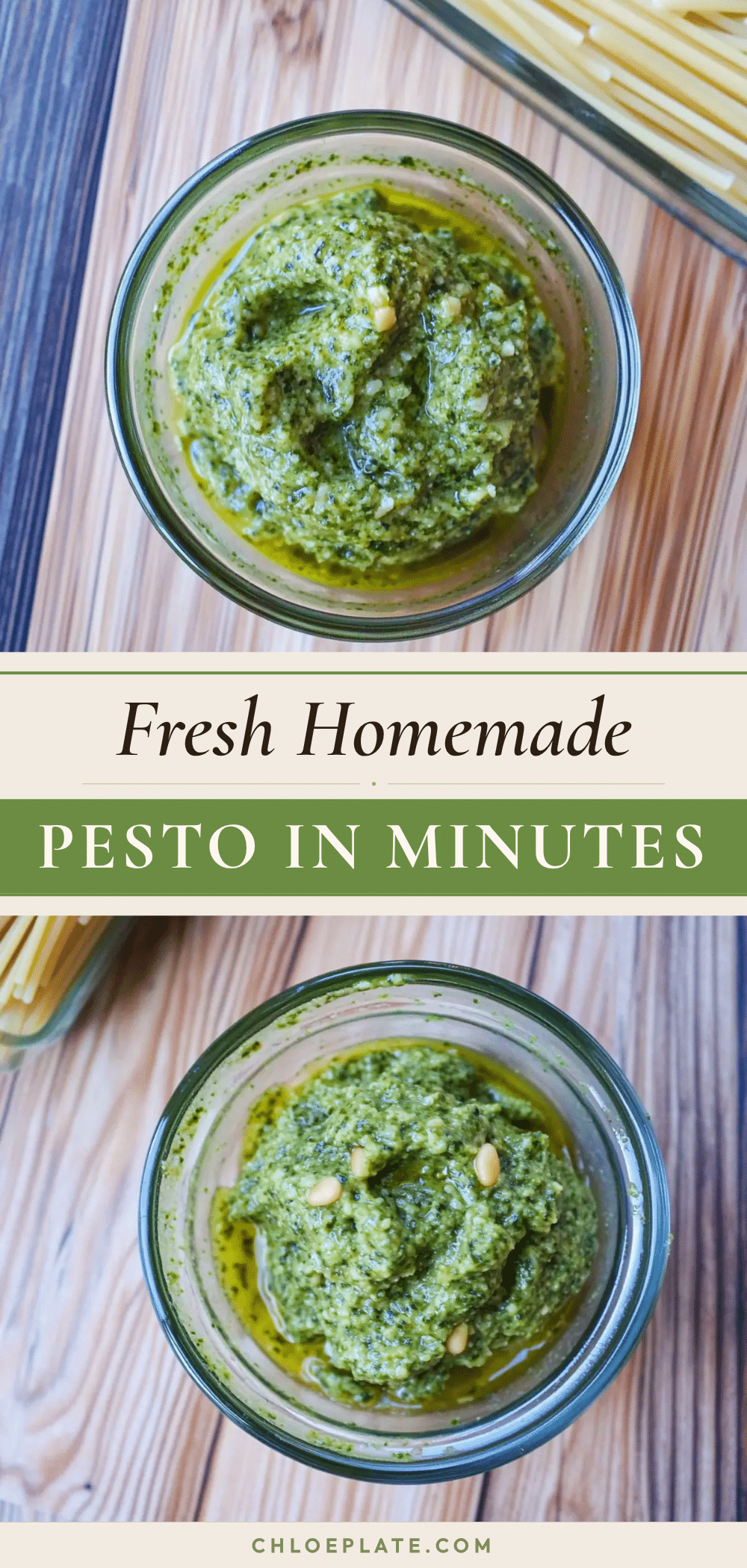
Fresh Homemade Pesto in Minutes – Best Easy Recipe
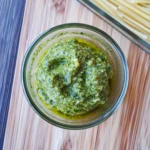
This fresh homemade pesto comes together in under 10 minutes with simple ingredients like basil, pine nuts, Parmesan, and olive oil. It’s brighter and more flavorful than store-bought versions, perfect for busy weeknights or impressing guests.
- Prep Time: 10 minutes
- Cook Time: 0 minutes
- Total Time: 10 minutes
- Yield: 4 servings 1x
- Category: Sauce
- Cuisine: Italian
Ingredients
- 2 cups fresh basil leaves, packed
- 1/3 cup pine nuts
- 1/2 cup freshly grated Parmesan cheese
- 1/4 cup freshly grated Pecorino Romano cheese
- 2–3 cloves fresh garlic, peeled
- 1/2 cup extra virgin olive oil
- 1/2 teaspoon sea salt
- 1/4 teaspoon black pepper, freshly ground
- 1 tablespoon fresh lemon juice (optional but recommended)
Instructions
- Toast the pine nuts (optional but recommended): Place the pine nuts in a dry small skillet over medium heat. Shake the pan frequently and cook for 2-3 minutes until they become fragrant and just barely golden. Immediately transfer to a plate to cool.
- Prep your ingredients: Wash and thoroughly dry the basil leaves. Peel the garlic cloves. Grate your cheeses if you haven’t already.
- Combine the dry ingredients: Add the cooled pine nuts, garlic cloves, and salt to the food processor bowl. Pulse 5-6 times until everything is roughly chopped.
- Add the basil: Add the packed basil leaves on top of the nut mixture. Pulse another 5-6 times until the basil is finely chopped and starting to look like a coarse paste.
- Add the cheeses: Sprinkle the Parmesan and Pecorino Romano over the basil mixture. Pulse 3-4 times to combine.
- Stream in the olive oil: With the food processor running on low, slowly drizzle in the olive oil through the feed tube. Let it run for about 20-30 seconds until the pesto is smooth and emulsified.
- Finish with lemon juice and pepper: Add the lemon juice and black pepper. Pulse once or twice just to combine. Taste and adjust seasoning.
- Scrape and serve: Use your rubber spatula to scrape every last bit of pesto out of the bowl. Serve immediately over pasta, spread on sandwiches, or use as a dip.
Notes
Toast pine nuts lightly for deeper flavor. Dry basil thoroughly to avoid watery pesto. Use room temperature ingredients. Start with 2 cloves of garlic and adjust to taste. Don’t over-process; leave some texture. Pesto freezes well in ice cube trays for up to 3 months.
Nutrition
- Serving Size: 2 tablespoons
- Calories: 180
- Sodium: 220
- Fat: 18
- Saturated Fat: 3
- Carbohydrates: 2
- Fiber: 1
- Protein: 4
Keywords: pesto, homemade pesto, fresh pesto, basil pesto, easy pesto recipe, quick pesto, Italian sauce