Love this? Save it for later!
Share the inspiration with your friends
The jar sat on my counter for three days before I finally tasted it. I had made the vinaigrette on a whim—a handful of cherry tomatoes about to turn, a bunch of basil that looked a little sad, and a bottle of good olive oil I was saving for “something special.” Honestly, I almost poured it down the sink. I mean, tomato in a dressing? That felt weird. But then I remembered a salad I had at a tiny café last summer, the kind where you take a bite and stop talking because the flavors are doing something. So I grabbed a fork, dipped a piece of bread, and—yeah. That was the moment. It tasted like summer in a jar, bright and herby and just rich enough. Not at all what I expected. This fresh tomato basil vinaigrette became the thing I reached for every day that week, drizzling it on everything from crunchy greens to roasted veggies. It’s funny how the simplest recipes often end up being the ones you can’t stop making. This dressing is proof that a few humble ingredients, when treated right, can turn into something you genuinely crave.
Why You’ll Love This Recipe
I’ve tested a lot of vinaigrettes over the years, and most fall into two camps: too acidic or too oily. This one hits the sweet spot. The tomato adds a natural sweetness and body that balances the vinegar perfectly, while fresh basil brings a pop of flavor that bottled stuff just can’t match. Here’s why this recipe works:
- Ready in 5 minutes flat — No chopping, no heating, just toss everything in a blender or jar and shake.
- Simple, real ingredients — You probably have most of them right now. No weird additives or hard-to-find oils.
- Perfect for summer produce — Use up those ripe tomatoes and basil from your garden or farmers market before they go bad.
- Incredibly versatile — It works as a salad dressing, a marinade for chicken or tofu, or even a drizzle over grilled veggies or crusty bread.
- Naturally vegan and gluten-free — No dairy, no gluten, no fuss. Everyone can enjoy it.
What makes this vinaigrette different from the rest? It’s the texture. The tomato breaks down into a velvety base that clings to every leaf, so you don’t need a ton of oil to get good coverage. And the basil? It’s not just a garnish here—it’s the star. I’ve made this with dried basil in a pinch, and while it’s okay, fresh basil is where the magic happens. Trust me on this one.
What Ingredients You Will Need
This recipe uses simple, everyday ingredients that come together in a way that feels almost magical. The tomato provides the body, the basil brings the freshness, and the vinegar and oil do their classic dance. Here’s what you’ll need:
- 1 large ripe tomato (or 1 cup cherry tomatoes), roughly chopped — The riper, the better. A super-ripe tomato gives the vinaigrette a natural sweetness and a gorgeous red-orange color. If your tomato is a bit firm, that’s fine—just add a pinch of sugar to balance the acidity.
- 1/4 cup fresh basil leaves, packed — Go for the leaves, not the stems. I like to use sweet basil, but Thai basil works too if you want a slightly spicier kick. If you’re in a pinch, 1 tablespoon of dried basil can work, but the fresh stuff really shines here.
- 1/4 cup extra-virgin olive oil — Use a good-quality one here since it’s a main flavor. I prefer a fruity, not-too-peppery oil for this dressing. California Olive Ranch is my go-to for reliable flavor.
- 2 tablespoons red wine vinegar — Red wine vinegar has a mellow acidity that pairs beautifully with tomatoes. White wine vinegar or apple cider vinegar also work in a pinch.
- 1 teaspoon Dijon mustard — This helps emulsify the dressing so it stays creamy instead of separating. It also adds a tiny tangy kick. Grey Poupon is my favorite for its smooth texture.
- 1/2 teaspoon salt — I use fine sea salt. Adjust to your taste depending on how salty your other ingredients are.
- 1/4 teaspoon black pepper — Freshly ground is best, but pre-ground works too.
- 1/2 teaspoon sugar (optional) — If your tomato isn’t super sweet, a pinch of sugar balances the acidity. I usually skip it in peak summer when tomatoes are at their best.
Equipment Needed
You don’t need much for this recipe, which is part of its charm. Here’s what I use:
- Blender or food processor — A small blender (like a NutriBullet) works perfectly for a single batch. If you don’t have one, a jar with a tight-fitting lid works too—just chop the tomato and basil very finely before shaking.
- Measuring cups and spoons — For accuracy, especially with the oil and vinegar. Eyeballing works if you’re experienced, but measuring helps maintain balance.
- Sharp knife and cutting board — For chopping the tomato and basil. A dull knife will bruise the basil, so keep it sharp.
- Fine-mesh strainer (optional) — If you want a super-smooth dressing, strain it after blending to remove any tomato seeds or basil bits. I usually skip this step because I like a little texture.
- Glass jar or bottle for storage — A mason jar works great. I use a 16-ounce Weck jar for easy pouring.
Preparation Method
Making this vinaigrette is almost embarrassingly easy. Here’s how I do it:
- Prep your ingredients — Wash and dry the tomato and basil. Roughly chop the tomato into chunks—no need to be precise since it’s going in the blender. Remove any thick basil stems and roughly tear the leaves.
- Combine in the blender — Add the chopped tomato, basil leaves, red wine vinegar, Dijon mustard, salt, pepper, and sugar (if using) to your blender or food processor. Pulse a few times to break everything down.
- Stream in the oil — With the blender running on low, slowly drizzle in the olive oil through the opening in the lid. This helps create a creamy emulsion that won’t separate as quickly. If you’re using a jar, add all ingredients except the oil, shake well, then add the oil and shake again vigorously.
- Blend until smooth — Blend for about 30 seconds to 1 minute, until the vinaigrette is smooth and vibrant. If it looks too thick, add a tablespoon of water and blend again. If it’s too thin, add a few more basil leaves.
- Taste and adjust — Dip a piece of lettuce or a bread crust in and taste. Does it need more salt? A splash more vinegar? A pinch of sweetness? Adjust accordingly. I usually end up adding a tiny bit more basil because I love the flavor.
- Strain (optional) — If you want a perfectly smooth dressing, pour it through a fine-mesh strainer into your storage jar. Press on the solids with a spoon to extract all the liquid. I usually skip this—the little bits of tomato and basil add character.
- Let it rest — Here’s the trick I learned by accident: let the vinaigrette sit at room temperature for about 15 minutes before using. The flavors meld together and the tomato sweetness really comes through. If you’re in a rush, it’s still delicious right away.
Pro tip from my kitchen to yours: If you’re using cherry tomatoes, don’t bother chopping them—just toss them in whole. The blender does the work for you, and it saves a step.
Cooking Tips & Techniques
I’ve made this vinaigrette at least a dozen times now, and I’ve learned a few things along the way. Here are my best tips for getting it right every time:
- Use room-temperature ingredients — Cold olive oil can make the emulsion break. If your oil is straight from the fridge, let it sit out for 10 minutes before blending. Same goes for the tomato—a cold tomato won’t blend as smoothly.
- Don’t over-blend the basil — Basil can turn bitter if you blend it too long or at too high a speed. Pulse it a few times at the end rather than running the blender on high for a full minute. You want flecks of green, not a brownish paste.
- Emulsify properly — The Dijon mustard is your friend here. It helps the oil and vinegar stay together. If you’re making this by hand in a jar, shake it like you mean it—at least 30 seconds of vigorous shaking.
- Season in layers — Add salt and pepper at the beginning, then taste at the end. Tomatoes vary wildly in sweetness and acidity, so you might need to adjust. I once used a super-sweet heirloom tomato and ended up adding an extra splash of vinegar to balance it.
- Make it ahead — This dressing actually gets better after a few hours in the fridge. The flavors deepen and meld together. Just remember to bring it to room temperature and shake well before using, as the olive oil will solidify slightly when cold.
One time I forgot the mustard entirely and ended up with a dressing that separated into a sad oily layer on top. It still tasted fine, but it wasn’t as pretty. So don’t skip the mustard—it’s doing more work than you think.
Variations & Adaptations
This vinaigrette is a great base for all kinds of tweaks. Here are some of my favorite variations:
- Roasted tomato version — For a deeper, smokier flavor, roast the tomato at 400°F for 20 minutes before blending. Let it cool slightly before adding it to the blender. This is amazing in the winter when fresh tomatoes aren’t at their peak.
- Herb swap — Replace the basil with fresh oregano, thyme, or a mix of parsley and chives. Each herb changes the personality of the dressing completely. Oregano gives it a Greek salad vibe, while parsley keeps it bright and fresh.
- Spicy kick — Add a small pinch of red pepper flakes or half a jalapeño (seeds removed) to the blender. It adds warmth without overwhelming the tomato and basil. I love this version on grilled chicken or fish.
- Creamy twist — Add 2 tablespoons of plain Greek yogurt or a spoonful of vegan cashew cream for a creamy tomato basil dressing. This turns it into something closer to a ranch-style dressing, perfect for dipping veggies.
- Balsamic swap — Replace the red wine vinegar with balsamic vinegar for a sweeter, more complex flavor. Balsamic and tomato are a classic pairing, and the result is almost like a tomato jam in dressing form.
I once made a version with sun-dried tomatoes instead of fresh, and it was incredible—intense and almost umami-rich. Just rehydrate them in hot water for 10 minutes first, then blend. That version is amazing on a lentil meatball bowl or drizzled over roasted vegetables.
Serving & Storage Suggestions
This vinaigrette is incredibly versatile. Here’s how I like to use it and keep it fresh:
- Serving temperature — Serve at room temperature for the best flavor and texture. If it’s been in the fridge, let it sit out for 15-20 minutes and give it a good shake before using.
- Salad ideas — It’s perfect on a classic garden salad with cucumbers, red onion, and feta cheese. It also shines on a crunchy cabbage and edamame salad or drizzled over sliced heirloom tomatoes with fresh mozzarella.
- Beyond salads — Use it as a marinade for chicken, fish, or tofu (marinate for 30 minutes to 2 hours). Drizzle it over grilled vegetables, roasted potatoes, or even crusty bread for a quick bruschetta topping. I’ve also used it as a sauce for grain bowls—try it on a BBQ chicken grain bowl for a fresh twist.
- Storage — Keep in an airtight glass jar in the refrigerator for up to 5 days. The flavors will meld and deepen over time. Don’t freeze it—the emulsion will break and the texture will be watery when thawed.
- Reheating — No need to reheat! Just bring it to room temperature and shake well. If the oil has solidified, run the jar under warm water for a minute or two, then shake.
The flavors actually get better after a day in the fridge. The tomato and basil have time to really get to know each other, so I often make a double batch on Sunday and use it all week long.
Nutritional Information & Benefits
This vinaigrette is as wholesome as it is delicious. Here’s the estimated nutrition per 2-tablespoon serving (based on 8 servings per batch):
- Calories: 80
- Fat: 7g (mostly heart-healthy olive oil)
- Carbohydrates: 3g
- Fiber: 1g
- Sugar: 2g (natural from tomatoes)
- Protein: 1g
- Sodium: 150mg
The star ingredient here is the tomato, which is packed with lycopene—a powerful antioxidant linked to heart health and reduced inflammation. Cooking tomatoes actually increases lycopene absorption, but since this dressing uses raw tomatoes, you still get plenty of vitamin C and potassium. The olive oil adds healthy monounsaturated fats that help your body absorb the fat-soluble vitamins from your salad greens. And fresh basil? It’s not just for flavor—it contains essential oils with anti-inflammatory properties and a good dose of vitamin K. This dressing is naturally vegan, gluten-free, and dairy-free, making it a great option for almost any dietary preference.
Conclusion
Honestly, I never expected a five-minute blender recipe to become a staple in my kitchen. But this fresh tomato basil vinaigrette just works. It’s bright without being harsh, rich without being heavy, and it makes even a simple bowl of greens feel like something special. The best part? You can tweak it endlessly based on what you have in your fridge. Use yellow tomatoes for a sweeter, milder dressing. Add a clove of garlic for a punchier version. Swap the basil for mint and pair it with watermelon and feta. The possibilities are endless, and they all start with this simple base.
I’d love to hear how you make it your own. Drop a comment below and let me know what variations you tried, or tag me in your photos if you share them online. And if you’re looking for more easy, fresh recipes, check out my creamy lemon basil vinaigrette for another quick dressing option that’s perfect for spring and summer. Happy cooking, friends!
Frequently Asked Questions
Can I use dried basil instead of fresh?
Yes, you can substitute dried basil, but the flavor won’t be as bright. Use 1 tablespoon of dried basil instead of 1/4 cup fresh. Let it sit in the vinegar for a few minutes before blending to rehydrate it slightly.
How long does this vinaigrette last in the fridge?
It stays fresh for up to 5 days in an airtight container in the refrigerator. The flavors actually improve after a day or two. Just remember to bring it to room temperature and shake well before using.
Can I make this without a blender?
Absolutely! Finely chop the tomato and basil, then add all ingredients to a jar with a tight-fitting lid. Shake vigorously for at least 30 seconds until emulsified. The texture will be chunkier, but it’s still delicious.
What if my dressing separates in the fridge?
That’s completely normal—olive oil solidifies when cold. Just let the jar sit at room temperature for 15-20 minutes, then shake it well. The Dijon mustard helps it come back together easily.
Can I use this as a marinade?
Yes! This vinaigrette makes an excellent marinade for chicken, fish, tofu, or vegetables. Marinate for 30 minutes to 2 hours in the refrigerator before cooking. The acid in the vinegar helps tenderize while the oil keeps things moist.
Pin This Recipe!
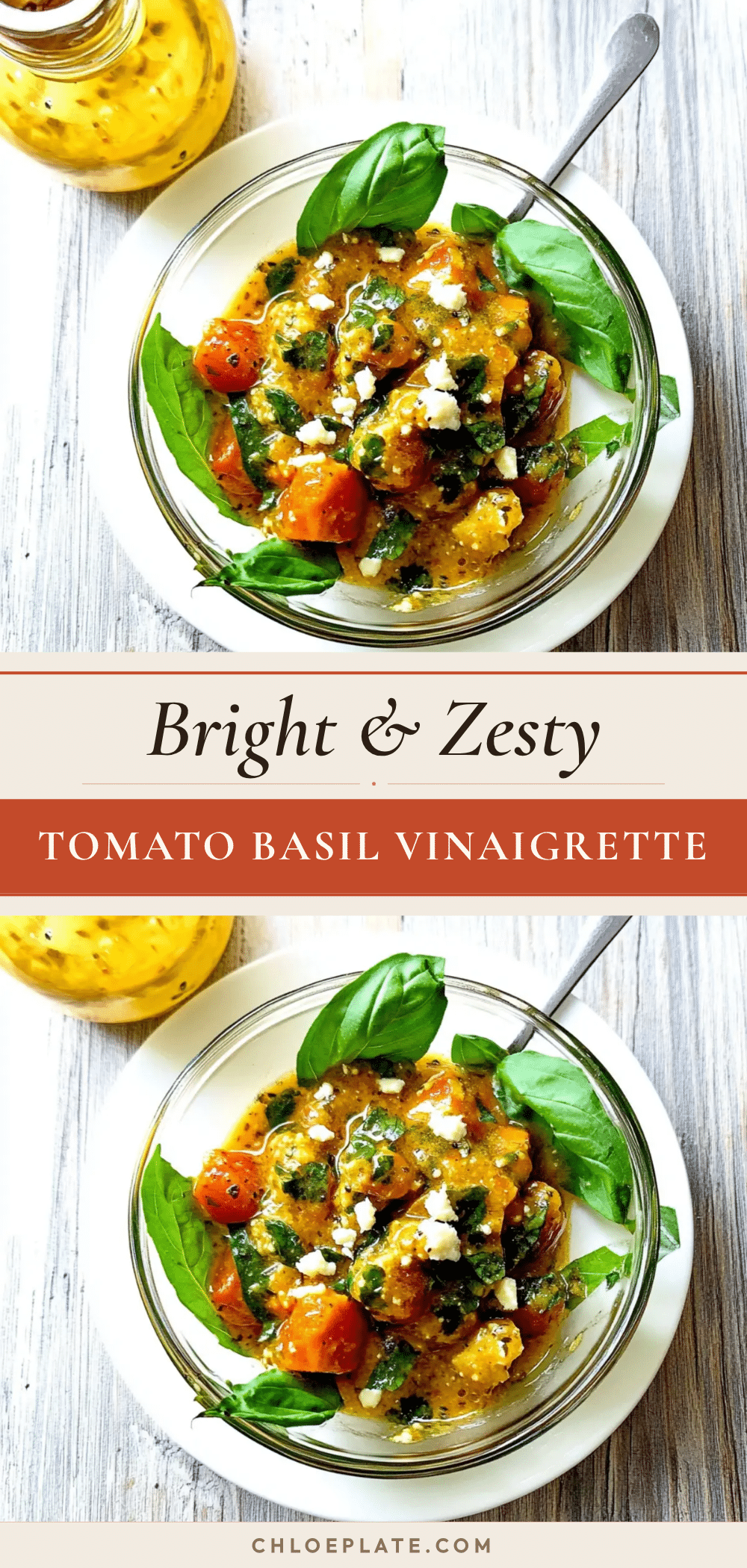
Fresh Tomato Basil Vinaigrette: Easy Homemade Dressing Recipe
This fresh tomato basil vinaigrette is a bright, herby, and rich dressing made with simple ingredients. Ready in 5 minutes, it’s perfect for salads, marinades, or drizzling over roasted veggies.
- Prep Time: 5 minutes
- Cook Time: 0 minutes
- Total Time: 5 minutes
- Yield: 8 servings 1x
- Category: Dressing
- Cuisine: American
Ingredients
- 1 large ripe tomato (or 1 cup cherry tomatoes), roughly chopped
- 1/4 cup fresh basil leaves, packed
- 1/4 cup extra-virgin olive oil
- 2 tablespoons red wine vinegar
- 1 teaspoon Dijon mustard
- 1/2 teaspoon salt
- 1/4 teaspoon black pepper
- 1/2 teaspoon sugar (optional)
Instructions
- Prep your ingredients: Wash and dry the tomato and basil. Roughly chop the tomato into chunks. Remove any thick basil stems and roughly tear the leaves.
- Combine in the blender: Add the chopped tomato, basil leaves, red wine vinegar, Dijon mustard, salt, pepper, and sugar (if using) to your blender or food processor. Pulse a few times to break everything down.
- Stream in the oil: With the blender running on low, slowly drizzle in the olive oil through the opening in the lid. This helps create a creamy emulsion.
- Blend until smooth: Blend for about 30 seconds to 1 minute, until the vinaigrette is smooth and vibrant. If it looks too thick, add a tablespoon of water and blend again. If it’s too thin, add a few more basil leaves.
- Taste and adjust: Dip a piece of lettuce or a bread crust in and taste. Adjust salt, vinegar, or sweetness as needed.
- Strain (optional): If you want a perfectly smooth dressing, pour it through a fine-mesh strainer into your storage jar. Press on the solids with a spoon to extract all the liquid.
- Let it rest: Let the vinaigrette sit at room temperature for about 15 minutes before using. The flavors meld together and the tomato sweetness really comes through.
Notes
Use room-temperature ingredients for best emulsion. Don’t over-blend the basil to avoid bitterness. The dressing gets better after a few hours in the fridge. Bring to room temperature and shake well before using.
Nutrition
- Serving Size: 2 tablespoons
- Calories: 80
- Sugar: 2
- Sodium: 150
- Fat: 7
- Saturated Fat: 1
- Carbohydrates: 3
- Fiber: 1
- Protein: 1
Keywords: tomato basil vinaigrette, homemade dressing, easy vinaigrette, fresh tomato dressing, basil vinaigrette, vegan dressing, gluten-free dressing