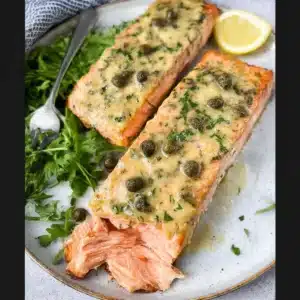
Love this? Save it for later!
Share the inspiration with your friends
“Wait, you made this? In twenty minutes?” My neighbor Jenna stood at my door, fork in hand, looking at the piece of salmon on her plate like it had just performed a magic trick. I had knocked on her door with an extra fillet and a half-apologetic smile, explaining I’d made too much for a Tuesday night. She took a bite, and I watched her eyebrows do that little lift they do when something tastes way better than expected. “Okay, you have to tell me what you put on this,” she said, already taking another bite.
The truth is, I almost didn’t make it that night. I had a long day, the kind where you stare into the fridge hoping dinner will assemble itself. Salmon was thawed, but I was tired. I wanted something that felt special but required almost no effort. That’s when I remembered a little trick a chef friend once mentioned—a quick Dijon coating that creates a golden, tangy crust without any marinating or fuss. I whisked it together, spread it on, and popped the fillets in the oven.
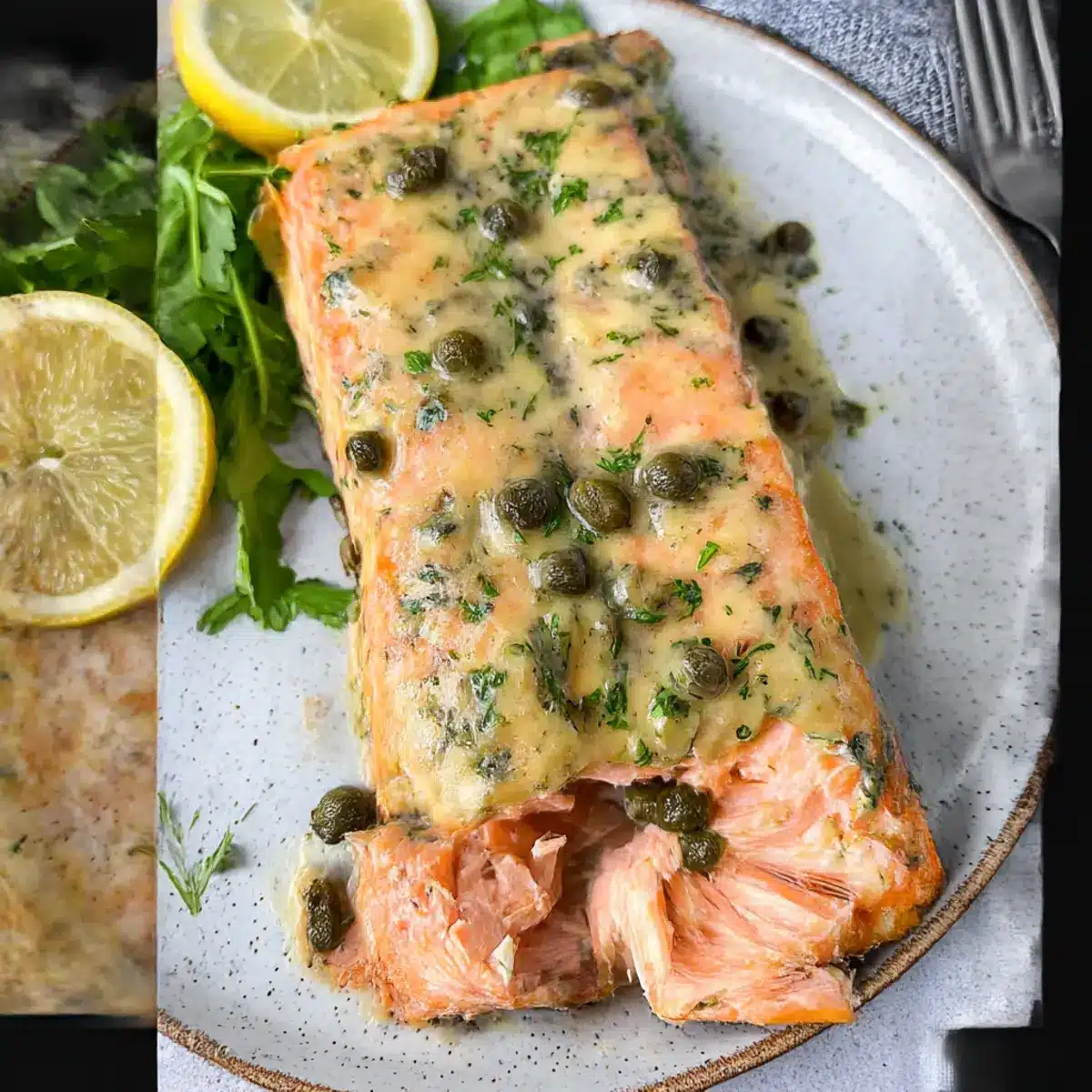
What came out was, honestly, a little ridiculous. The fish was flaky, tender, and that mustard coating had caramelized into something savory and slightly sweet. It tasted like a restaurant meal, but I’d barely dirtied a bowl. That night, I texted Jenna the recipe before she even asked. This Quick Baked Dijon Salmon has been in heavy rotation ever since. It’s the kind of dinner that rescues a tired weeknight, and it makes you look like you have your life together—even if you’re wearing sweatpants.
Why You’ll Love This Recipe
This isn’t just another salmon recipe. It’s the one I’ve tested on picky eaters, busy friends, and even someone who swore they didn’t like fish. Every single time, the plate came back clean. Here’s what makes it stand out:
- Quick & Easy: From fridge to table in 20 minutes flat. No marinating, no complicated steps, no stress.
- Simple Ingredients: You probably have Dijon mustard, honey, and garlic in your kitchen right now. No fancy grocery run required.
- Perfect for Busy Weeknights: This is the dinner you make when you’re short on time but still want something that feels nourishing and satisfying.
- Crowd-Pleaser: The tangy-sweet glaze appeals to both adults and kids. I’ve served it to guests who asked for the recipe before dessert.
- Unbelievably Delicious: The combination of creamy Dijon, a touch of honey, and flaky salmon creates a flavor that’s both bold and comforting.
What makes this version different from others? It’s the balance. Some recipes make the mustard too sharp or the glaze too sweet. I’ve spent time tweaking the ratios so the Dijon adds warmth without overpowering the salmon’s natural richness. The result is a perfectly seasoned fillet that tastes like it took far more effort than it actually did. It’s the kind of meal that makes you close your eyes after the first bite—and that’s coming from someone who eats salmon at least twice a week.
What Ingredients You Will Need
This recipe uses simple, pantry-friendly ingredients to deliver big flavor without the hassle. Each component plays a specific role in creating that golden, flaky result.
- Salmon Fillets (4 fillets, about 6 oz each): Look for fillets that are similar in thickness so they cook evenly. I prefer wild-caught when possible, but farm-raised works beautifully too. Pat them dry with paper towels before seasoning—this helps the glaze stick and promotes better browning.
- Dijon Mustard (3 tablespoons): This is the star of the show. Dijon adds a creamy, tangy depth that regular yellow mustard just can’t match. I recommend Maille or Grey Poupon for consistent flavor. Don’t use whole-grain mustard here unless you want a different texture.
- Honey (2 tablespoons): Just enough sweetness to balance the mustard’s bite. It also helps create that beautiful caramelized crust. If your honey is crystallized, warm it slightly in the microwave.
- Olive Oil (1 tablespoon): Helps the glaze spread smoothly and keeps the salmon moist during baking. Extra virgin is fine, but a light olive oil works just as well.
- Garlic (2 cloves, minced): Fresh garlic is key here. It adds a savory punch that blends perfectly with the mustard. Avoid jarred minced garlic—it tends to be watery and less flavorful.
- Lemon Juice (1 tablespoon, fresh): A squeeze of acidity brightens the whole dish. Bottled lemon juice works in a pinch, but fresh makes a noticeable difference.
- Salt and Black Pepper (to taste): Keep it simple. I use kosher salt and freshly ground black pepper for the best flavor.
- Fresh Dill or Parsley (for garnish, optional): A sprinkle of fresh herbs adds a pop of color and freshness. Dill pairs beautifully with salmon, but parsley works great too.
Ingredient Tips: For the best texture, let your salmon sit at room temperature for about 10 minutes before baking. This helps it cook more evenly. If you don’t have Dijon mustard, you can substitute with spicy brown mustard, though the flavor will be slightly different. For a low-sugar option, use a sugar-free honey substitute or maple syrup.
Equipment Needed
You don’t need a fully stocked kitchen to pull this off. Here’s what you’ll need:
- Baking Sheet or Oven-Safe Dish: A rimmed baking sheet works perfectly. I like lining mine with parchment paper for easy cleanup.
- Small Mixing Bowl: For whisking together the Dijon glaze.
- Whisk or Fork: To combine the glaze ingredients smoothly.
- Pastry Brush or Spoon: For spreading the glaze over the salmon. A spoon works just fine if you don’t have a brush.
- Instant-Read Thermometer (optional but helpful): Salmon is perfectly cooked at 125°F to 130°F for medium. This takes the guesswork out of doneness.
- Aluminum Foil or Parchment Paper: Lining your pan makes cleanup a breeze. I prefer parchment for non-stick results.
If you don’t have a baking sheet, a cast-iron skillet works beautifully. Just make sure it’s oven-safe. I’ve even used a glass baking dish in a pinch—just keep an eye on cooking time since glass can heat differently.
Preparation Method
- Preheat your oven to 400°F (200°C). Line a baking sheet with parchment paper or aluminum foil for easy cleanup. Let the oven fully preheat before you put the salmon in—this ensures even cooking.
- Prepare the salmon. Pat the fillets dry with paper towels. This step is important because excess moisture can prevent the glaze from sticking and steaming the fish instead of roasting it. Place the fillets skin-side down on the prepared baking sheet, spacing them about an inch apart.
- Season the fillets. Sprinkle both sides lightly with salt and black pepper. Don’t overdo it—the Dijon glaze adds plenty of flavor. I usually use about ¼ teaspoon of salt per fillet.
- Make the Dijon glaze. In a small bowl, whisk together the Dijon mustard, honey, olive oil, minced garlic, and fresh lemon juice. Whisk until the mixture is smooth and well combined. It should look like a thick, creamy sauce. Taste it and adjust if needed—add a little more honey if you prefer sweeter, or more mustard if you like it tangier.
- Spread the glaze. Using a pastry brush or the back of a spoon, spread an even layer of the glaze over the top of each salmon fillet. Don’t worry about coating the sides or bottom—the top is where all the magic happens. Reserve any extra glaze for brushing on after baking.
- Bake the salmon. Place the baking sheet in the preheated oven and bake for 10 to 12 minutes, depending on the thickness of your fillets. For fillets that are about 1 inch thick, 11 minutes is usually perfect. The salmon is done when it flakes easily with a fork and the internal temperature reaches 125°F to 130°F for medium. The glaze should be bubbly and slightly caramelized on top.
- Optional broil for extra color. If you want a deeper golden crust, switch your oven to broil for the last 1 to 2 minutes of cooking. Watch it closely—broilers vary in intensity, and you don’t want to burn the glaze. I’ve done this many times and it adds a lovely crispy edge.
- Rest and serve. Remove the salmon from the oven and let it rest on the baking sheet for 2 to 3 minutes. This allows the juices to redistribute, keeping the fish moist. If you reserved extra glaze, brush it on now while the salmon is still warm. Garnish with fresh dill or parsley if desired.
Cooking Tips & Techniques
Over the many times I’ve made this Quick Baked Dijon Salmon, I’ve learned a few things the hard way. Here are my best tips for getting it right every time.
Don’t overcook the salmon. This is the number one mistake. Salmon goes from perfectly flaky to dry and chalky in about two minutes. I always set my timer for 10 minutes and check early. If you don’t have a thermometer, look for the flakes to separate easily when you press gently with a fork. The center should still be slightly translucent when you take it out—it will continue cooking from residual heat.
Let the salmon come to room temperature. I know it’s tempting to throw cold fillets straight into the oven, but letting them sit out for 10 minutes helps them cook more evenly. Cold salmon can end up overcooked on the outside and raw in the middle.
Use a light hand with the glaze. It’s easy to go overboard, but a thick layer of glaze can make the top soggy instead of caramelized. A thin, even coating is all you need. Trust me—I learned this after a few gloppy attempts.
Line your pan. The glaze can stick and burn onto your baking sheet, making cleanup a nightmare. Parchment paper or foil is your friend here. I always double-check that I have some before I start.
Experiment with resting time. I used to skip the resting step, but now I swear by it. That two-minute rest makes a noticeable difference in moisture. It’s a small pause that pays off big.
Variations & Adaptations
This recipe is wonderfully flexible. Here are a few ways I’ve adapted it depending on what I have on hand or who I’m cooking for.
- Herb-Crusted Version: Add a tablespoon of chopped fresh dill or thyme to the glaze. The herbs infuse the salmon with a bright, garden-fresh flavor. I love this variation in the spring.
- Spicy Kick: Stir in ½ teaspoon of red pepper flakes or a teaspoon of sriracha to the glaze. The heat balances beautifully with the honey and mustard. My husband requests this version every time.
- Low-Carb or Keto-Friendly: Swap the honey for a sugar-free alternative like monk fruit syrup or allulose. The glaze will still caramelize nicely without the carbs. I’ve tested this with friends on keto diets and they gave it two thumbs up.
- Parmesan Topping: After spreading the glaze, sprinkle a tablespoon of grated Parmesan cheese over each fillet. Bake as directed. The cheese forms a crispy, savory crust that’s absolutely addictive.
- Lemon-Dill Variation: Increase the lemon juice to 2 tablespoons and add 1 teaspoon of dried dill to the glaze. This makes the salmon taste brighter and more herbaceous. Pair it with a side of roasted asparagus for a complete meal.
I once made a maple-mustard version by substituting the honey with pure maple syrup. It was fantastic—slightly earthier and perfect for fall. Don’t be afraid to play with the ratios. Cooking is about making a recipe your own.
Serving & Storage Suggestions
This salmon is versatile enough to pair with almost anything. Here’s how I like to serve and store it.
Serving: Serve the salmon warm, right after resting. It pairs beautifully with a simple side of steamed green beans, roasted broccoli, or a fresh green salad. I often make a batch of fresh grilled chicken salad with easy blueberry vinaigrette on the side for a light, refreshing contrast. For a heartier meal, serve it over fluffy rice, quinoa, or alongside savory green beans with bacon and garlic. A squeeze of lemon over the top right before serving brightens everything up.
Storage: Leftover salmon keeps well in an airtight container in the refrigerator for up to 3 days. The flavor actually deepens slightly overnight as the glaze continues to meld with the fish. I wouldn’t recommend freezing cooked salmon—the texture can become watery and less flaky when thawed.
Reheating: The best way to reheat is in a low oven (300°F) for about 5 to 7 minutes, or until just warmed through. You can also reheat it in a skillet over medium-low heat with a splash of water or lemon juice to add moisture. Avoid the microwave if possible—it tends to dry out the fish and make the glaze rubbery. If you’re in a hurry, a quick 20-second zap works, but keep an eye on it.
I’ve also flaked leftover salmon into a salad or tossed it with pasta for a quick lunch. It’s almost better the next day, honestly.
Nutritional Information & Benefits
Here’s an approximate nutritional breakdown for one serving (one fillet with glaze):
- Calories: 320
- Protein: 34g
- Fat: 18g (including healthy omega-3s)
- Carbohydrates: 9g
- Fiber: 0g
- Sugar: 8g (from honey)
Salmon is packed with omega-3 fatty acids, which are fantastic for heart health and reducing inflammation. The Dijon mustard and garlic add antioxidants, while the honey provides a natural energy boost. This recipe is naturally gluten-free and can be made low-carb with a simple sweetener swap.
I love that this meal feels indulgent but is actually incredibly good for you. It’s proof that healthy eating doesn’t have to be boring or complicated. If you’re watching your sodium, you can reduce the added salt or use a low-sodium seasoning blend. As always, consult your nutritionist for specific dietary needs.
Conclusion
This Quick Baked Dijon Salmon has become my go-to for busy nights, last-minute guests, and any time I want a meal that feels special without the effort. It’s proof that a handful of simple ingredients can come together to create something truly memorable. The tangy, caramelized glaze, the flaky, tender fish—it’s comfort food that’s good for you, too.
I hope you give this recipe a try and make it your own. Maybe you’ll add a little extra garlic, a squeeze of lemon, or a sprinkle of fresh herbs. That’s the beauty of cooking—you get to tweak and experiment until it’s perfect for you. I’d love to hear how it turns out! Drop a comment below, share your photos, or tag me on social media. Your kitchen adventures make my day.
Until next time, happy cooking—and don’t forget to save this recipe for those nights when you need a delicious win in under 20 minutes.
Frequently Asked Questions
Can I use frozen salmon for this recipe?
Yes, you can! Just make sure to thaw the fillets completely in the refrigerator overnight before cooking. Pat them dry thoroughly to remove excess moisture, as frozen salmon tends to release more water. The baking time may increase by a minute or two.
What can I use instead of Dijon mustard?
Spicy brown mustard or whole-grain mustard are the best substitutes. Yellow mustard will work in a pinch, but the flavor will be less complex. For a completely different twist, you can use stone-ground mustard with a pinch of extra garlic.
How do I know when the salmon is fully cooked?
The easiest way is to use an instant-read thermometer—125°F to 130°F for medium. If you don’t have one, gently press the top of the fillet with a fork. The flesh should flake easily and look opaque all the way through. The center should still be slightly translucent when you take it out, as it will continue cooking from residual heat.
Can I make this recipe ahead of time?
You can prepare the glaze up to 3 days in advance and store it in the refrigerator. When you’re ready to cook, simply spread the glaze on the salmon and bake. The cooked salmon is best fresh, but leftovers keep well for up to 3 days in the fridge.
What sides go best with this salmon?
This salmon pairs beautifully with roasted vegetables like asparagus or broccoli, a fresh green salad, or a simple grain like quinoa or rice. I also love serving it with easy one-pan chicken and rice with black beans for a complete, satisfying meal. A squeeze of lemon over the top right before serving brightens everything up.
Pin This Recipe!
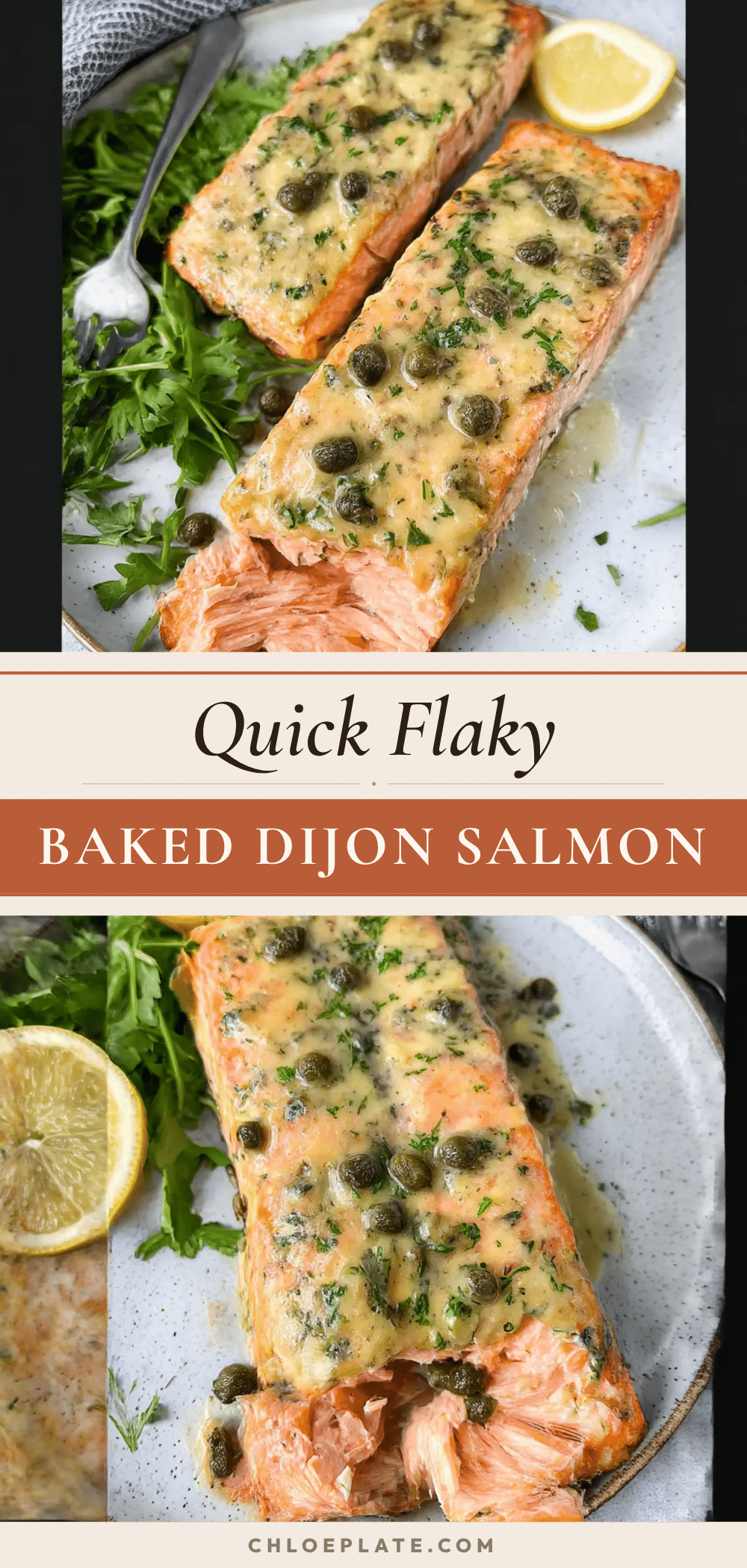
Best Quick Baked Dijon Salmon Recipe Ready in 20 Minutes

This Quick Baked Dijon Salmon is a 20-minute weeknight wonder featuring a tangy-sweet Dijon glaze that caramelizes into a golden crust. Perfect for busy nights, it’s flaky, tender, and made with simple pantry ingredients.
- Prep Time: 5 minutes
- Cook Time: 12 minutes
- Total Time: 20 minutes
- Yield: 4 servings 1x
- Category: Main Course
- Cuisine: American
Ingredients
- 4 salmon fillets (about 6 oz each)
- 3 tablespoons Dijon mustard
- 2 tablespoons honey
- 1 tablespoon olive oil
- 2 cloves garlic, minced
- 1 tablespoon fresh lemon juice
- Salt and black pepper to taste
- Fresh dill or parsley for garnish (optional)
Instructions
- Preheat your oven to 400°F (200°C). Line a baking sheet with parchment paper or aluminum foil.
- Pat the salmon fillets dry with paper towels. Place them skin-side down on the prepared baking sheet, spacing about an inch apart.
- Season both sides of the fillets lightly with salt and black pepper.
- In a small bowl, whisk together Dijon mustard, honey, olive oil, minced garlic, and fresh lemon juice until smooth.
- Spread an even layer of the glaze over the top of each salmon fillet using a pastry brush or the back of a spoon. Reserve any extra glaze for after baking.
- Bake for 10 to 12 minutes, depending on thickness, until the salmon flakes easily with a fork and the internal temperature reaches 125°F to 130°F for medium.
- Optional: For a deeper golden crust, switch the oven to broil for the last 1 to 2 minutes, watching closely.
- Remove from the oven and let rest for 2 to 3 minutes. Brush with reserved glaze if desired. Garnish with fresh dill or parsley.
Notes
Let salmon sit at room temperature for 10 minutes before baking for even cooking. Don’t overcook; check early. For a low-carb version, swap honey with a sugar-free alternative. Leftovers keep in the fridge for up to 3 days; reheat in a low oven or skillet.
Nutrition
- Serving Size: 1 fillet with glaze
- Calories: 320
- Sugar: 8
- Sodium: 400
- Fat: 18
- Saturated Fat: 3
- Carbohydrates: 9
- Protein: 34
Keywords: baked salmon, Dijon salmon, quick salmon recipe, weeknight dinner, healthy salmon, easy salmon recipe