Love this? Save it for later!
Share the inspiration with your friends
I was standing in my kitchen staring at a pack of chicken thighs and a bottle of fish sauce that had been lingering in my fridge for weeks. Not because I didn’t know what to do with them. I knew exactly what I wanted. But I was tired. The kind of tired where chopping vegetables feels like a workout and the thought of standing over a stove makes you want to order takeout.
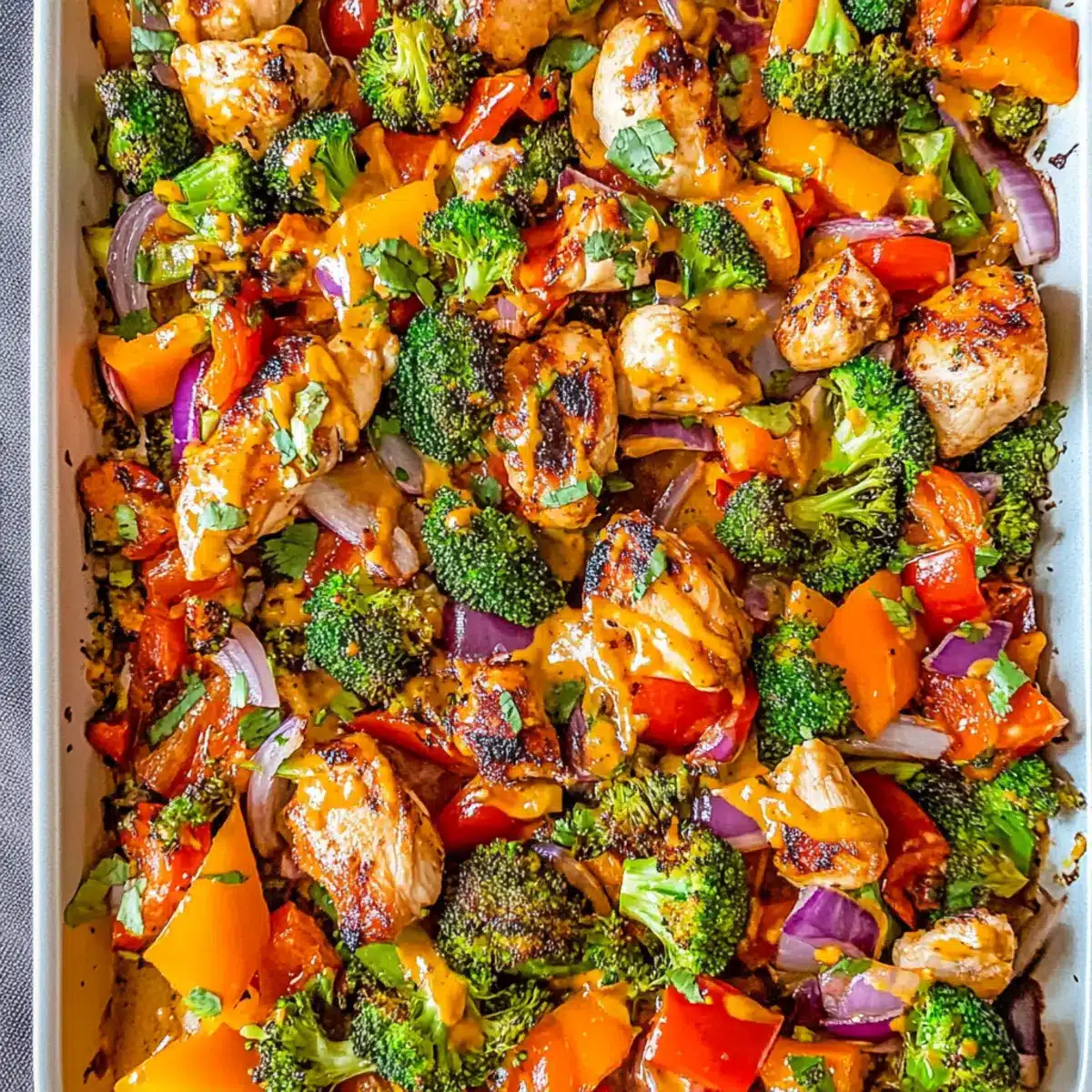
Then I remembered a conversation with my neighbor, Jen, who had mentioned making “that sheet pan Thai thing” the week before. She said it was the only dinner her kids didn’t complain about. I texted her. “What’s in it?” She sent back a blurry photo of a baking tray covered in golden chicken and charred broccoli. “Just dump everything on a pan and roast it” she wrote. That was it. No cryptic instructions. No fuss.
So I tried it. And honestly? It was one of those meals that makes you wonder why you ever bother with complicated recipes. The chicken came out juicy with crispy edges. The broccoli was caramelized and slightly sweet. And the sauce—that sticky, savory, slightly spicy glaze—coated everything in a way that felt like comfort food but tasted like something you’d pay for at a restaurant. I made it three times that month. The first time was an experiment. The second time was proof it wasn’t a fluke. The third time I started tweaking it, adding a little more lime here, a little less sugar there. This is that version. The one I keep coming back to.
Why You’ll Love This Recipe
This sheet pan Thai chicken dinner is the kind of meal that solves the “what’s for dinner” problem without creating a mess in your kitchen. It’s all cooked on one pan, which means minimal cleanup and maximum flavor. Let me tell you why it works so well.
- Quick & Easy : From start to finish, this dinner is ready in about 35 minutes. No marinating required. Just mix the sauce, toss everything on a pan, and let the oven do the heavy lifting.
- Simple Ingredients : You probably already have soy sauce, garlic, and lime juice in your kitchen. The only slightly unusual ingredient is fish sauce, and trust me, it’s worth picking up. It adds that unmistakable savory depth that makes Thai food so addictive.
- Perfect for Busy Weeknights : This is the dinner you make when you’re short on time but still want something that feels special. It’s also great for meal prep because the leftovers reheat beautifully.
- Crowd-Pleaser : I’ve served this to picky eaters, spice-averse friends, and even my dad who claims he doesn’t like “foreign food.” Everyone goes back for seconds. The sweet and savory balance is universally appealing.
- Unbelievably Delicious : The magic happens when the sauce caramelizes on the chicken and vegetables during roasting. You get these sticky, slightly charred edges that are pure flavor bombs. It’s comfort food with a Thai twist.
What makes this recipe different from other sheet pan dinners is the balance of flavors. The fish sauce and soy sauce bring umami. The lime juice and rice vinegar add brightness. The honey and brown sugar provide sweetness that balances the heat from the chili flakes. And the peanut butter? It adds a subtle creaminess that ties everything together. I tested this recipe six times to get the ratios right, and honestly, this version is the one that made me stop tweaking.
What Ingredients You Will Need
This recipe uses simple, wholesome ingredients that come together to create bold, layered flavors. Most of these are pantry staples if you cook Asian-inspired food regularly. Here’s what you’ll need.
For the Thai Peanut Sauce:
- 1/4 cup soy sauce (I prefer low-sodium so I can control the saltiness)
- 3 tablespoons fish sauce (Red Boat is my go-to brand—it’s clean and flavorful)
- 2 tablespoons honey
- 2 tablespoons brown sugar, packed
- 2 tablespoons creamy peanut butter (use natural peanut butter for less sugar)
- 2 tablespoons fresh lime juice (about 1 lime)
- 1 tablespoon rice vinegar
- 3 cloves garlic, minced (about 1 tablespoon)
- 1 tablespoon fresh ginger, grated (or 1 teaspoon ground ginger in a pinch)
- 1-2 teaspoons red pepper flakes (adjust based on your spice tolerance)
- 1 tablespoon vegetable oil
For the Chicken and Vegetables:
- 1.5 pounds boneless, skinless chicken thighs (about 4-6 thighs)
- 2 cups broccoli florets (about 1 medium head)
- 1 red bell pepper, sliced into thin strips
- 1 cup snap peas, trimmed
- 1 small red onion, sliced into wedges
- 2 tablespoons vegetable oil
- Salt and black pepper to taste
For Serving:
- Cooked jasmine rice or brown rice
- Fresh cilantro, chopped
- Chopped peanuts (optional but highly recommended)
- Lime wedges
- Sliced green onions
I recommend using chicken thighs instead of breasts because they stay juicier during roasting. If you only have chicken breasts, reduce the cooking time by about 5 minutes and check for doneness earlier. For the vegetables, feel free to swap in whatever you have on hand. Green beans, zucchini, or even asparagus work great. Just keep in mind that denser vegetables like carrots may need to be cut smaller or par-cooked before adding to the pan.
Equipment Needed
You don’t need much for this recipe, which is part of the appeal. Here’s what you’ll want to have ready.
- Large Sheet Pan : A half-sheet pan (18×13 inches) works perfectly. If you use a smaller pan, the ingredients will be crowded and won’t caramelize properly. I use a rimmed baking sheet to catch any sauce drips.
- Mixing Bowls : One medium bowl for the sauce and one large bowl for tossing the chicken and vegetables.
- Whisk or Fork : For mixing the sauce ingredients together until smooth.
- Chef’s Knife and Cutting Board : For prepping the vegetables and trimming the chicken.
- Tongs : For flipping the chicken and vegetables halfway through cooking. I prefer metal tongs with silicone tips so they don’t scratch my pan.
- Instant-Read Thermometer : Optional but helpful for checking that the chicken reaches 165°F internally. I use a Thermapen and it’s worth every penny.
If you don’t have a sheet pan, you can use a large baking dish or even a cast-iron skillet. Just keep in mind that the cooking time may vary slightly. I’ve also made this on a foil-lined baking sheet for even easier cleanup. Just make sure the foil is crimped around the edges to prevent sauce from leaking onto the pan.
Preparation Method
Follow these steps for perfectly cooked sheet pan Thai chicken every time. I’ve included all the little details that make a difference.
- Preheat your oven to 400°F. Position the rack in the middle of the oven. While the oven heats up, line your sheet pan with parchment paper or aluminum foil for easy cleanup. I prefer parchment because it prevents sticking better than foil.
- Make the Thai peanut sauce. In a medium bowl, whisk together the soy sauce, fish sauce, honey, brown sugar, peanut butter, lime juice, rice vinegar, minced garlic, grated ginger, red pepper flakes, and vegetable oil. Whisk until the peanut butter is fully incorporated and the sauce is smooth. Taste it. It should be salty, sweet, tangy, and slightly spicy all at once. If it’s too thick, add a tablespoon of warm water to thin it out.
- Prep the chicken. Pat the chicken thighs dry with paper towels. This helps the sauce stick and promotes better browning. Trim any excess fat if needed. Place the chicken in a large bowl and season with a pinch of salt and black pepper.
- Prep the vegetables. Cut the broccoli into small florets (about 1-inch pieces). Slice the red bell pepper into thin strips. Trim the snap peas. Cut the red onion into wedges about 1/2-inch thick. Add all the vegetables to the bowl with the chicken.
- Toss everything with the sauce. Pour about 3/4 of the sauce over the chicken and vegetables. Use your hands or tongs to toss everything until evenly coated. Reserve the remaining sauce for basting later. Don’t skip this step—the reserved sauce adds an extra layer of flavor at the end.
- Arrange on the sheet pan. Spread the chicken and vegetables in a single layer on the prepared pan. Make sure the chicken pieces aren’t overlapping. If they’re crowded, they’ll steam instead of roast. Arrange the vegetables around the chicken, leaving a little space between each piece for air to circulate.
- Roast for 20 minutes. Place the pan in the preheated oven and roast for 20 minutes. The chicken should start to brown and the vegetables should be tender but still slightly crisp.
- Flip and baste. Remove the pan from the oven. Use tongs to flip the chicken pieces over. Give the reserved sauce a quick stir and brush it over the chicken. Flip the vegetables too if they’re sticking to the pan. Return the pan to the oven.
- Roast for another 10-15 minutes. Continue roasting until the chicken reaches an internal temperature of 165°F and the edges are caramelized and slightly charred. The vegetables should be tender and golden brown. If you want extra char, switch the oven to broil for the last 2 minutes. Watch it closely so it doesn’t burn.
- Rest and serve. Remove the pan from the oven and let it rest for 5 minutes. This allows the juices to redistribute in the chicken. Serve the chicken and vegetables over steamed rice. Drizzle any pan juices over the top. Garnish with fresh cilantro, chopped peanuts, sliced green onions, and a squeeze of lime juice.
Pro tip: If your vegetables are browning faster than the chicken, you can remove them from the pan and keep them warm while the chicken finishes cooking. I’ve done this many times and it prevents over-charred veggies.
Cooking Tips & Techniques
After making this recipe more times than I can count, I’ve picked up a few tricks that make a real difference. Here are my best tips.
Don’t skip the fish sauce. I know it smells funky straight out of the bottle, but trust me, it transforms in the oven. The heat mellows out the pungent aroma and leaves behind a deep, savory flavor that you can’t get from soy sauce alone. If you’re really nervous, start with 2 tablespoons instead of 3.
Pat the chicken dry. This is one of those steps that seems unnecessary until you skip it. Wet chicken won’t brown properly. The moisture creates steam and prevents that beautiful caramelization you’re after. Take the extra 30 seconds to blot the chicken with paper towels.
Cut vegetables uniformly. I learned this the hard way after ending up with burnt broccoli and undercooked onions. Cut everything roughly the same size so they cook evenly. For the red onion, keep the wedges intact so they don’t fall apart during roasting.
Watch the sugar. The honey and brown sugar in the sauce can burn if the oven temperature is too high or if you leave the pan in too long. Stick with 400°F and check the chicken at the 25-minute mark. If the sauce is starting to look dark and sticky, it’s probably done.
Use a thermometer. I used to guess when my chicken was done, and I ended up with dry, overcooked meat more often than I’d like to admit. An instant-read thermometer takes the guesswork out. Chicken thighs are done at 165°F, but I usually pull them at 160°F and let carryover cooking do the rest.
Double the sauce. If you’re a sauce person like me, make 1.5 times the recipe. You’ll have extra to drizzle over the rice or dip the chicken in. Just don’t add it all to the pan at once or you’ll end up with soggy vegetables.
One mistake I made early on: I used a non-stick pan and wondered why nothing was browning. Non-stick pans are great for eggs, but they don’t promote caramelization. Use a regular rimmed baking sheet, preferably light-colored metal. Dark pans absorb more heat and can cause burning.
Variations & Adaptations
This recipe is incredibly flexible. Here are some ways to change it up based on what you have or what you’re craving.
Spicy Thai Basil Version : Add a handful of fresh Thai basil leaves to the pan during the last 5 minutes of roasting. The heat wilts the leaves and releases their anise-like flavor. I also add an extra teaspoon of red pepper flakes for more heat. This version tastes like something from your favorite Thai takeout spot.
Low-Carb / Keto Adaptation : Skip the honey and brown sugar, and use a sugar-free sweetener like monk fruit or allulose instead. Replace the peanut butter with almond butter for lower carbs. Serve over cauliflower rice instead of jasmine rice. The chicken and vegetables are naturally low-carb, so this adaptation is surprisingly easy.
Vegetarian Version : Swap the chicken for extra-firm tofu or tempeh. Press the tofu for 15 minutes to remove excess moisture, then cut it into 1-inch cubes. Toss with the sauce and roast for 20-25 minutes, flipping halfway. Add more vegetables like zucchini, mushrooms, or eggplant to make it heartier. Use a vegetarian fish sauce substitute or just double the soy sauce.
Mild Version for Kids : Reduce the red pepper flakes to 1/4 teaspoon or omit them entirely. Add a tablespoon of extra honey for more sweetness. My friend’s kids love this version, and she says it’s the only way they’ll eat broccoli without complaint. You can also serve the sauce on the side for dipping.
Air Fryer Adaptation : This works beautifully in an air fryer. Preheat to 375°F. Cook the chicken and vegetables in a single layer in the air fryer basket (you may need to do it in batches). Cook for 12-15 minutes, shaking the basket halfway through. The results are even crispier than the oven version. I’ve done this many times when I’m short on time.
Serving & Storage Suggestions
This sheet pan Thai chicken dinner is incredibly versatile when it comes to serving and storing. Here’s how to get the most out of it.
Serving Temperature and Presentation : Serve the chicken and vegetables hot, straight from the oven. Arrange them over a bed of steamed jasmine rice. Drizzle any remaining pan juices over the top. Garnish generously with fresh cilantro, chopped peanuts, sliced green onions, and a lime wedge on the side. The colors are gorgeous—golden chicken, bright green broccoli, red bell pepper, and white rice. It’s a beautiful plate that looks like you spent hours on it.
Complementary Dishes : This pairs beautifully with a simple cucumber salad (sliced cucumbers, rice vinegar, sugar, and sesame seeds). You could also serve it with a side of spring rolls or a light miso soup. For drinks, an iced Thai tea or a crisp white wine like Sauvignon Blanc works well. If you’re feeling ambitious, try it alongside my quick garlic lime shrimp for a surf-and-turf twist.
Storage Instructions : Store leftovers in an airtight container in the refrigerator for up to 4 days. The flavors actually meld together and deepen overnight, so leftovers taste even better the next day. I often make a double batch specifically for lunch prep.
Reheating Methods : The best way to reheat this is in a skillet over medium heat. Add a splash of water or chicken broth to loosen the sauce and prevent drying out. Heat for 3-4 minutes, stirring occasionally. You can also reheat it in the oven at 350°F for 10 minutes. Avoid the microwave if possible—it makes the chicken rubbery and the vegetables soggy. If you’re in a hurry, the microwave works fine, just cover the plate with a damp paper towel.
Freezer Instructions : This freezes well for up to 3 months. Let the dish cool completely, then transfer to a freezer-safe container or zip-top bag. To reheat, thaw overnight in the refrigerator, then reheat in a skillet or oven. The vegetables will be softer after freezing, so consider adding fresh broccoli when reheating if texture is important to you.
Flavor Development : The sauce thickens and becomes more intense as it sits. If you’re meal prepping, I recommend storing the sauce separately from the chicken and vegetables. Combine them when reheating for the best texture. The rice should also be stored separately to prevent it from absorbing too much moisture and becoming mushy.
Nutritional Information & Benefits
This sheet pan Thai chicken dinner is not just delicious—it’s also packed with nutrients that make it a smart choice for a balanced meal. Here’s the breakdown per serving (based on 4 servings, including rice).
| Nutrient | Amount Per Serving |
|---|---|
| Calories | 485 |
| Protein | 38g |
| Carbohydrates | 42g |
| Fiber | 5g |
| Sugar | 18g |
| Fat | 18g |
| Saturated Fat | 3g |
| Sodium | 980mg |
Health Benefits of Key Ingredients : Chicken thighs are a great source of lean protein and B vitamins, which support energy metabolism. Broccoli is loaded with vitamin C, fiber, and antioxidants. Red bell peppers provide more vitamin C than oranges, plus vitamin A for eye health. Snap peas add crunch and are rich in vitamin K. The ginger and garlic in the sauce have anti-inflammatory properties. Peanuts provide healthy fats and protein.
Dietary Considerations : This recipe is naturally gluten-free if you use tamari instead of soy sauce. It’s also dairy-free and nut-free if you skip the peanut garnish (though the peanut butter in the sauce can be swapped for sunflower seed butter for a nut-free version). To reduce sodium, use low-sodium soy sauce and reduce the fish sauce to 2 tablespoons.
Potential Allergens : This recipe contains soy (soy sauce), fish (fish sauce), peanuts (peanut butter), and sesame (if using sesame oil). Always check labels if cooking for someone with allergies.
I personally love that this meal feels indulgent but is actually quite balanced. You get protein, vegetables, and complex carbs all in one dish. It’s the kind of dinner that leaves you satisfied without feeling heavy.
Frequently Asked Questions
Can I use chicken breasts instead of thighs?
Absolutely. Chicken breasts will work, but they cook faster and can dry out more easily. Reduce the cooking time by 5-7 minutes and check for doneness at 20 minutes total. I recommend pounding the breasts to an even thickness for consistent cooking. If you want a foolproof option, stick with thighs—they’re more forgiving and stay juicier.
How do I make this recipe spicier?
There are several ways to amp up the heat. Add more red pepper flakes to the sauce (up to 1 tablespoon if you can handle it). You can also add a sliced fresh Thai chili or serrano pepper to the pan before roasting. For extra heat at the table, serve with sriracha or chili garlic sauce on the side. I sometimes add a teaspoon of gochujang (Korean chili paste) to the sauce for a different kind of heat.
Can I prep this meal in advance?
Yes, with a few adjustments. You can make the sauce up to 3 days ahead and store it in the refrigerator. You can also chop the vegetables and trim the chicken a day in advance. Store them separately in airtight containers. When you’re ready to cook, just toss everything together and roast. I don’t recommend assembling the entire dish on the pan ahead of time because the vegetables will release moisture and the chicken won’t brown as well.
What can I use instead of fish sauce?
If you don’t have fish sauce or need a vegetarian option, you can substitute with an equal amount of soy sauce or tamari. The flavor won’t be exactly the same, but it will still be delicious. For a closer approximation, mix 2 tablespoons soy sauce with 1 tablespoon lime juice and 1 teaspoon miso paste. This combination mimics the umami and acidity of fish sauce. I’ve used this substitution when cooking for vegetarian friends and it worked great.
How do I prevent the vegetables from getting soggy?
The key is not overcrowding the pan. Make sure the vegetables are spread in a single layer with space between them. If they’re piled on top of each other, they’ll steam instead of roast. Also, don’t add too much sauce to the vegetables. I like to toss the chicken and vegetables separately with the sauce, then arrange them on the pan with the chicken slightly elevated. If you notice the vegetables releasing too much liquid, you can remove them from the pan halfway through and finish them under the broiler for a few minutes.
Conclusion
This sheet pan Thai chicken dinner has become a staple in my kitchen for good reason. It’s the kind of recipe that makes you feel like you’re eating something special without spending hours in the kitchen. The combination of sweet, savory, tangy, and spicy flavors is perfectly balanced, and the fact that it all cooks on one pan means you spend less time cleaning and more time enjoying your meal.
What I love most about this recipe is how adaptable it is. You can swap in whatever vegetables you have, adjust the spice level to your liking, or even change up the protein. It’s a forgiving recipe that rewards experimentation. I’ve made it with tofu, shrimp, and even salmon, and each version was delicious in its own way.
If you try this recipe, I’d love to hear how it turns out. Leave a comment below and let me know what variations you tried. Did you add extra spice? Swap in different vegetables? Make it for a crowd? Share your experience and tag me in your photos. And if you’re looking for more easy weeknight dinners, check out my sweet and spicy honey chipotle chicken rice bowls or this cozy slow cooker apple cider chicken sandwiches for more one-pan magic.
Until next time, happy cooking and don’t forget the lime wedge. It makes all the difference.
Pin This Recipe!
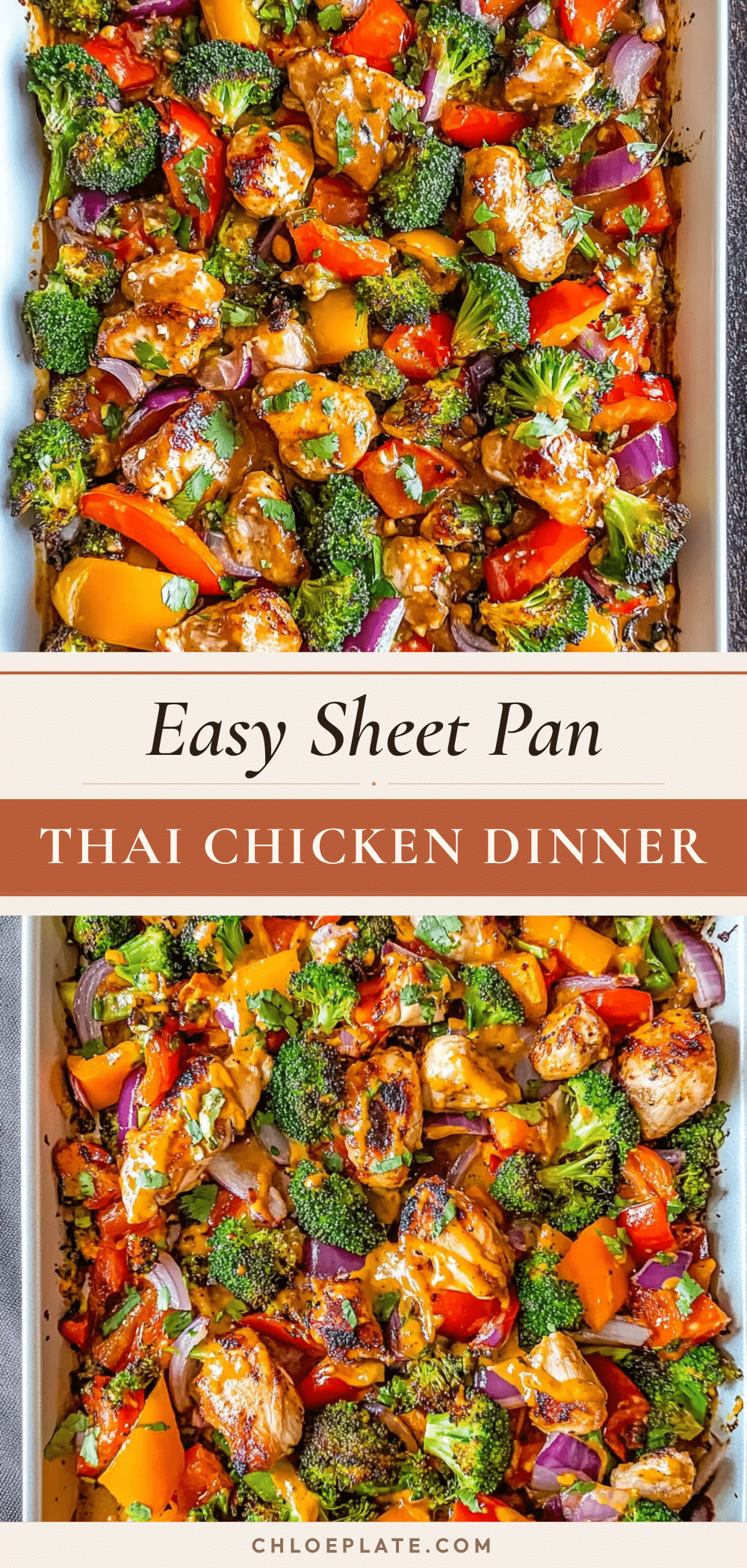
Best Easy Sheet Pan Thai Chicken Dinner Recipe
This sheet pan Thai chicken dinner is a quick and easy weeknight meal with juicy chicken, caramelized vegetables, and a savory-sweet Thai peanut sauce. Ready in about 35 minutes with minimal cleanup.
- Prep Time: 15 minutes
- Cook Time: 30 minutes
- Total Time: 45 minutes
- Yield: 4 servings 1x
- Category: Main Course
- Cuisine: Thai
Ingredients
- 1/4 cup soy sauce (low-sodium preferred)
- 3 tablespoons fish sauce (Red Boat recommended)
- 2 tablespoons honey
- 2 tablespoons brown sugar, packed
- 2 tablespoons creamy peanut butter (natural preferred)
- 2 tablespoons fresh lime juice (about 1 lime)
- 1 tablespoon rice vinegar
- 3 cloves garlic, minced (about 1 tablespoon)
- 1 tablespoon fresh ginger, grated (or 1 teaspoon ground ginger)
- 1–2 teaspoons red pepper flakes
- 1 tablespoon vegetable oil
- 1.5 pounds boneless, skinless chicken thighs (about 4–6 thighs)
- 2 cups broccoli florets (about 1 medium head)
- 1 red bell pepper, sliced into thin strips
- 1 cup snap peas, trimmed
- 1 small red onion, sliced into wedges
- 2 tablespoons vegetable oil
- Salt and black pepper to taste
- Cooked jasmine rice or brown rice for serving
- Fresh cilantro, chopped for garnish
- Chopped peanuts (optional)
- Lime wedges for serving
- Sliced green onions for garnish
Instructions
- Preheat your oven to 400°F. Position the rack in the middle of the oven. Line your sheet pan with parchment paper or aluminum foil for easy cleanup.
- Make the Thai peanut sauce: In a medium bowl, whisk together soy sauce, fish sauce, honey, brown sugar, peanut butter, lime juice, rice vinegar, minced garlic, grated ginger, red pepper flakes, and vegetable oil until smooth. If too thick, add a tablespoon of warm water.
- Prep the chicken: Pat the chicken thighs dry with paper towels. Trim excess fat if needed. Place in a large bowl and season with a pinch of salt and black pepper.
- Prep the vegetables: Cut broccoli into small florets (about 1-inch pieces). Slice red bell pepper into thin strips. Trim snap peas. Cut red onion into wedges about 1/2-inch thick. Add all vegetables to the bowl with the chicken.
- Toss everything with the sauce: Pour about 3/4 of the sauce over the chicken and vegetables. Use your hands or tongs to toss until evenly coated. Reserve the remaining sauce for basting.
- Arrange on the sheet pan: Spread the chicken and vegetables in a single layer on the prepared pan. Make sure chicken pieces aren’t overlapping. Arrange vegetables around the chicken with space between pieces.
- Roast for 20 minutes: Place the pan in the preheated oven and roast for 20 minutes until chicken starts to brown and vegetables are tender but still slightly crisp.
- Flip and baste: Remove the pan from the oven. Use tongs to flip the chicken pieces over. Stir the reserved sauce and brush it over the chicken. Flip vegetables if sticking. Return to the oven.
- Roast for another 10-15 minutes: Continue roasting until chicken reaches an internal temperature of 165°F and edges are caramelized and slightly charred. For extra char, broil for the last 2 minutes.
- Rest and serve: Remove from oven and let rest for 5 minutes. Serve over steamed rice. Drizzle pan juices on top. Garnish with fresh cilantro, chopped peanuts, sliced green onions, and a squeeze of lime juice.
Notes
Don’t skip the fish sauce; it mellows in the oven. Pat chicken dry for better browning. Cut vegetables uniformly for even cooking. Watch the sugar to prevent burning. Use a thermometer for perfect doneness. Double the sauce if desired. Use a regular rimmed baking sheet (not non-stick) for better caramelization.
Nutrition
- Serving Size: 1 serving (including
- Calories: 485
- Sugar: 18
- Sodium: 980
- Fat: 18
- Saturated Fat: 3
- Carbohydrates: 42
- Fiber: 5
- Protein: 38
Keywords: sheet pan dinner, Thai chicken, easy weeknight dinner, one pan meal, Thai peanut sauce, chicken thighs, broccoli, quick dinner