Love this? Save it for later!
Share the inspiration with your friends
I was standing in my kitchen last October, staring at a butternut squash that had been sitting on my counter for over a week. I bought it with big plans—roasted squash bowls, maybe a soup—but life got busy, and there it sat. I needed something quick for dinner, something that didn’t feel like a project. That’s when I spotted the eggs in my fridge and a leftover log of goat cheese. Honestly, the idea felt a little weird at first. Squash and eggs? But I was hungry, and I didn’t feel like going to the store.
So I cubed that squash, tossed it in a hot skillet with some olive oil, and let it get those beautiful caramelized edges. A few minutes later, I whisked together some eggs, crumbled the goat cheese right in, and poured it all over the squash. I slid the skillet into the oven and crossed my fingers. When I pulled it out, the top was puffed and golden, the cheese had melted into little creamy pockets, and the smell—sweet squash, savory eggs, tangy cheese—was exactly what I needed. I ate a slice standing at the counter, and something clicked.
This cozy butternut squash frittata with goat cheese became my go-to that fall. It’s the kind of meal that works for breakfast, lunch, or a light dinner. It feels fancy enough to serve company but comes together with almost no effort. The squash gets tender and sweet in the oven, the eggs stay soft and fluffy, and the goat cheese adds this tangy richness that ties everything together. Every time I make it, I remember that weeknight when I just threw things together and ended up with something I actually craved.
Why You’ll Love This Recipe
I’ve tested this frittata more times than I can count. I made it for my neighbor when she had a baby. I brought it to a brunch potluck where it disappeared before the muffins. I’ve even made it on a Tuesday night when I needed dinner in under 30 minutes. Here’s why it keeps winning people over:
- Quick & Easy : From start to finish, this comes together in about 30 minutes. Most of that time is hands-off while it bakes.
- Simple Ingredients : You probably already have eggs, olive oil, and salt in your kitchen. The squash and goat cheese are easy to find at any grocery store.
- Perfect for Fall : This is the kind of recipe that makes your kitchen smell like autumn. It’s great for cozy mornings, holiday brunches, or a simple weeknight meal.
- Crowd-Pleaser : I’ve served this to people who said they didn’t like goat cheese, and they went back for seconds. The tangy flavor gets mellow when it bakes.
- Unbelievably Delicious : The texture is what gets me every time. The eggs are silky, the squash is tender, and the cheese melts into these little pockets of creaminess.
What makes this cozy butternut squash frittata with goat cheese different from other egg dishes is the way the squash gets roasted first. That extra step makes all the difference. The edges caramelize and get slightly crispy, which adds a little sweetness and texture that you don’t get if you just throw raw squash into the eggs. It’s a small thing, but it turns a simple frittata into something special.
This recipe is the kind you’ll make when you want something that feels comforting but doesn’t leave you with a sink full of dishes. It’s satisfying without being heavy. And honestly, it’s the kind of meal that makes you feel like you’ve got your life together, even if you’re just eating it in your sweatpants.
What Ingredients You Will Need
This recipe uses simple, wholesome ingredients to deliver big flavor. Most of these are pantry staples or easy to find at any grocery store. Here’s what you’ll need:
For the Frittata
- 2 cups butternut squash, peeled and cut into ½-inch cubes (about half a medium squash)
- 2 tablespoons olive oil, divided
- ½ teaspoon salt, divided
- ¼ teaspoon black pepper
- 8 large eggs
- ¼ cup whole milk or half-and-half (adds richness, but you can use any milk you have)
- 4 ounces goat cheese, crumbled (about 1 cup)
- ¼ cup finely chopped fresh sage leaves (optional but highly recommended)
- 2 cloves garlic, minced
For Topping (Optional)
- ¼ cup toasted pumpkin seeds (pepitas)
- Fresh thyme or parsley for garnish
- Flaky sea salt for finishing
A few notes on ingredients. I like using a firm, fresh goat cheese log for this. The softer, spreadable kind works too, but it melts more completely. If you want those distinct creamy pockets, go with a log you can crumble yourself. For the squash, look for one that feels heavy for its size with firm, unblemished skin. Pre-cut squash from the store works in a pinch, but it tends to be drier. I usually buy a whole squash and cut it myself—it’s cheaper and the texture is better.
If you don’t have fresh sage, dried sage works. Just use about 1 tablespoon instead of ¼ cup. And if you’re not a sage fan, fresh thyme or rosemary are lovely substitutes. The garlic is optional too, but I think it adds a nice savory backbone. For a dairy-free version, you can skip the milk and use a dairy-free cheese alternative, though the texture will be slightly different.
I always recommend using organic eggs if you can. The difference in flavor and color is noticeable, especially in a simple dish like this where eggs are the star. But honestly, whatever eggs you have will work just fine.
Equipment Needed
You don’t need much for this recipe, which is part of why I love it. Here’s what you’ll need:
- 10-inch oven-safe skillet : Cast iron is ideal because it holds heat well and gives the squash those nice caramelized edges. A stainless steel skillet works too. Just make sure the handle is oven-safe up to 400°F.
- Sharp chef’s knife : Cutting butternut squash requires a good knife. A dull one makes the job harder and more dangerous.
- Cutting board
- Large mixing bowl
- Whisk
- Measuring cups and spoons
- Spatula
If you don’t have a cast iron skillet, you can roast the squash on a baking sheet and then transfer it to a greased pie dish or 9×9 baking pan. Just whisk the eggs, stir in the roasted squash and cheese, pour it into the dish, and bake. The timing will be about the same. I’ve done it this way when my cast iron was already in use, and it worked perfectly.
A vegetable peeler makes quick work of removing the squash skin. And if you have a bench scraper, it’s great for transferring those cubed pieces from the cutting board to the skillet without making a mess. But honestly, a spatula works fine too.
Preparation Method
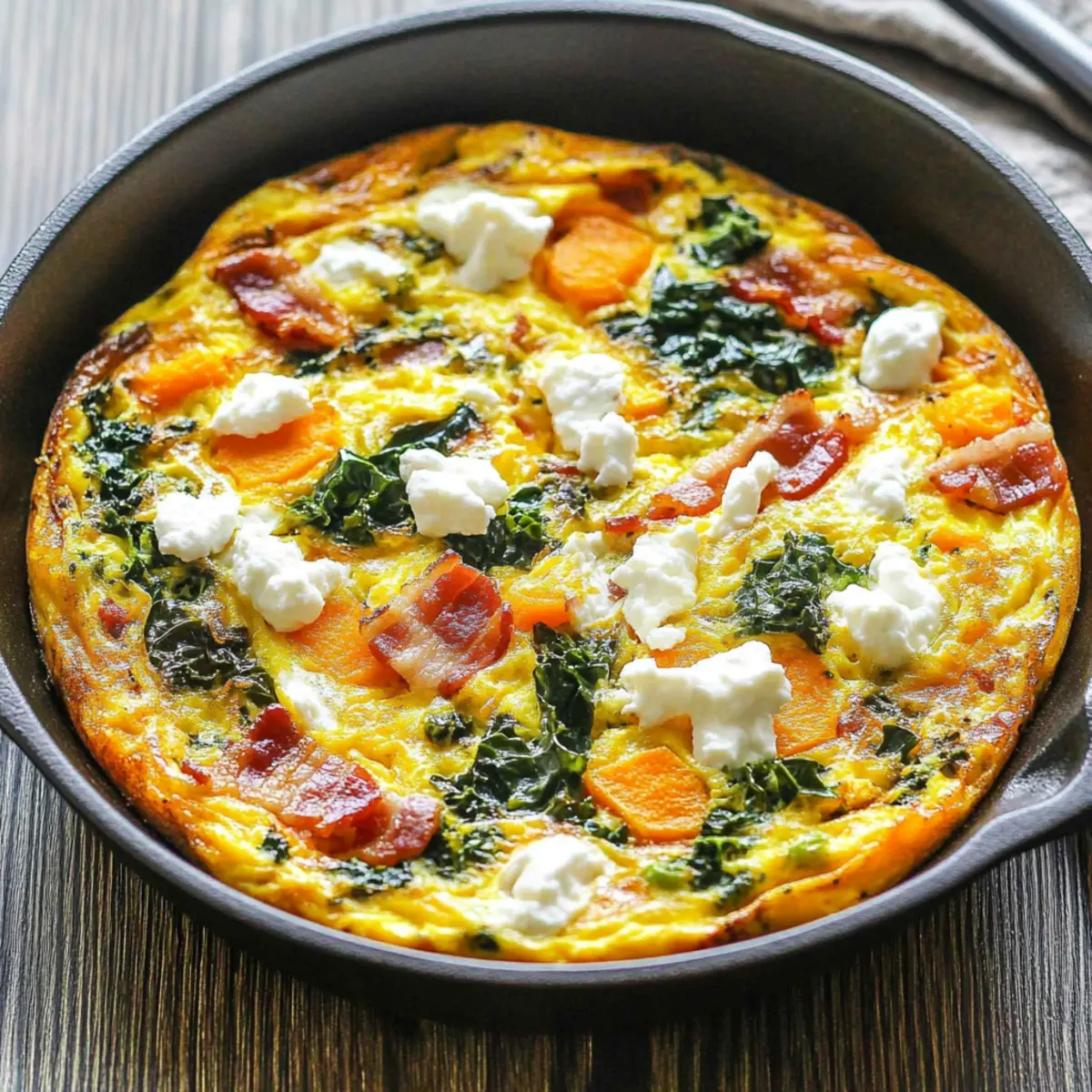
Let’s make this cozy butternut squash frittata with goat cheese. I’ll walk you through each step so you get perfect results every time.
Step 1: Preheat and Prep
Preheat your oven to 400°F (200°C). Place your oven-safe skillet inside while it preheats. This helps the skillet get hot evenly, which means better browning for your squash.
While the oven is heating, peel your butternut squash. Cut off the stem end and the bottom. Slice the squash in half where the narrow neck meets the wider bulb. Stand each piece upright and slice off the skin from top to bottom. Cut the squash into ½-inch cubes. You should have about 2 cups. If you have extra, save it for another recipe—it roasts beautifully on its own.
Step 2: Roast the Squash
Carefully remove the hot skillet from the oven. Add 1 tablespoon of olive oil and swirl to coat the bottom. Add the cubed squash in a single layer. Sprinkle with ¼ teaspoon of salt and the black pepper. Toss gently to coat the squash in the oil.
Return the skillet to the oven and roast for 15-18 minutes, stirring halfway through. The squash should be tender when pierced with a fork, with golden brown edges. The smell at this point is incredible—sweet and nutty. Don’t skip this step. Roasting the squash first concentrates its natural sugars and gives the frittata so much more flavor.
Step 3: Whisk the Eggs
While the squash roasts, crack the eggs into a large mixing bowl. Add the milk, remaining ¼ teaspoon of salt, and the minced garlic. Whisk vigorously until the eggs are completely uniform in color and slightly frothy on top. This takes about 30 seconds of steady whisking. The milk makes the eggs tender, and the frothiness helps the frittata rise a little in the oven.
Stir in half of the crumbled goat cheese and all of the chopped sage (if using). Set the bowl aside.
Step 4: Combine and Bake
When the squash is done, remove the skillet from the oven. Reduce the oven temperature to 375°F (190°C).
Pour the egg mixture evenly over the hot squash. Don’t stir—just let the eggs settle around the cubes. Sprinkle the remaining goat cheese on top. The heat from the skillet will start cooking the eggs immediately, which is exactly what you want.
Return the skillet to the oven and bake for 18-22 minutes. The frittata is done when the edges are set and the center jiggles just slightly when you gently shake the skillet. A knife inserted into the center should come out clean. If the top is browning too quickly but the center isn’t set, tent the skillet loosely with foil for the last 5 minutes.
Step 5: Rest and Serve
Remove the skillet from the oven and let it rest for 5 minutes. This is important—the eggs continue cooking from residual heat, and resting makes the frittata easier to slice. The top will deflate slightly, which is normal.
Sprinkle with toasted pumpkin seeds and fresh herbs if you’re using them. Add a pinch of flaky sea salt on top. Slice into wedges and serve warm or at room temperature.
One thing I learned the hard way: don’t overbake this. The first few times I made it, I left it in the oven until the center was completely firm. It was still good, but the eggs turned out a little rubbery. You want that slight jiggle in the center—it means the frittata will be silky and tender.
Cooking Tips & Techniques
After making this frittata more times than I can count, I’ve picked up a few tricks that make a real difference.
Cut the squash evenly. This is the most important tip I can give. If your cubes are different sizes, some will be mushy while others are still crunchy. Take the extra minute to make them uniform. Your future self will thank you.
Don’t skip the preheated skillet. Adding the squash to a hot pan gives you those caramelized edges that make this dish special. If you add the squash to a cold pan, it will steam instead of brown, and you’ll miss out on that sweet, nutty flavor.
Let the eggs come to room temperature. Cold eggs can make the frittata cook unevenly. If you have time, take the eggs out of the fridge 15 minutes before you start. If you forget, it’s not the end of the world—I forget all the time, and it still turns out great.
Use a gentle hand with the cheese. Goat cheese can get tough if it bakes too long. That’s why I add half to the egg mixture and sprinkle the rest on top right before baking. The cheese on top gets golden and slightly crispy, while the cheese inside stays creamy.
Watch the oven, not the clock. Every oven runs a little differently. Start checking your frittata at 18 minutes. If the center still looks very liquid, give it another 2-3 minutes. It’s better to check early than to end up with dry eggs.
I once made this for a brunch and got distracted by conversation. I left the frittata in the oven for almost 30 minutes. The edges were brown and crispy, and the center was dry. It was still edible, but it wasn’t the silky, tender frittata I wanted. Now I always set a timer and check it right at 18 minutes. Learn from my mistake.
Variations & Adaptations
This cozy butternut squash frittata with goat cheese is flexible. Here are some ways to change it up:
Make it vegetarian-friendly. It already is! But if you want to add more vegetables, try stirring in a handful of fresh spinach or sautéed mushrooms right before you pour in the eggs. I’ve also added roasted red peppers and caramelized onions with great results.
Swap the cheese. Not a goat cheese fan? Feta is a great substitute. It has a similar tangy flavor and crumbly texture. Gruyère or sharp cheddar also work beautifully. Just shred or crumble about 4 ounces and use it the same way.
Try different squash. Butternut is my favorite, but this works with any winter squash. Acorn, delicata, or even pumpkin all roast nicely. Just adjust the roasting time based on the squash you use—delicata cooks faster, while pumpkin might need a few extra minutes.
Add protein. For a heartier meal, add cooked crumbled sausage, crispy bacon, or diced ham. Stir it in with the squash before adding the eggs. I’ve made this with leftover roasted chicken, and it was fantastic.
Go dairy-free. Skip the milk and use unsweetened almond or oat milk instead. Use a dairy-free cheese alternative or just leave the cheese out entirely. The frittata will still be delicious—just a little less rich.
Make it spicy. Add a pinch of red pepper flakes to the egg mixture, or top the finished frittata with a drizzle of hot honey. The sweetness of the squash pairs surprisingly well with a little heat.
My personal favorite variation is adding caramelized onions. I cook them slowly while the squash roasts, then layer them over the squash before pouring in the eggs. The sweetness of the onions doubles down on the squash’s natural sugar, and the goat cheese cuts through it all. It’s the kind of breakfast that feels like a hug.
Serving & Storage Suggestions
This frittata is versatile when it comes to serving. I love it warm, straight from the skillet, with a simple side salad dressed with a bright vinaigrette. The tangy dressing balances the richness of the eggs and cheese. A creamy lemon basil vinaigrette is my go-to—it adds freshness and cuts through the richness perfectly.
It’s also great at room temperature, which makes it perfect for brunch buffets or potlucks. I’ve brought this to more than a few gatherings, and it always gets compliments. Slice it into thin wedges and arrange them on a platter with some fresh herbs on top. It looks beautiful and requires almost no effort.
For a complete fall meal, serve it alongside a cozy creamy French lentil soup for a dinner that feels truly special. The earthy lentils and the sweet squash frittata complement each other beautifully.
Storage: Leftover frittata keeps well in the refrigerator for up to 4 days. Store it in an airtight container or wrap the cooled skillet tightly with foil. The flavors actually get better after a day—the squash and cheese meld together even more.
Reheating: The best way to reheat is in a low oven (300°F) for about 10 minutes. This warms it through without drying out the eggs. You can also microwave individual slices for 30-45 seconds, but the texture won’t be quite as nice. I’ve also eaten it cold straight from the fridge, and honestly, it’s still delicious that way.
Freezing: This frittata freezes surprisingly well. Let it cool completely, then wrap individual slices in plastic wrap and place them in a freezer bag. They’ll keep for up to 2 months. Thaw in the refrigerator overnight and reheat in the oven or microwave.
Nutritional Information & Benefits
This frittata is packed with good-for-you ingredients. Here’s the estimated nutritional breakdown per serving (one-sixth of the frittata):
- Calories: 245
- Protein: 16g
- Fat: 17g
- Carbohydrates: 8g
- Fiber: 2g
- Sugar: 3g
Butternut squash is a nutritional powerhouse. It’s loaded with vitamin A (one serving provides over 100% of your daily needs), vitamin C, potassium, and fiber. The orange color comes from beta-carotene, an antioxidant that supports eye health and immune function.
Eggs are one of the most nutrient-dense foods you can eat. They’re a complete protein, meaning they contain all nine essential amino acids. They’re also rich in choline, which supports brain health, and vitamin D, which is hard to get from food.
Goat cheese is easier to digest than cow’s milk cheese for many people. It’s also lower in lactose and provides calcium, protein, and healthy fats. The probiotics in goat cheese support gut health, though the beneficial bacteria are mostly killed during baking.
This recipe is naturally gluten-free and can be made dairy-free with simple substitutions. It’s also low-carb and keto-friendly if you skip the milk and use a lower-carb squash variety.
Conclusion
This cozy butternut squash frittata with goat cheese has become my fall staple for good reason. It’s the kind of recipe that feels special enough for a holiday brunch but simple enough for a Tuesday night. The sweet roasted squash, the creamy tangy cheese, the fluffy eggs—every bite works together in a way that just feels right.
I love that I can make it with ingredients I usually have on hand. I love that it comes together in one skillet. And I really love that I can eat it for breakfast, lunch, or dinner without anyone judging me. It’s forgiving, flexible, and always satisfying.
I hope you give this frittata a try. Play with the variations, make it your own, and let me know how it turns out. Did you add something unexpected? Did you serve it with something amazing? Drop a comment below and share your version. And if you loved it, share this recipe with a friend who needs a little cozy breakfast in their life. Happy cooking!
Frequently Asked Questions
Can I use frozen butternut squash for this recipe?
Yes, you can use frozen butternut squash. Just thaw it first and pat it very dry with paper towels to remove excess moisture. Frozen squash has more water than fresh, so it won’t get as caramelized, but it still works in a pinch. Roast it a few minutes longer to help evaporate some of that extra moisture.
Can I make this frittata ahead of time?
Absolutely. This frittata is great for meal prep. Bake it, let it cool completely, and store it in the refrigerator for up to 4 days. It reheats beautifully in the oven or microwave. You can also serve it at room temperature, which makes it perfect for brunch buffets or packed lunches.
How do I keep the frittata from sticking to the skillet?
Make sure your skillet is well-seasoned if you’re using cast iron. The olive oil helps too. If you’re worried about sticking, you can line the skillet with parchment paper or use a non-stick oven-safe skillet. Letting the frittata rest for 5 minutes after baking also helps it release more easily.
Can I add other vegetables to this frittata?
Definitely. This recipe is very flexible. Try adding sautéed mushrooms, caramelized onions, roasted red peppers, or a handful of fresh spinach. Just make sure any watery vegetables (like zucchini or tomatoes) are cooked down first to remove excess moisture, or your frittata might turn out soggy.
Is this recipe keto-friendly?
Yes, with a small adjustment. Butternut squash has about 8 grams of net carbs per serving, which fits into a keto diet if you’re mindful of your other carbs. For a lower-carb option, you can swap the butternut squash for roasted cauliflower or zucchini. The texture will be different, but it will still be delicious.
Pin This Recipe!
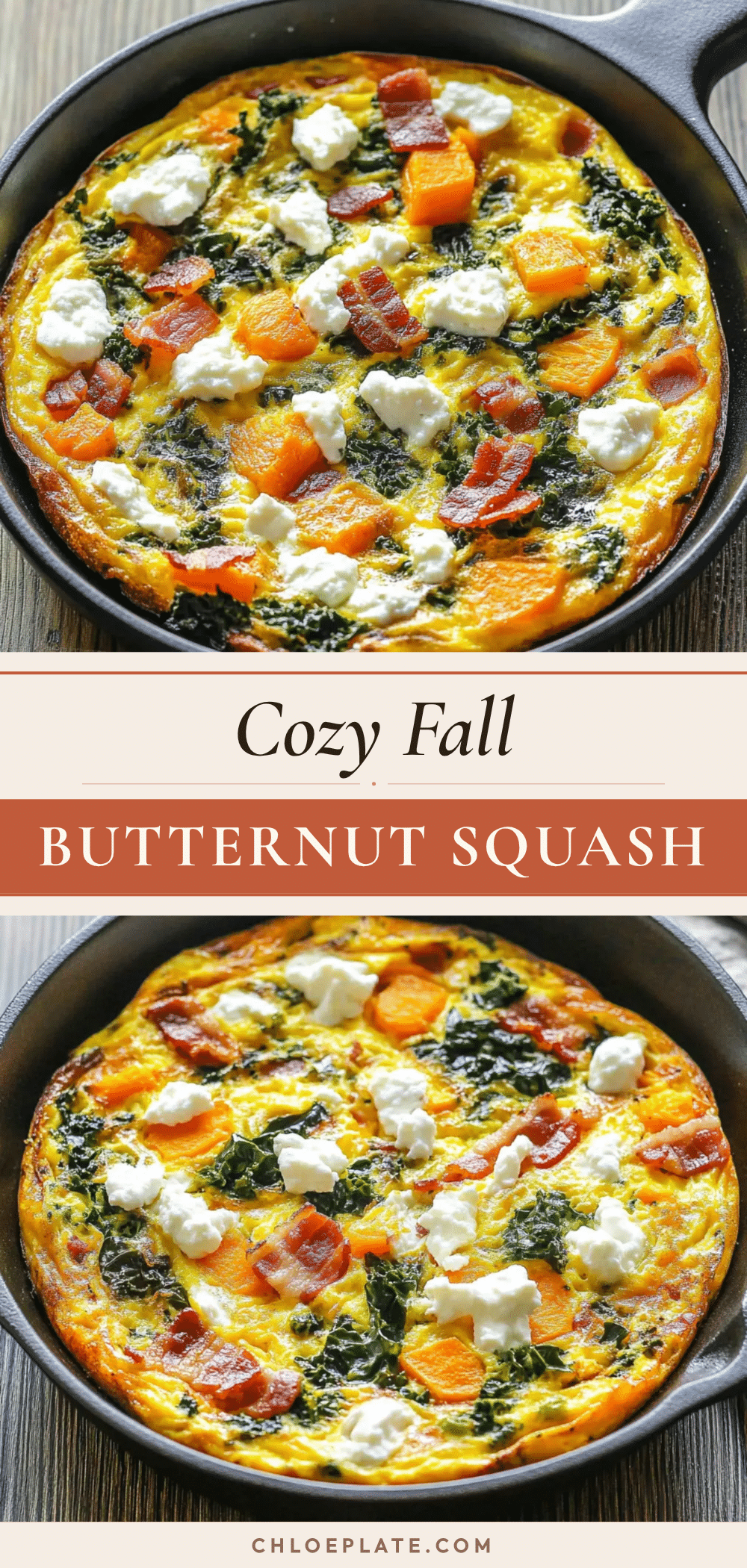
Cozy Butternut Squash Frittata with Goat Cheese – Easy Fall Breakfast

A quick and easy frittata featuring sweet roasted butternut squash, creamy goat cheese, and fluffy eggs. Perfect for breakfast, lunch, or a light dinner, this one-skillet meal comes together in about 30 minutes and is a crowd-pleaser for fall.
- Prep Time: 10 minutes
- Cook Time: 20 minutes
- Total Time: 30 minutes
- Yield: 6 servings 1x
- Category: Main Course
- Cuisine: American
Ingredients
- 2 cups butternut squash, peeled and cut into ½-inch cubes (about half a medium squash)
- 2 tablespoons olive oil, divided
- ½ teaspoon salt, divided
- ¼ teaspoon black pepper
- 8 large eggs
- ¼ cup whole milk or half-and-half
- 4 ounces goat cheese, crumbled (about 1 cup)
- ¼ cup finely chopped fresh sage leaves (optional)
- 2 cloves garlic, minced
- ¼ cup toasted pumpkin seeds (pepitas) for topping (optional)
- Fresh thyme or parsley for garnish (optional)
- Flaky sea salt for finishing (optional)
Instructions
- Preheat your oven to 400°F (200°C). Place a 10-inch oven-safe skillet (preferably cast iron) inside while it preheats.
- Peel the butternut squash, cut off the stem and bottom, slice in half where the narrow neck meets the bulb, and slice off the skin. Cut into ½-inch cubes to yield about 2 cups.
- Carefully remove the hot skillet from the oven. Add 1 tablespoon olive oil and swirl to coat. Add the cubed squash in a single layer, sprinkle with ¼ teaspoon salt and the black pepper, and toss gently to coat.
- Return the skillet to the oven and roast for 15-18 minutes, stirring halfway through, until the squash is tender and golden brown on the edges.
- While the squash roasts, crack the eggs into a large mixing bowl. Add the milk, remaining ¼ teaspoon salt, and minced garlic. Whisk vigorously until uniform and slightly frothy, about 30 seconds. Stir in half of the crumbled goat cheese and all of the chopped sage (if using).
- When the squash is done, remove the skillet from the oven. Reduce the oven temperature to 375°F (190°C).
- Pour the egg mixture evenly over the hot squash. Sprinkle the remaining goat cheese on top.
- Bake for 18-22 minutes, until the edges are set and the center jiggles slightly when shaken. A knife inserted into the center should come out clean. If the top browns too quickly, tent with foil for the last 5 minutes.
- Remove from the oven and let rest for 5 minutes. The top will deflate slightly.
- Sprinkle with toasted pumpkin seeds, fresh herbs, and flaky sea salt if desired. Slice into wedges and serve warm or at room temperature.
Notes
For best results, cut squash evenly to ensure even cooking. Don’t skip preheating the skillet—it helps caramelize the squash. Let eggs come to room temperature for more even cooking. Add half the goat cheese to the egg mixture and sprinkle the rest on top for creamy pockets. Check frittata at 18 minutes to avoid overbaking; the center should jiggle slightly. Leftovers keep in the refrigerator for up to 4 days and reheat well in a 300°F oven for 10 minutes. The frittata can also be frozen for up to 2 months.
Nutrition
- Serving Size: 1 slice (1/6 of frit
- Calories: 245
- Sugar: 3
- Sodium: 450
- Fat: 17
- Saturated Fat: 6
- Carbohydrates: 8
- Fiber: 2
- Protein: 16
Keywords: butternut squash frittata, goat cheese frittata, fall breakfast, easy frittata, one-skillet meal, gluten-free frittata