Love this? Save it for later!
Share the inspiration with your friends
The first time I made this Perfect Peach Cobbler Pound Cake, it was purely selfish. I had a basket of peaches that were just past their prime—too soft for eating out of hand, but too beautiful to toss. And I had a craving that didn’t quite know what it wanted. Was it the buttery, dense crumb of a pound cake? Or the sticky, jammy fruit situation you get with a cobbler? I stood there, peach juice dripping down my wrist, and just decided to make both things at once. I figured the worst that could happen was a weird, soggy mess.
Instead, what came out of the oven was this golden, crackly-topped loaf that smelled like summer had been baked into existence. The edges were crisp, the inside was tender, and the peaches had sunk into the batter in these little pockets of caramelized sweetness. I honestly didn’t tell anyone what I was doing until it was cooling on the rack, and by then, the whole kitchen smelled like a bakery and a farmers market had a baby. My neighbor texted me later that night asking what I’d made because “the smell was coming through the walls.” That’s when I knew this one was special.
This isn’t just another fruit cake situation. It’s a pound cake that actually tastes like a cobbler—with that signature buttery, almost biscuit-like top and a swirl of tender, cinnamon-spiced peaches running right through the middle. It’s the kind of dessert that feels fancy enough for company but easy enough that you’ll make it on a random Tuesday just because. And honestly? You should.
Why You’ll Love This Recipe
I’ve tested this recipe about six times now (my family has been very patient), and I can confidently say this version is the one. It balances the dense, rich texture of a classic pound cake with the bright, fruity sweetness of peach cobbler without any of the fuss. Here’s why it works:
- Simple Ingredients — You don’t need a specialty grocery run. Butter, sugar, eggs, flour, and fresh or canned peaches. That’s the core of it.
- One-Bowl Batter — The cake batter comes together in a single bowl with a hand mixer. No creaming butter and sugar for ten minutes. No separating eggs. Just honest, straightforward mixing.
- Perfect for Any Occasion — This works for a summer barbecue, a holiday brunch, or a quiet night when you want something sweet with your coffee. It’s not fussy, but it looks impressive.
- That Cobbler Texture — The top gets this slightly crunchy, sugary crust while the inside stays moist and tender. The peaches soften into jammy pockets that make every slice a little different.
- Crowd-Pleaser — I’ve brought this to three different gatherings now, and every single time, someone asks for the recipe. It’s one of those desserts that makes people close their eyes while they eat it.
What makes this different from other peach pound cakes is the technique. Instead of just folding peaches into the batter—which usually makes them sink to the bottom—I layer them in the middle and sprinkle the top with a little cinnamon sugar. That creates that cobbler-like crust on top and keeps the fruit evenly distributed. It’s a small change, but it makes all the difference between a good cake and a great one.
What Ingredients You Will Need
This recipe uses simple, everyday ingredients, but each one plays a specific role in getting that perfect pound cake texture. Here’s what you’ll need and why each one matters:
For the Cake Batter
- 1 cup (2 sticks) unsalted butter, softened — Butter is the backbone here. It gives the cake its rich flavor and tender crumb. Make sure it’s truly at room temperature—if it’s too cold, it won’t cream properly with the sugar. I like using a good-quality butter like Kerrygold for the best flavor, but any unsalted butter works fine.
- 1 ½ cups granulated sugar — This isn’t just for sweetness. Sugar helps create that crackly top crust and keeps the cake moist. Don’t reduce it, or the texture will suffer.
- 4 large eggs, room temperature — Eggs add structure and richness. Room temperature eggs emulsify into the batter much better than cold ones, giving you a smoother, more uniform crumb. If you forget to take them out ahead of time, place them in a bowl of warm water for 5 minutes.
- 1 teaspoon vanilla extract — Pure vanilla extract adds warmth and depth. Avoid imitation vanilla if you can—it makes a noticeable difference in a simple cake like this.
- 1 teaspoon almond extract — This is my secret weapon. Almond extract enhances the peach flavor in a way that’s subtle but magical. It’s the kind of thing people notice but can’t quite place. If you don’t have it, you can skip it, but I really recommend trying it.
- 2 cups all-purpose flour — Standard all-purpose flour gives the cake the right structure. Don’t swap in cake flour here—it’s too delicate and the cake won’t hold up to the peaches. Spoon and level your flour for the most accurate measurement.
- 1 teaspoon baking powder — This gives the cake a little lift without making it too airy. Pound cake should be dense but not heavy, and baking powder helps strike that balance.
- ½ teaspoon salt — Salt balances the sweetness and enhances the flavor of the butter and peaches. Don’t skip it.
- ½ cup sour cream, room temperature — Sour cream is the secret to a moist, tender pound cake. The acidity tenderizes the gluten and adds richness without making the batter too thin. Full-fat sour cream works best, but Greek yogurt is a fine substitute.
For the Peach Cobbler Swirl
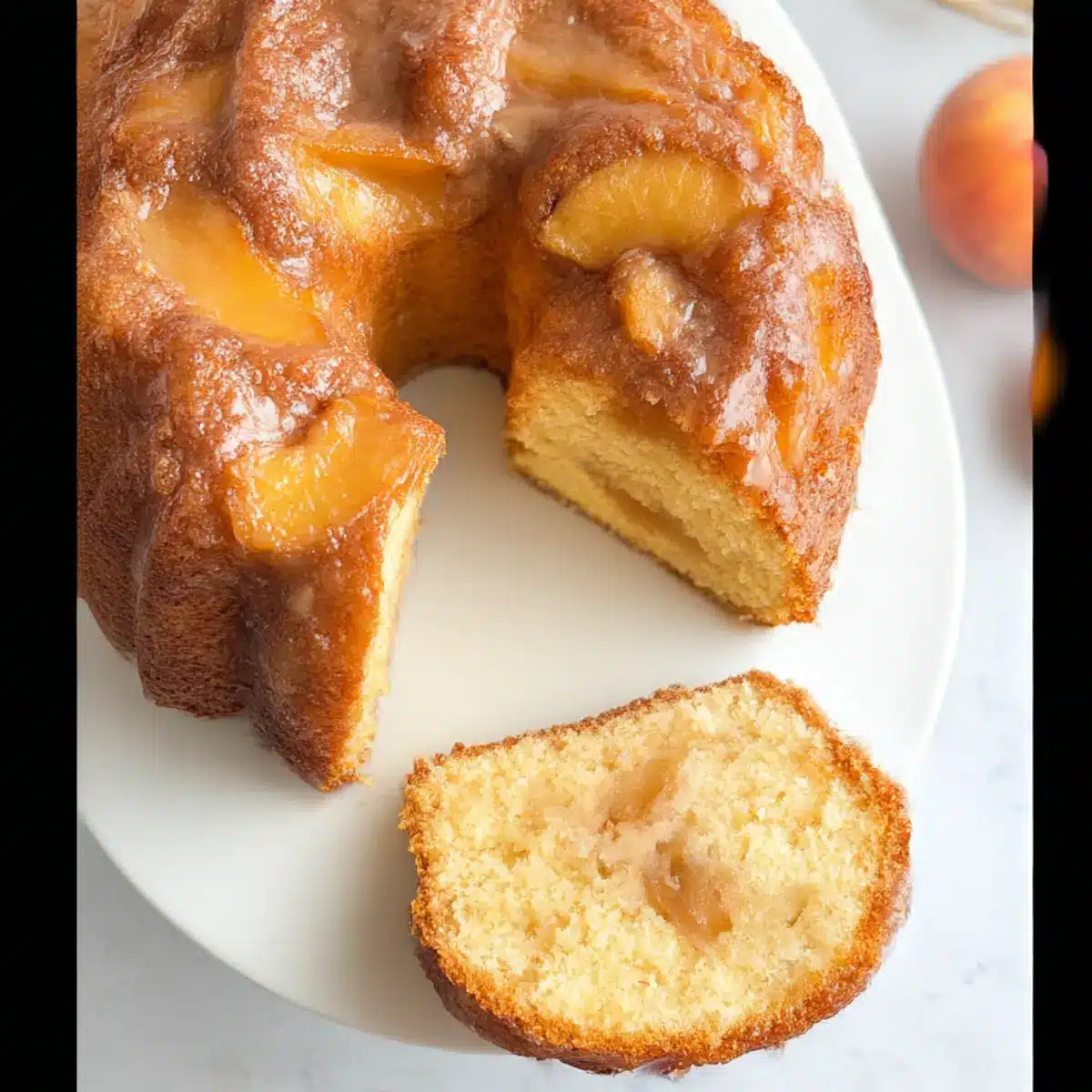
- 2 cups fresh or canned peaches, diced — If using fresh peaches, choose ones that are ripe but still firm—not mushy. If using canned, drain them well and pat them dry with paper towels. Too much liquid will make the cake soggy. Frozen peaches work too, but thaw and drain them first.
- 2 tablespoons brown sugar — Brown sugar adds a deeper, almost caramel-like sweetness to the peaches. It helps them get jammy as they bake.
- 1 teaspoon cinnamon — Cinnamon and peaches are a classic pairing. It adds warmth and makes the cobbler flavor really pop.
- 1 tablespoon all-purpose flour — Tossing the peaches in flour helps absorb excess moisture and prevents them from sinking to the bottom of the cake.
For the Topping
- 1 tablespoon granulated sugar — Sprinkled on top before baking, this creates that signature crunchy, sugary crust.
- ½ teaspoon cinnamon — Mixed with the sugar, this gives the top a subtle spiced finish.
Equipment Needed
You don’t need a lot of fancy equipment for this cake, which is part of why I love it. Here’s what you’ll need:
- 9×5-inch loaf pan — A standard loaf pan works perfectly. If you use a glass or ceramic pan, you may need to add a few minutes to the baking time. I prefer a metal pan for more even browning.
- Hand mixer or stand mixer — A hand mixer is totally fine for this recipe. A stand mixer works too, but don’t overmix the batter once you add the flour.
- Mixing bowls — One large bowl for the batter and a small one for the peach mixture.
- Parchment paper — Lining the pan with parchment paper makes lifting the cake out so much easier. Leave a little overhang on the sides for handles.
- Cooling rack — Letting the cake cool completely on a wire rack prevents the bottom from getting soggy.
- Measuring cups and spoons — Accurate measurements matter in baking. Use dry measuring cups for flour and sugar, and liquid measuring cups for the sour cream.
Preparation Method
This recipe is straightforward, but a few small details make a big difference. Follow these steps carefully, and you’ll get a perfect loaf every time.
Step 1: Preheat and Prep
Preheat your oven to 350°F (175°C). Grease your 9×5-inch loaf pan thoroughly with butter or non-stick spray, then line it with a strip of parchment paper, leaving about 2 inches of overhang on the long sides. This will help you lift the cake out cleanly later. Set the pan aside.
Step 2: Prepare the Peaches
In a small bowl, combine the diced peaches, brown sugar, cinnamon, and 1 tablespoon of flour. Stir gently until the peaches are evenly coated. Let this sit while you make the batter. The flour will absorb some of the peach juices, which keeps the cake from getting soggy. If your peaches are very juicy, let them sit for 5 minutes and then drain off any excess liquid.
Step 3: Cream the Butter and Sugar
In a large mixing bowl, beat the softened butter and granulated sugar together on medium speed until light and fluffy, about 3 to 4 minutes. You want the mixture to look pale and airy. Scrape down the sides of the bowl halfway through. This step is important—it creates the structure for the cake and helps it rise properly.
Step 4: Add the Eggs and Extracts
Add the eggs one at a time, beating well after each addition. The batter might look a little curdled at this point—that’s totally normal. Add the vanilla extract and almond extract and beat until combined. The batter should be smooth and glossy.
Step 5: Alternate the Dry Ingredients and Sour Cream
In a separate bowl, whisk together the flour, baking powder, and salt. With the mixer on low speed, add about one-third of the flour mixture to the butter mixture, beating just until combined. Add half of the sour cream and mix. Repeat with another third of the flour, the remaining sour cream, and finally the last of the flour. Mix just until you don’t see any streaks of flour. Overmixing at this stage will make the cake tough.
Step 6: Layer the Batter and Peaches
Pour half of the batter into the prepared loaf pan and spread it evenly with a spatula. It will be thick—that’s okay. Spoon the peach mixture evenly over the batter, keeping it away from the very edges of the pan. Pour the remaining batter on top and spread it gently to cover the peaches. Don’t worry if a few peaches peek through; it adds to the rustic look.
Step 7: Add the Topping and Bake
In a tiny bowl, mix the remaining 1 tablespoon of sugar and ½ teaspoon of cinnamon. Sprinkle this evenly over the top of the batter. Bake for 55 to 65 minutes, or until a toothpick inserted into the center comes out clean or with just a few moist crumbs. If the top is browning too quickly after 40 minutes, tent the pan loosely with foil.
Step 8: Cool and Serve
Let the cake cool in the pan for 15 minutes, then use the parchment paper to lift it out and transfer it to a wire rack. Let it cool completely before slicing—about 1 to 2 hours. I know it’s hard to wait, but slicing it warm will make it crumble. Trust me, I learned this the hard way.
Cooking Tips & Techniques
After making this cake more times than I care to admit, I’ve picked up a few tricks that make the process smoother and the results more consistent. Here are the ones that matter most:
Room temperature ingredients are non-negotiable. Cold butter won’t cream properly, and cold eggs can cause the batter to separate. Take everything out of the fridge about an hour before you start baking. If you’re in a hurry, you can microwave the butter for 10 to 15 seconds (don’t melt it!) and place the eggs in a bowl of warm water for 5 minutes.
Don’t overmix the batter. Once you add the flour, mix just until it disappears. Overmixing develops the gluten, which makes the cake dense and tough instead of tender. A few small lumps are totally fine—they’ll bake out.
Layer the peaches in the middle, not the bottom. If you pour all the peaches into the bottom of the pan, they’ll sink and create a soggy layer. Putting them in the middle keeps them suspended in the batter and gives you beautiful peach pockets throughout the cake.
Check for doneness early. Ovens vary, so start checking your cake at 55 minutes. Insert a toothpick into the center—if it comes out clean or with just a few moist crumbs, it’s done. If it comes out with wet batter, give it another 5 minutes and check again.
Let it cool completely. This is the hardest part, but it’s crucial. The cake continues to set as it cools, and slicing it too early will result in a crumbly mess. I usually make this cake in the evening and let it cool overnight before slicing it the next morning.
Variations & Adaptations
One of the best things about this recipe is how adaptable it is. Here are a few variations I’ve tried and loved:
Gluten-Free Version: Substitute the all-purpose flour with a 1:1 gluten-free baking flour blend. I’ve tested this with Bob’s Red Mill 1:1 Baking Flour, and it works beautifully. Add an extra tablespoon of sour cream to help with moisture, since gluten-free flours tend to be drier.
Dairy-Free Version: Use vegan butter and a dairy-free sour cream alternative. The texture will be slightly less tender, but it’s still delicious. I’ve made this with Miyoko’s vegan butter and Kite Hill sour cream, and it turned out great.
Nectarine or Plum Version: If peaches aren’t in season, nectarines or plums work wonderfully. They have a similar texture and sweetness. Just dice them the same way and proceed with the recipe. You can also use a mix of stone fruits for a more complex flavor.
Spiced Version: Add ½ teaspoon of nutmeg and ¼ teaspoon of cardamom to the flour mixture for a warmer, more aromatic flavor profile. This is especially lovely in the fall. I made this version for a Thanksgiving brunch, and it was gone in minutes.
Brown Butter Version: For an even richer flavor, brown the butter before using it. Melt the butter in a saucepan over medium heat, swirling occasionally, until it turns golden brown and smells nutty. Let it cool slightly before creaming it with the sugar. Be careful—brown butter has less moisture, so you may need to add an extra tablespoon of sour cream.
Serving & Storage Suggestions
This cake is wonderful on its own, but a few simple additions can make it feel extra special. Here’s how I like to serve and store it:
Serving: Serve slices at room temperature or slightly warmed. A quick 10-second zap in the microwave brings out the peach flavor and softens the butter. For a truly decadent treat, top each slice with a scoop of vanilla ice cream or a dollop of lightly sweetened whipped cream. A drizzle of caramel sauce is also amazing—it plays off the brown sugar in the peaches perfectly.
This cake pairs beautifully with a cup of hot coffee or a tall glass of iced tea. If you’re serving it for brunch, consider offering it alongside a cozy sweet tea harvest punch for a truly seasonal spread. The flavors complement each other wonderfully.
Storage: Store leftover cake in an airtight container at room temperature for up to 3 days. If your kitchen is warm, you can refrigerate it, but let it come to room temperature before serving for the best texture. The cake actually gets more moist and flavorful on the second day as the peach juices continue to soak into the crumb.
Freezing: This cake freezes beautifully. Wrap the completely cooled loaf tightly in plastic wrap, then in a layer of foil, and freeze for up to 3 months. To thaw, let it sit at room temperature for several hours or overnight in the refrigerator. You can also freeze individual slices for quick treats—just wrap each slice separately.
Reheating: For a warm slice, microwave individual pieces for 10 to 15 seconds. To reheat the whole loaf, wrap it in foil and warm it in a 300°F oven for 10 to 15 minutes.
Nutritional Information & Benefits
This is a dessert, so it’s not exactly health food, but it does have a few redeeming qualities. Here’s a rough estimate of the nutritional information per slice (based on 10 slices):
- Calories: Approximately 380
- Fat: 18g
- Carbohydrates: 50g
- Protein: 5g
- Fiber: 1g
- Sugar: 32g
Peaches are a good source of vitamin C and vitamin A, and they contain antioxidants that support immune health. The sour cream adds a small amount of calcium and probiotics. Of course, the butter and sugar are what make this cake so delicious, so enjoy it as an occasional treat rather than an everyday snack.
If you’re looking for a lighter option, you can reduce the sugar by ¼ cup and use Greek yogurt instead of sour cream. The texture will be slightly different, but it will still be very good. For a more balanced brunch menu, pair a small slice with some healthy cozy almond croissant baked oats for a satisfying start to the day.
Conclusion
This Perfect Peach Cobbler Pound Cake is the kind of recipe that feels like a hug in food form. It’s buttery and rich, but the peaches keep it bright and summery. It’s simple enough for a weekday baking project but impressive enough to bring to a party. And honestly, the way the cinnamon-sugar crust cracks on top and the peaches turn all jammy and soft in the middle? That’s pure magic.
I really hope you give this one a try. Don’t be afraid to make it your own—swap in your favorite stone fruit, add a little extra cinnamon, or serve it with a giant scoop of ice cream. However you make it, I promise it’ll be worth it. And if you do make it, I’d love to hear how it turned out. Leave a comment below, tag me in your photos, or just send me a message telling me how many slices you ate in one sitting. No judgment here.
Happy baking, friends! You’ve got this.
Frequently Asked Questions
Can I use canned peaches instead of fresh?
Absolutely. Just make sure to drain them well and pat them dry with paper towels to remove excess liquid. Canned peaches are usually softer, so they’ll break down more during baking, but the flavor is still great.
Why did my cake sink in the middle?
This usually happens when the oven door is opened too early or the cake is underbaked. Try not to open the oven for the first 40 minutes of baking. If the center is still jiggly when you check it, give it more time.
Can I make this into a bundt cake instead?
Yes! Grease a 10-cup bundt pan thoroughly and bake for 50 to 60 minutes. You may need to adjust the baking time slightly, so start checking at 50 minutes. The presentation is gorgeous in a bundt pan.
How do I know when the cake is done?
Insert a toothpick or skewer into the center of the cake. If it comes out clean or with just a few moist crumbs, it’s done. If it comes out with wet batter, bake for another 5 to 10 minutes and test again.
Can I add nuts to this recipe?
Definitely. Chopped pecans or walnuts would be a lovely addition. Fold about ½ cup into the batter along with the peaches, or sprinkle them on top before baking for extra crunch.
If you loved this recipe, you might also enjoy my best soft peach cookies for another easy summer dessert, or my cozy pumpkin cobbler with gooey caramel sauce when the seasons change. Happy baking!
Pin This Recipe!
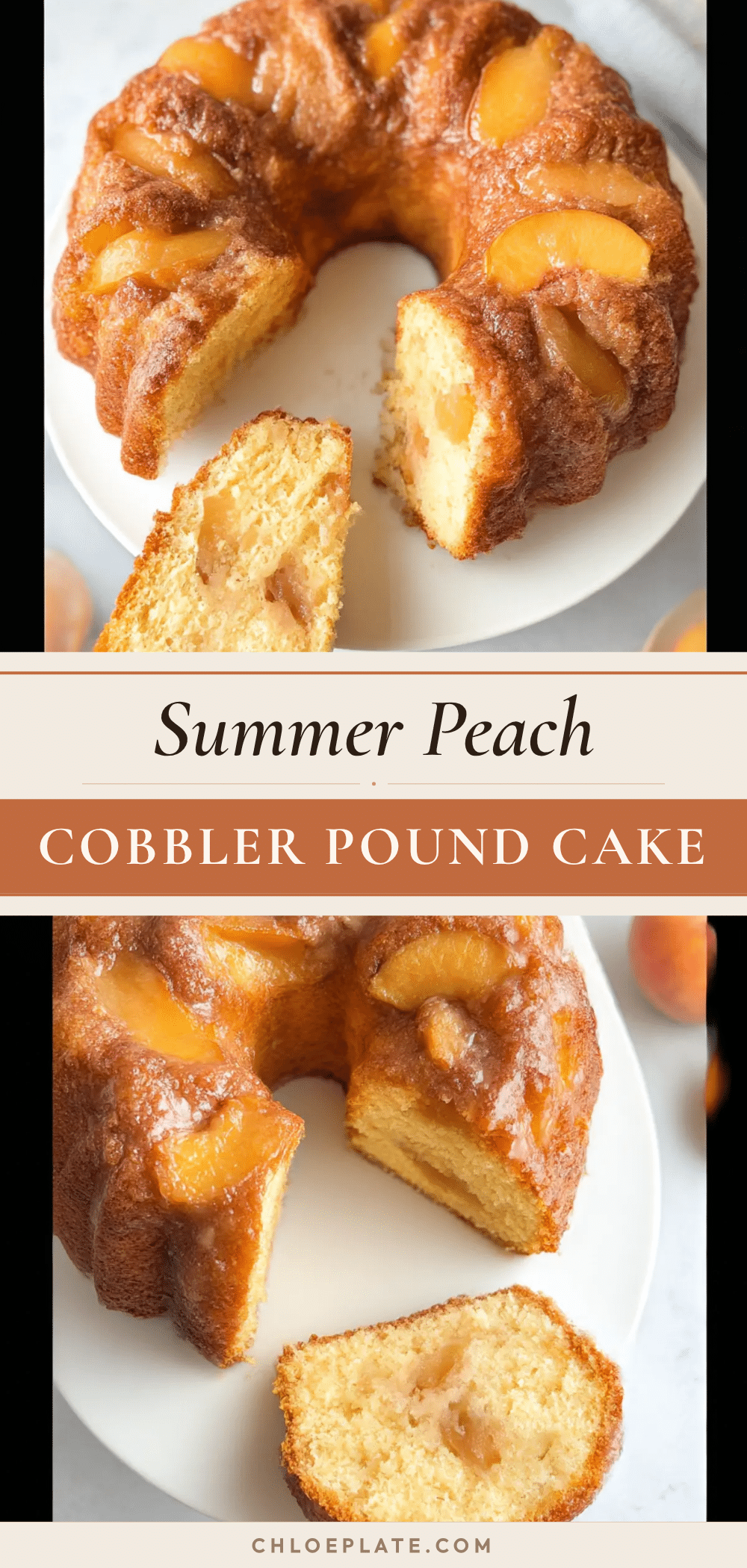
Perfect Peach Cobbler Pound Cake: Easy & Best Homemade Recipe

This Perfect Peach Cobbler Pound Cake combines the buttery, dense crumb of a classic pound cake with sticky, jammy peach cobbler filling. It’s an easy, one-bowl recipe that creates a golden, crackly-topped loaf with pockets of caramelized peach sweetness.
- Prep Time: 15 minutes
- Cook Time: 55-65 minutes
- Total Time: 1 hour 10 minutes to 1 hour 20 minutes
- Yield: 10 servings 1x
- Category: Dessert
- Cuisine: American
Ingredients
- 1 cup (2 sticks) unsalted butter, softened
- 1 ½ cups granulated sugar
- 4 large eggs, room temperature
- 1 teaspoon vanilla extract
- 1 teaspoon almond extract
- 2 cups all-purpose flour
- 1 teaspoon baking powder
- ½ teaspoon salt
- ½ cup sour cream, room temperature
- 2 cups fresh or canned peaches, diced
- 2 tablespoons brown sugar
- 1 teaspoon cinnamon
- 1 tablespoon all-purpose flour
- 1 tablespoon granulated sugar (for topping)
- ½ teaspoon cinnamon (for topping)
Instructions
- Preheat your oven to 350°F (175°C). Grease a 9×5-inch loaf pan thoroughly with butter or non-stick spray, then line it with a strip of parchment paper, leaving about 2 inches of overhang on the long sides. Set aside.
- In a small bowl, combine the diced peaches, brown sugar, cinnamon, and 1 tablespoon of flour. Stir gently until the peaches are evenly coated. Let sit while you make the batter. If peaches are very juicy, let sit for 5 minutes and drain off excess liquid.
- In a large mixing bowl, beat the softened butter and granulated sugar together on medium speed until light and fluffy, about 3 to 4 minutes. Scrape down the sides of the bowl halfway through.
- Add the eggs one at a time, beating well after each addition. Add the vanilla extract and almond extract and beat until combined. The batter should be smooth and glossy.
- In a separate bowl, whisk together the flour, baking powder, and salt. With the mixer on low speed, add about one-third of the flour mixture to the butter mixture, beating just until combined. Add half of the sour cream and mix. Repeat with another third of the flour, the remaining sour cream, and finally the last of the flour. Mix just until no streaks of flour remain.
- Pour half of the batter into the prepared loaf pan and spread it evenly with a spatula. Spoon the peach mixture evenly over the batter, keeping it away from the very edges of the pan. Pour the remaining batter on top and spread it gently to cover the peaches.
- In a tiny bowl, mix the remaining 1 tablespoon of sugar and ½ teaspoon of cinnamon. Sprinkle this evenly over the top of the batter.
- Bake for 55 to 65 minutes, or until a toothpick inserted into the center comes out clean or with just a few moist crumbs. If the top is browning too quickly after 40 minutes, tent the pan loosely with foil.
- Let the cake cool in the pan for 15 minutes, then use the parchment paper to lift it out and transfer it to a wire rack. Let it cool completely before slicing—about 1 to 2 hours.
Notes
Room temperature ingredients are crucial for best results. Don’t overmix the batter once flour is added. Layer peaches in the middle to prevent sinking. Let cake cool completely before slicing to avoid crumbling. Cake can be stored at room temperature for up to 3 days or frozen for up to 3 months.
Nutrition
- Serving Size: 1 slice
- Calories: 380
- Sugar: 32
- Fat: 18
- Carbohydrates: 50
- Fiber: 1
- Protein: 5
Keywords: peach cobbler pound cake, peach pound cake, peach dessert, summer dessert, homemade pound cake, peach cobbler cake, easy peach cake