Love this? Save it for later!
Share the inspiration with your friends
The salmon was already defrosting on the counter, and I was staring into the fridge hoping for a miracle. You know those nights when you want something that feels special but you have exactly zero energy left? That was this Tuesday. I spotted the jar of apricot preserves hiding behind the mustard, and honestly, I almost closed the door. But then I grabbed it anyway, along with the Dijon, and just started mixing. No plan. No recipe. Just a spoon and a hunch.
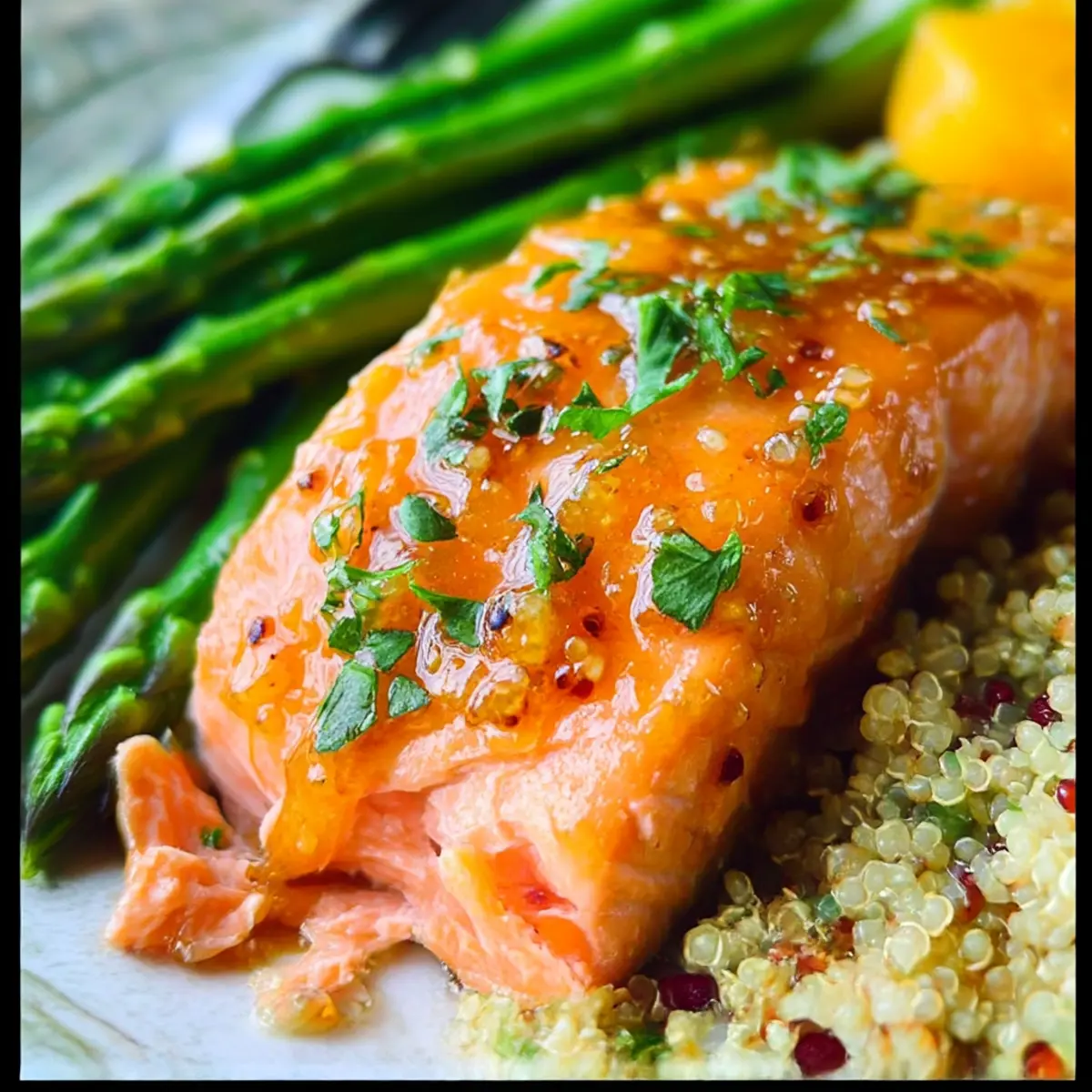
I brushed that sticky, tangy glaze over the salmon fillets and slid them under the broiler. The kitchen filled with this sweet-meets-sharp smell that made me stop scrolling on my phone and just stand there watching. Five minutes later, I pulled out salmon that looked like it belonged on a restaurant plate—glossy, caramelized edges, flaking apart with a fork. I ate it standing at the counter, straight from the pan, and that is not something I do often.
That accidental dinner became my go-to. I have made this Apricot Dijon Glazed Salmon at least a dozen times since then, tweaking the ratios until the balance of sweet and tangy felt exactly right. It is the kind of recipe that makes you look like you tried really hard when you actually just threw things together. And honestly, that is my favorite kind of dinner.
This is not a complicated dish. It is a 20-minute meal that uses pantry staples and delivers big, glossy flavor. The glaze caramelizes under heat, creating a sticky-sweet crust that locks in moisture. The Dijon cuts through the sweetness with a gentle bite, and the apricot keeps everything bright and fruity. Perfect for weeknights when you need something fast but refuse to eat bland chicken again.
Why You’ll Love This Recipe
I have tested this recipe more times than I care to admit. The first version was too sweet. The second was too mustardy. The third made my kitchen smell like a fancy bistro, and I knew I had cracked it. This version is the Goldilocks zone of glazes—balanced, glossy, and forgiving.
- Quick & Easy: From fridge to plate in under 20 minutes. No marinating, no complicated steps, just mix and brush.
- Simple Ingredients: You probably have apricot preserves and Dijon mustard in your fridge right now. If not, they are easy to find at any grocery store.
- Perfect for Busy Weeknights: This is the dinner you make when you want something impressive without spending an hour in the kitchen.
- Crowd-Pleaser: Even people who swear they do not like salmon have asked me for the recipe. The glaze is that good.
- Unbelievably Delicious: The caramelized edges are honestly addictive. The glaze gets sticky and slightly charred, creating texture contrasts that make every bite interesting.
What makes this different from other glazed salmon recipes is the ratio. Most versions drown the fish in sweetness or make the mustard too aggressive. I spent time dialing in the balance so the apricot shines without being cloying, and the Dijon adds depth without burning your nose. It is comfort food that feels light but satisfying, and it works just as well for a solo dinner as it does for company.
What Ingredients You Will Need
This recipe relies on a short list of ingredients that work together to create something bigger than the sum of their parts. The glaze is the star, but the quality of your salmon matters too. Here is what you need and why each ingredient pulls its weight.
- Salmon Fillets (4 fillets, about 6 ounces each): Look for fillets that are similar in thickness so they cook evenly. I prefer wild-caught salmon for its firmer texture and cleaner flavor, but farm-raised works fine too. Pat them dry with paper towels before glazing—this helps the glaze stick better.
- Apricot Preserves (1/3 cup): Use good quality preserves, not jam or jelly. Preserves have actual fruit pieces that add texture and concentrated flavor. I like Bonne Maman or a local brand if I can find one. The sweetness here is key, so do not use sugar-free versions—they will not caramelize properly.
- Dijon Mustard (2 tablespoons): This is where the tang comes from. I use Grey Poupon because it has a smooth, sharp flavor that cuts through the sweetness. Do not swap this for yellow mustard—the flavor profile is completely different and will throw off the balance.
- Olive Oil (1 tablespoon): A light drizzle helps the glaze spread and prevents the salmon from sticking to the pan. Use a mild olive oil, not extra-virgin, so it does not overpower the delicate fish.
- Garlic (2 cloves, minced): Fresh garlic adds a savory backbone that keeps the glaze from tasting one-dimensional. If you are in a rush, use 1/2 teaspoon of garlic powder, but fresh really makes a difference here.
- Salt and Black Pepper (to taste): Simple seasoning that enhances the natural flavor of the salmon. Do not skip this step—it makes the glaze pop.
- Fresh Lemon Juice (1 tablespoon, plus wedges for serving): A squeeze of lemon at the end brightens everything up. It balances the sweetness and adds a fresh finish that makes the dish feel lighter.
- Optional Garnish: Fresh Parsley or Chives (chopped): Not necessary but adds a nice pop of color and a subtle herbaceous note.
Equipment Needed
You do not need fancy tools for this recipe, which is part of why I love it. Here is what you will need:
- Baking Sheet or Oven-Safe Skillet: A rimmed baking sheet lined with foil or parchment makes cleanup a breeze. I use a cast iron skillet sometimes for better heat retention and a nice sear on the bottom.
- Small Mixing Bowl: For whisking together the glaze. Any small bowl works.
- Pastry Brush or Spoon: A silicone pastry brush is ideal for even coating, but a regular spoon works fine too. Just drizzle and spread.
- Aluminum Foil or Parchment Paper: Lining your pan prevents sticking and makes cleanup almost zero. Trust me on this one.
- Fish Spatula or Thin Spatula: Salmon fillets can be delicate after cooking. A thin, angled spatula helps you lift them without breaking them apart.
- Instant-Read Thermometer (Optional but Helpful): Salmon is perfectly cooked at 125°F to 130°F in the thickest part. If you cook salmon often, this tool is worth having.
Preparation Method
This comes together fast, so I recommend having everything prepped before you start. The actual cooking time is under 10 minutes, so you do not want to be chopping garlic while the broiler is on.
- Preheat your broiler and position an oven rack about 6 inches from the heating element. Line a baking sheet with foil or parchment paper for easy cleanup. If you are using foil, give it a quick spray of cooking spray to be safe.
- Pat the salmon fillets dry with paper towels. This is not optional—excess moisture will steam the fish instead of letting it caramelize. Place the fillets skin-side down on the prepared baking sheet, spacing them at least an inch apart so the heat circulates evenly.
- Season the tops with a pinch of salt and a few cracks of black pepper. Keep it light—the glaze has plenty of flavor on its own. Let the salmon sit at room temperature for about 5 minutes while you make the glaze.
- In a small bowl, whisk together the apricot preserves, Dijon mustard, olive oil, and minced garlic until smooth. The mixture should be thick but spreadable. If it feels too stiff, add a teaspoon of water to loosen it up. Taste it here—you want a balance of sweet and tangy with a little kick from the garlic.
- Brush the glaze generously over the tops and sides of each fillet. Do not be shy—this is where the flavor lives. Use all the glaze if you can. Reserve a tiny bit if you want to brush on a second layer halfway through cooking.
- Broil the salmon for 6 to 8 minutes, depending on thickness. Do not walk away. Broilers vary wildly in temperature, and you want the glaze to bubble and caramelize without burning. At the 5-minute mark, check the salmon. The glaze should be dark golden and slightly sticky, and the fish should flake easily with a fork.
- Remove from the oven and squeeze fresh lemon juice over the top. The acid cuts through the sweetness and wakes up all the flavors. Let the salmon rest for 2 minutes—this allows the juices to redistribute so the fish stays moist.
- Transfer to plates using a thin spatula, lifting carefully from under the fillet. Garnish with chopped parsley or chives if you are feeling fancy. Serve immediately with lemon wedges on the side.
Cooking Tips & Techniques
I have burned my fair share of glaze under the broiler, and I have learned a few things the hard way. Here is what I wish someone had told me the first time.
Watch the broiler like a hawk. I cannot stress this enough. The line between caramelized and burnt is about 30 seconds. If your broiler runs hot, check the salmon at 4 minutes. If it runs cool, give it the full 8. Every oven is different, and you will learn yours after one or two tries.
Do not overcrowd the pan. Salmon fillets need breathing room. If they are too close together, they steam instead of caramelizing, and you lose that gorgeous sticky crust. Use two baking sheets if you are cooking for a crowd.
Let the salmon come to room temperature. Cold salmon straight from the fridge cooks unevenly. Let it sit on the counter for 10 to 15 minutes before brushing on the glaze. This small step makes a big difference in texture.
Double the glaze if you love sauce. The recipe makes just enough for a nice coating, but if you want extra to drizzle over rice or vegetables, make a separate batch. Do not use the same brush that touched raw fish on the extra glaze—keep it separate.
Use an instant-read thermometer if you are unsure. Salmon is perfectly cooked at 125°F to 130°F in the thickest part. It will continue cooking slightly after you pull it out, so do not wait until it hits 135°F or it will be overdone.
Variations & Adaptations
This recipe is flexible, and I have tried several variations depending on what I have in the pantry or who I am cooking for.
- Spicy Version: Add 1/2 teaspoon of red pepper flakes or a drizzle of sriracha to the glaze. The heat plays beautifully with the sweet apricot and sharp Dijon. I made this version for a friend who loves spice, and she said it was the best salmon she had ever eaten.
- Honey Substitute: If you do not have apricot preserves, use 1/4 cup of honey and add 1 tablespoon of apple cider vinegar to mimic the acidity. The texture will be slightly thinner, but the flavor is still delicious.
- Low-Carb Option: This recipe is naturally low-carb and keto-friendly as written. Serve it with roasted asparagus or a simple green salad to keep the meal light and satisfying.
- Grilled Version: Instead of broiling, grill the salmon over medium-high heat for 4 to 5 minutes per side. Brush the glaze on during the last 2 minutes of cooking to prevent burning. The smoky char from the grill adds another layer of flavor.
- Baked Version: If you prefer baking, cook at 400°F for 12 to 15 minutes. The glaze will not caramelize as deeply, but the salmon will be tender and flaky. Brush on a second layer of glaze halfway through for extra flavor.
Serving & Storage Suggestions
This salmon is versatile enough to pair with almost anything. I usually serve it over a bed of fluffy rice or quinoa to soak up the extra glaze. Roasted vegetables like asparagus, broccoli, or green beans work beautifully alongside it. If you want something lighter, try it over a bed of mixed greens with a simple lemon vinaigrette—the sweetness of the glaze contrasts nicely with the tart dressing.
For a complete meal, I love serving this with a side of savory green beans with bacon and garlic. The smoky, savory flavors balance the sweet-tangy salmon perfectly. If you are in the mood for something fresh, a crispy broccoli salad with bacon adds crunch and brightness to the plate.
Storing Leftovers: Store leftover salmon in an airtight container in the refrigerator for up to 3 days. The glaze will soften, but the flavor remains excellent. I do not recommend freezing cooked salmon—the texture becomes watery when thawed.
Reheating: The best way to reheat is in a low oven at 300°F for about 10 minutes, or in a skillet over medium-low heat with a splash of water to rehydrate the glaze. Avoid the microwave if you can—it tends to dry out the fish and make the glaze rubbery. Cold leftover salmon is also delicious flaked over a salad the next day.
The flavors actually deepen overnight as the glaze seeps into the fish. I have been known to make extra just for lunch the next day, flaking it over a bed of greens with a drizzle of zesty Japanese ginger salad dressing.
Nutritional Information & Benefits
Salmon is one of the most nutrient-dense proteins you can eat, and this recipe keeps it healthy without sacrificing flavor. Here is the estimated nutritional breakdown per serving (based on 4 servings):
- Calories: 380
- Protein: 34g
- Fat: 18g
- Carbohydrates: 18g
- Fiber: 0g
- Sugar: 14g
Salmon is packed with omega-3 fatty acids, which support heart health and reduce inflammation. Apricot preserves provide a small amount of vitamin A and antioxidants, while the garlic offers immune-boosting properties. This meal is naturally gluten-free, dairy-free, and low-carb, making it suitable for a variety of dietary needs. If you are watching your sugar intake, look for preserves with no added sugar or reduce the amount slightly—the Dijon will still carry the flavor.
Conclusion
This Apricot Dijon Glazed Salmon has become my emergency dinner, my company dinner, and my “I want something good but I am tired” dinner. It is the recipe I turn to when I need to feel like I have my life together, even if the rest of the day was chaos. The glaze is forgiving, the cooking time is short, and the result looks like you fussed when you absolutely did not.
I hope you try this and make it your own. Adjust the sweetness, add some heat, serve it over rice or greens or straight from the pan like I did that first night. The best recipes are the ones that work with you, not against you, and this one has never let me down.
If you make this, I would love to hear how it turned out. Drop a comment below, tag me in your photos, or tell me what side dish you paired it with. And if you love quick, flavorful dinners, you might also enjoy this quick garlic lime shrimp or these juicy oven BBQ chicken thighs. Happy cooking!
Frequently Asked Questions
Can I use frozen salmon for this recipe?
Yes, but thaw it completely in the refrigerator overnight and pat it very dry before glazing. Excess moisture will prevent the glaze from caramelizing properly.
What can I substitute for apricot preserves?
Peach preserves, orange marmalade, or honey mixed with a splash of apple cider vinegar all work well. The flavor will change slightly, but the sweet-tangy balance will still be delicious.
How do I know when the salmon is done?
The salmon should flake easily with a fork and the internal temperature should reach 125°F to 130°F in the thickest part. The glaze should be bubbly and dark golden.
Can I make the glaze ahead of time?
Absolutely. Whisk the glaze together up to 3 days in advance and store it in an airtight container in the refrigerator. Let it come to room temperature before brushing it on the salmon.
Is this recipe keto-friendly?
Yes, this recipe is naturally low in carbohydrates and fits well into a keto diet. Each serving contains about 18g of carbs, mostly from the apricot preserves. For a lower-carb option, reduce the preserves to 1/4 cup.
Pin This Recipe!
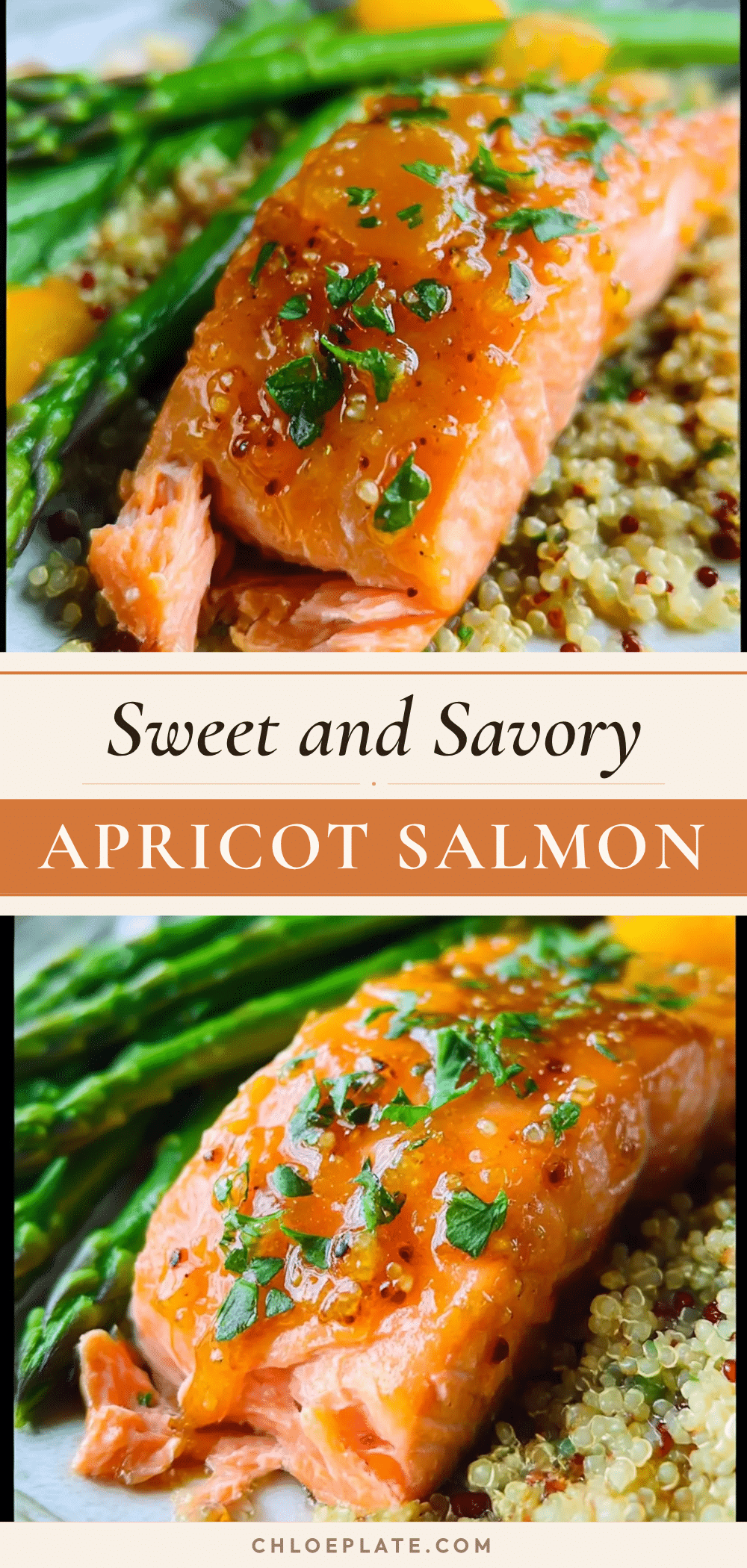
Flavorful Apricot Dijon Glazed Salmon: Easy 20-Minute Dinner

A quick and easy 20-minute dinner featuring salmon fillets glazed with a sweet and tangy apricot Dijon mixture, broiled to perfection for a caramelized, restaurant-quality finish.
- Prep Time: 10 minutes
- Cook Time: 8 minutes
- Total Time: 18 minutes
- Yield: 4 servings 1x
- Category: Main Course
- Cuisine: American
Ingredients
- 4 salmon fillets (about 6 ounces each)
- 1/3 cup apricot preserves
- 2 tablespoons Dijon mustard
- 1 tablespoon olive oil
- 2 cloves garlic, minced
- Salt and black pepper to taste
- 1 tablespoon fresh lemon juice (plus wedges for serving)
- Optional: fresh parsley or chives, chopped for garnish
Instructions
- Preheat your broiler and position an oven rack about 6 inches from the heating element. Line a baking sheet with foil or parchment paper.
- Pat the salmon fillets dry with paper towels. Place them skin-side down on the prepared baking sheet, spacing them at least an inch apart.
- Season the tops with a pinch of salt and a few cracks of black pepper. Let the salmon sit at room temperature for about 5 minutes.
- In a small bowl, whisk together the apricot preserves, Dijon mustard, olive oil, and minced garlic until smooth.
- Brush the glaze generously over the tops and sides of each fillet.
- Broil the salmon for 6 to 8 minutes, depending on thickness, until the glaze is dark golden and bubbly and the fish flakes easily with a fork.
- Remove from the oven and squeeze fresh lemon juice over the top. Let the salmon rest for 2 minutes.
- Transfer to plates using a thin spatula. Garnish with chopped parsley or chives if desired. Serve immediately with lemon wedges.
Notes
Watch the broiler closely to prevent burning. Let salmon come to room temperature before cooking for even results. Double the glaze if you want extra for drizzling. Leftovers can be stored in the refrigerator for up to 3 days; reheat in a low oven or skillet.
Nutrition
- Serving Size: 1 fillet
- Calories: 380
- Sugar: 14
- Sodium: 400
- Fat: 18
- Saturated Fat: 3
- Carbohydrates: 18
- Protein: 34
Keywords: apricot dijon glazed salmon, easy salmon recipe, 20-minute dinner, broiled salmon, weeknight dinner, healthy salmon, gluten-free salmon, low-carb salmon