Love this? Save it for later!
Share the inspiration with your friends
The first time I made this dressing, I was chasing a memory. You know that salad you get at a certain Japanese steakhouse—the one with the pale orange dressing that you’d happily drink if nobody was watching? That one. I’d order it, eat my iceberg lettuce like it was a delicacy, and wonder why my own salads at home never hit that same note. So one night, after a particularly long week, I grabbed a blender, a hunk of fresh ginger, and basically started throwing things together. I wasn’t expecting much, honestly. I figured I’d end up with something edible, maybe a little too sharp, and move on.
But then I tasted it. And I actually stopped mid-swipe of the spatula. The ginger was there, bright and warm, but it wasn’t screaming. The rice vinegar gave it this gentle tang, and the carrot—pureed right in—made everything smooth and just slightly sweet. It was that restaurant dressing. Or close enough that it didn’t matter. I made a salad that night just to have an excuse to eat more of it. And then I made another salad the next day. And the day after that.
This zesty Japanese ginger salad dressing has become my kitchen staple. It’s the kind of thing you keep in a jar in the fridge and drizzle on everything from crisp romaine to roasted vegetables. It’s not complicated, which is exactly why it works. No obscure ingredients, no fussy techniques. Just a handful of pantry staples that somehow turn into something you’ll crave. And once you make it yourself, you’ll never go back to the bottled stuff. Trust me on that.
Why You’ll Love This Recipe
I’ve tested a lot of dressing recipes over the years. Some were too oily, some were too sour, and some just tasted like they were trying too hard. This one? It hits every note without any drama. Here’s why it’s earned a permanent spot in my fridge:
- Quick & Easy : It comes together in under 5 minutes. No cooking, no chopping beyond a rough peel. Just toss everything in a blender and go.
- Simple Ingredients : You probably have most of this in your kitchen right now. Fresh ginger, rice vinegar, soy sauce, a little oil, and a carrot. That’s it.
- Perfect for Meal Prep : This dressing stays good for over a week in the fridge. Make a batch on Sunday and you’ve got vibrant salads all week long.
- Crowd-Pleaser : I’ve brought this to potlucks and watched people ask for the recipe before they even finished their first plate. Kids love it too—it’s not too spicy or too tangy.
- Unbelievably Versatile : Use it as a salad dressing, a marinade for chicken or tofu, or even a drizzle over roasted veggies. It’s way more than a one-trick pony.
What makes this version different from the rest? It’s the balance. So many homemade ginger dressings end up too sharp or too sweet. By blending in a little carrot and using the right ratio of oil to vinegar, you get a dressing that’s creamy without dairy, tangy without being harsh, and just sweet enough to keep you coming back for another bite. It’s comfort in a jar—reimagined for real life.
What Ingredients You Will Need
This recipe uses simple, wholesome ingredients to deliver bold flavor and satisfying texture without the fuss. Most of these are pantry staples, which makes this dressing dangerously easy to whip up anytime.
For the Dressing
- Fresh ginger (2-inch piece, peeled) – This is the star of the show. Use fresh ginger, not the dried powder. It gives that warm, peppery kick that makes the dressing so addictive. I like to peel it with a spoon—it’s easier than a peeler and wastes less ginger.
- Carrot (1 medium, roughly chopped) – This adds natural sweetness and that signature pale orange color. It also helps create a creamy texture without any dairy. Look for firm, bright orange carrots for the best flavor.
- Rice vinegar (¼ cup) – Milder than white vinegar, with a gentle acidity that doesn’t overpower the ginger. I use unseasoned rice vinegar to control the salt level myself. If you only have seasoned, reduce the soy sauce slightly.
- Soy sauce (2 tablespoons) – Adds that savory umami depth. I use low-sodium soy sauce so I can adjust the saltiness later. Tamari works great for a gluten-free option.
- Neutral oil (⅓ cup) – A light oil like avocado or grapeseed works best. You don’t want something with a strong flavor competing with the ginger. Olive oil can work in a pinch, but it will change the taste noticeably.
- Toasted sesame oil (1 tablespoon) – This is optional but highly recommended. It adds a subtle nuttiness that rounds everything out. Just don’t overdo it—a little goes a long way.
- Honey or maple syrup (1 tablespoon) – A touch of sweetness to balance the vinegar and ginger. Maple syrup works beautifully for a vegan version. Adjust to your taste—some like it sweeter, some prefer more tang.
- Garlic (1 small clove) – One small clove is enough. It adds depth without screaming “garlic dressing.” If you love garlic, feel free to add another, but start small.
- Salt and white pepper (to taste) – White pepper keeps the color light and adds a gentle heat. Black pepper works too, but you’ll see little specks in the final dressing.
Equipment Needed
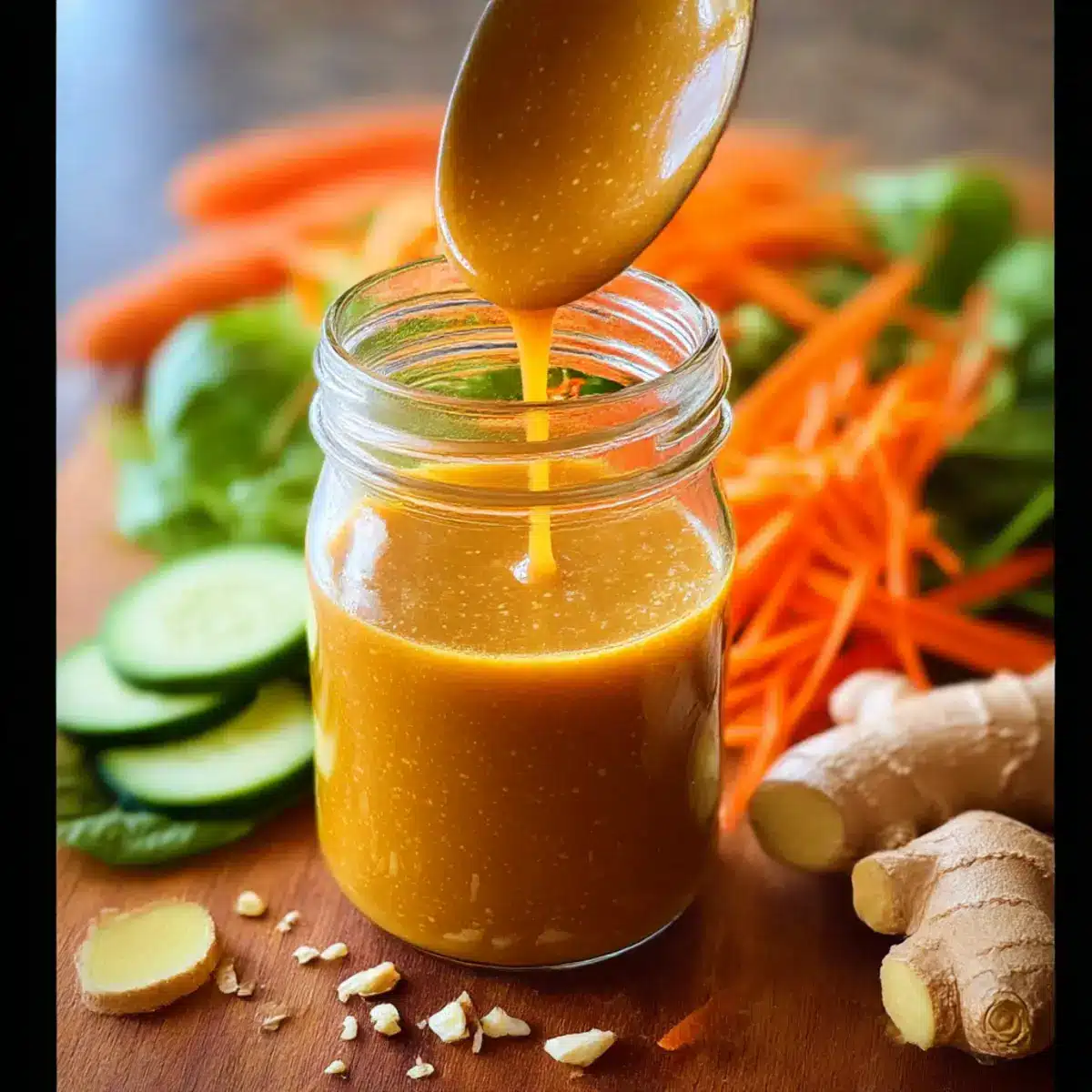
You don’t need a lot of fancy tools for this recipe, which is part of its charm. Here’s what you’ll need:
- Blender or food processor – A small blender works best. I use a personal-sized blender for easy cleanup. A full-size blender works too, but you may need to scrape down the sides a few times. If you don’t have a blender, you can grate the ginger and carrot finely and whisk everything together—it just won’t be as smooth.
- Measuring cups and spoons – For accuracy. I’m usually a “glug and guess” kind of cook, but this dressing benefits from balanced ratios.
- Fine-mesh strainer (optional) – If your ginger is particularly fibrous, you can strain the dressing after blending. I usually skip this step unless I’m serving it to guests and want it extra silky.
- Glass jar or bottle with lid – For storage. A mason jar works perfectly. The dressing will keep in the fridge for up to 10 days.
- Vegetable peeler – For the ginger and carrot. A spoon works for ginger, but a peeler is faster for the carrot.
Budget-friendly tip: If you don’t have a blender, a microplane grater is your best friend. Grate the ginger and carrot directly into a bowl, then whisk in the remaining ingredients. It’s a little more work, but the flavor is just as good.
Preparation Method
Making this dressing is almost embarrassingly easy. But I’ll walk you through it step by step, because the little details matter. Here’s how to get that perfect, creamy, zesty result every time.
- Prep your ginger and carrot. Peel the ginger using a spoon or vegetable peeler. You want about a 2-inch piece, which is roughly 2 tablespoons once grated or chopped. Peel the carrot and chop it into rough chunks. Smaller pieces blend more easily, so don’t just throw in a whole carrot and hope for the best.
- Combine the wet ingredients. In your blender, add the rice vinegar, soy sauce, neutral oil, toasted sesame oil, and honey or maple syrup. Give it a quick swirl to combine. This helps the blender work more efficiently once you add the solids.
- Add the aromatics. Drop in the chopped ginger, carrot, and garlic clove. The garlic should be peeled—just smash it with the side of your knife and the skin slips right off. If you’re sensitive to raw garlic, remove the green germ from the center of the clove for a milder flavor.
- Blend until smooth. Start on low speed and gradually increase to high. Blend for about 30 to 45 seconds, or until the dressing is completely smooth and has a uniform pale orange color. If it seems too thick, add a tablespoon of water at a time until it reaches your desired consistency. I usually add about 2 tablespoons of water for a pourable dressing.
- Taste and adjust. This is the most important step. Dip a clean spoon in and taste it. Need more tang? Add a splash more rice vinegar. Want it sweeter? Another drizzle of honey. Too salty? A little more oil or water will balance it out. Write down what you changed so you can replicate it next time.
- Strain (optional). If your ginger was particularly fibrous or you want a restaurant-smooth texture, pour the dressing through a fine-mesh strainer into a bowl or jar. Press it through with the back of a spoon. I usually skip this step for everyday use, but it’s worth the extra minute if you’re serving company.
- Chill before serving. Transfer the dressing to a jar or bottle and refrigerate for at least 30 minutes before using. The flavors meld together as it chills, and the texture thickens slightly. It’s even better the next day.
The dressing will separate slightly as it sits—that’s totally normal. Just give it a good shake or stir before each use. If it thickens too much in the fridge, let it sit at room temperature for 10 minutes or add a teaspoon of warm water and shake vigorously.
Cooking Tips & Techniques
Over the years, I’ve made this dressing enough times to learn a few tricks the hard way. Here’s what I wish someone had told me from the start:
Don’t skip the fresh ginger. I know it’s tempting to use the jarred stuff from the fridge, but it won’t give you the same bright, peppery kick. Fresh ginger has a heat that mellowed ginger paste just doesn’t have. If you’re in a pinch, use about half the amount of jarred ginger and add a pinch of cayenne for warmth.
Toast your sesame oil lightly. If you have time, heat the sesame oil in a small pan for about 30 seconds over medium heat. Let it cool before adding it to the blender. This deepens the nutty flavor and makes the dressing even more aromatic. It’s a small step that makes a big difference.
Watch your oil ratio. Too much oil and the dressing feels greasy. Too little and it’s sharp and thin. The ⅓ cup neutral oil plus 1 tablespoon sesame oil is my sweet spot. If you’re watching calories, you can reduce the neutral oil to ¼ cup and add 2 tablespoons of water instead. It won’t be as creamy, but it’ll still taste great.
Let it rest. I know you’ll want to use it immediately, but trust me—this dressing gets better after an hour in the fridge. The ginger and garlic mellow out, the carrot sweetness comes forward, and everything just settles into harmony. Make it ahead if you can.
Don’t over-blend. Blending too long can actually make the dressing slightly bitter, especially if your blender gets hot. Stop as soon as it’s smooth. 30 seconds is usually plenty.
Variations & Adaptations
This dressing is incredibly flexible. Here are a few ways I’ve tweaked it over the years, depending on what I have on hand or who I’m cooking for.
- Spicy Ginger Dressing : Add ½ teaspoon of sriracha or a small red chili (seeds removed) to the blender. The heat pairs beautifully with the ginger and makes it perfect for drizzling over grain bowls or grilled meats.
- Creamy Ginger Dressing : Add 2 tablespoons of plain Greek yogurt or silken tofu to the blender. This gives it a ranch-like creaminess while keeping the ginger flavor front and center. It’s my go-to for heartier salads with kale or cabbage.
- Citrus Ginger Dressing : Replace 2 tablespoons of the rice vinegar with fresh orange or lime juice. The citrus brightens everything up and makes it feel lighter. I love this version in the summer with a fresh berry salad.
- Low-Fat Version : Cut the neutral oil to 2 tablespoons and add ¼ cup of water or unsweetened applesauce. The texture will be thinner, but the flavor is still fantastic. Great for when you want a lighter option.
- Nut-Free Version : The recipe is already nut-free as written. Just make sure your toasted sesame oil is pure sesame oil and not a blend that includes peanut oil.
I once made a batch with mango instead of carrot—it was surprisingly good, though definitely sweeter. Don’t be afraid to experiment. This dressing is forgiving.
Serving & Storage Suggestions
This dressing is a workhorse in my kitchen. Here’s how I use and store it:
Serving : Serve it chilled or at room temperature. It’s perfect over a simple bed of mixed greens, shredded cabbage, or romaine. I also love it drizzled over grilled chicken salads or used as a dipping sauce for spring rolls and dumplings. For a quick weeknight dinner, toss it with cold soba noodles, shredded carrots, and edamame. It’s also fantastic as a marinade for salmon or tofu—just let it sit for 20 minutes before cooking.
Storage : Store the dressing in an airtight glass jar in the refrigerator for up to 10 days. The flavors actually deepen after the first day. Before each use, shake the jar vigorously or stir with a fork, as the ingredients will separate naturally. If the dressing thickens too much in the fridge, let it sit at room temperature for 10 minutes or add a teaspoon of warm water and shake.
Freezing : I don’t recommend freezing this dressing. The texture becomes grainy when thawed due to the carrot and ginger fibers. It’s best made fresh and used within a week or two.
Nutritional Information & Benefits
This dressing is surprisingly wholesome for how indulgent it tastes. Here’s a rough estimate per 2-tablespoon serving:
- Calories: 90-110
- Fat: 9g (mostly from healthy oils)
- Carbohydrates: 4g
- Sugar: 2g (naturally occurring from carrot and honey)
- Protein: 1g
- Sodium: 180mg (varies with soy sauce)
Health Benefits : Fresh ginger is known for its anti-inflammatory properties and can help with digestion. Carrots are packed with beta-carotene, which your body converts to vitamin A for healthy eyes and skin. Using avocado or grapeseed oil provides heart-healthy unsaturated fats. This dressing is naturally gluten-free if you use tamari, and it’s dairy-free and vegan-friendly with maple syrup instead of honey.
Dietary Considerations : This recipe is already dairy-free, egg-free, and nut-free. For a lower-sodium version, use low-sodium soy sauce and reduce the added salt. For a sugar-free version, substitute the honey with a monk fruit sweetener or skip it entirely—the carrot adds enough natural sweetness for most palates.
Conclusion
This zesty Japanese ginger salad dressing has become more than just a recipe in my kitchen—it’s a little ritual. I make a batch every Sunday, and somehow, it makes the whole week feel more organized. It turns a boring bag of greens into something I actually look forward to eating. It’s the kind of dressing that makes salads feel like a treat, not a chore.
I hope you give it a try, and I hope you make it your own. Play with the ratios, swap in different vinegars, add a little heat if that’s your thing. The best recipes are the ones that bend to fit your life. And this one bends beautifully.
Have you tried this dressing? I’d love to hear how it turned out for you. Drop a comment below and let me know what you paired it with, or if you came up with a variation I haven’t thought of. And if you loved it, share this post with a friend who needs a little more zest in their salad life. Happy cooking!
Frequently Asked Questions
Can I use ground ginger instead of fresh ginger?
You can, but it won’t taste the same. Fresh ginger gives the dressing that bright, peppery kick that makes it so distinctive. Ground ginger is more muted and slightly dusty in flavor. If you’re in a pinch, use about 1 teaspoon of ground ginger and add a tiny pinch of cayenne for warmth.
How long does this dressing last in the fridge?
It stays fresh for up to 10 days in an airtight glass jar. The flavors actually get better after the first day. Just give it a good shake before using, as the ingredients will separate naturally.
Can I make this dressing without a blender?
Absolutely. Use a microplane or the smallest holes on a box grater to finely grate the ginger and carrot. Then whisk everything together in a bowl. It won’t be as smooth, but the flavor is just as good. This method actually gives you a more textured, rustic dressing.
What salads go best with this dressing?
It’s incredibly versatile. It’s amazing on a simple green salad with cucumber and avocado, but it also shines on shredded cabbage slaw, grain bowls, or over grilled vegetables. I especially love it on a fresh grilled chicken salad with some crunchy toppings.
Is this dressing gluten-free?
As written, it contains soy sauce, which typically has wheat. To make it gluten-free, simply swap the soy sauce for tamari or coconut aminos. Both work beautifully and won’t change the flavor much. The rest of the ingredients are naturally gluten-free.
Pin This Recipe!
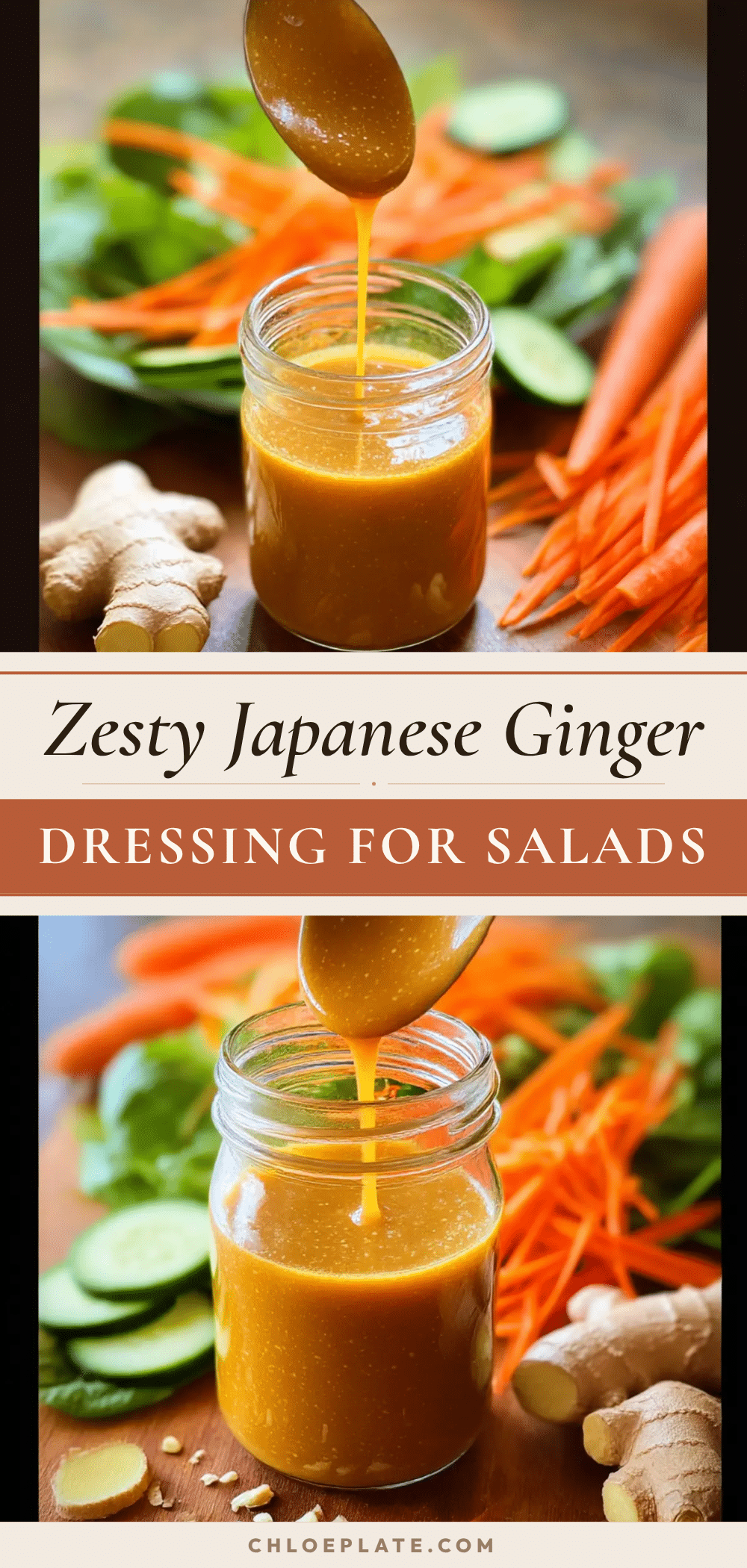
Zesty Japanese Ginger Salad Dressing: Best Homemade Recipe
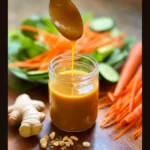
This zesty Japanese ginger salad dressing is a kitchen staple that comes together in under 5 minutes. It’s creamy without dairy, tangy without being harsh, and perfectly balanced with fresh ginger, carrot, and rice vinegar.
- Prep Time: 5 minutes
- Cook Time: 0 minutes
- Total Time: 5 minutes
- Yield: 8 servings 1x
- Category: Condiment
- Cuisine: Japanese
Ingredients
- 2-inch piece fresh ginger, peeled
- 1 medium carrot, roughly chopped
- ¼ cup rice vinegar (unseasoned)
- 2 tablespoons low-sodium soy sauce
- ⅓ cup neutral oil (avocado or grapeseed)
- 1 tablespoon toasted sesame oil
- 1 tablespoon honey or maple syrup
- 1 small garlic clove, peeled
- Salt and white pepper to taste
Instructions
- Peel the ginger using a spoon or vegetable peeler. Peel the carrot and chop into rough chunks.
- In a blender, combine rice vinegar, soy sauce, neutral oil, toasted sesame oil, and honey or maple syrup. Swirl to combine.
- Add chopped ginger, carrot, and garlic clove to the blender.
- Blend on low speed, gradually increasing to high, for 30 to 45 seconds until completely smooth and pale orange. If too thick, add water 1 tablespoon at a time until desired consistency (about 2 tablespoons for pourable dressing).
- Taste and adjust seasoning: add more rice vinegar for tang, honey for sweetness, or oil/water to balance saltiness.
- Optional: Strain through a fine-mesh strainer for a smoother texture.
- Transfer to a jar or bottle and refrigerate for at least 30 minutes before serving to allow flavors to meld.
Notes
The dressing will separate slightly as it sits; shake well before each use. If it thickens too much in the fridge, let it sit at room temperature for 10 minutes or add a teaspoon of warm water and shake. For a spicier version, add ½ teaspoon sriracha or a small red chili. For a creamier version, add 2 tablespoons plain Greek yogurt or silken tofu. For a citrus twist, replace 2 tablespoons of rice vinegar with fresh orange or lime juice.
Nutrition
- Serving Size: 2 tablespoons
- Calories: 100
- Sugar: 2
- Sodium: 180
- Fat: 9
- Saturated Fat: 1
- Carbohydrates: 4
- Protein: 1
Keywords: Japanese ginger dressing, homemade salad dressing, ginger carrot dressing, Asian salad dressing, easy dressing recipe