Love this? Save it for later!
Share the inspiration with your friends
“You have to taste this,” my neighbor insisted one late summer afternoon as I wrestled with a sad-looking eggplant I’d just bought on impulse. Honestly, I wasn’t sold at first—eggplant can be a fickle friend, sometimes bitter, sometimes mushy. But that day, after a quick chat over the fence and a borrowed pan, I got a lesson in caponata that changed how I see this vegetable forever.
The kitchen filled with the sweet tang of simmering tomatoes, the gentle crunch of celery, and the unexpected pop of raisins mingling with pine nuts. It was a little like the Mediterranean sun had been caught in a jar and was now warm on my tongue. There was no rush, just the slow coaxing of flavors that turned random pantry odds and ends into something quietly spectacular.
That eggplant caponata became my go-to for weeknight dinners, picnic spreads, and even an easy appetizer when friends stopped by unannounced. It’s the kind of recipe you don’t forget because it’s honest—no need for fancy gadgets or exotic spices, just good ingredients doing their thing. I kept tweaking it over a couple of weeks, sometimes swapping in a splash of red wine vinegar instead of balsamic, or adding a pinch of chili flakes for a whisper of heat. Each time, it felt like a little Mediterranean vacation right in my own kitchen.
What’s stuck with me, though, is the way this vibrant relish brings people together, whether spread on warm toasted bread or spooned over grilled chicken. It’s a humble dish with a big personality, and honestly, it’s become one of those comforting staples I reach for when I want to feel both grounded and a little adventurous. So, if you’re curious about making a flavorful eggplant caponata that’s easy and endlessly satisfying, you might find this recipe worth a little spot on your table.
Why You’ll Love This Recipe
After trying a dozen versions and getting my hands dirty with every simmer, here’s why this flavorful eggplant caponata recipe stands out:
- Quick & Easy: Ready in about 40 minutes, this relish is perfect when you want Mediterranean flair without the fuss.
- Simple Ingredients: No need to hunt for hard-to-find items; most ingredients are pantry staples or fresh produce you probably already have.
- Perfect for Entertaining: Whether it’s a casual brunch or a laid-back dinner, caponata adds color and bright flavor to your table.
- Crowd-Pleaser: With its sweet, tangy, and savory notes, it’s one of those dishes that vanishes fast—kids and adults alike can’t get enough.
- Unbelievably Delicious: The mix of textures—from tender eggplant to crunchy pine nuts—makes every bite interesting and satisfying.
What sets this recipe apart? The balance of acidity and sweetness is just right, thanks to a careful blend of vinegars and a touch of sugar, which I’ve fine-tuned after several kitchen experiments. Plus, frying the eggplant cubes until golden before simmering ensures they hold their shape and don’t turn into a mushy mess—a trick I learned the hard way. This caponata isn’t just another version floating around; it’s the one I trust to bring a genuine Mediterranean vibe to my table, whether served alongside my easy savory baked chicken kabobs or as a vibrant side at a casual gathering.
What Ingredients You Will Need
This recipe uses simple, wholesome ingredients to create a bold, vibrant relish that’s both sweet and tangy. Most are pantry staples, with fresh produce that’s easy to find year-round. Here’s what you’ll gather:
- Eggplant – 2 medium (about 1.5 lbs/700g), peeled and diced into 1-inch cubes (choose firm, unblemished ones for best texture)
- Olive oil – ¼ cup (60 ml), for frying (I prefer a good quality extra virgin olive oil like California Olive Ranch)
- Onion – 1 medium, finely chopped (yellow or sweet onion works well)
- Celery stalks – 2, diced (adds crunch and classic caponata flavor)
- Garlic – 3 cloves, minced (fresh is best for punchy aroma)
- Tomatoes – 1 cup (240 ml) canned crushed tomatoes or fresh, chopped (use plum tomatoes if fresh and in season)
- Red wine vinegar – 3 tablespoons (adds tang, but balsamic can be swapped for a sweeter note)
- Capers – 2 tablespoons, rinsed (for that salty, briny kick)
- Green olives – ½ cup (about 75g), pitted and chopped (Kalamata or Castelvetrano are my favorites)
- Raisins – 2 tablespoons (bring in subtle sweetness)
- Pine nuts – 2 tablespoons, toasted (for crunch and a buttery hint)
- Fresh basil – handful, chopped (adds freshness and herbal brightness)
- Granulated sugar – 1 teaspoon (helps balance acidity)
- Salt & freshly ground black pepper – to taste
For substitutions, you can swap pine nuts with chopped walnuts or almonds if needed, and raisins with chopped dried apricots for a different fruity note. If you’re looking for a gluten-free or vegan relish, this recipe fits the bill perfectly, just double-check your vinegar and capers for cross-contamination.
Equipment Needed
- Large skillet or frying pan: Preferably non-stick or stainless steel with a heavy bottom for even heat. I find a 12-inch (30 cm) pan works great here.
- Wooden spoon or heat-resistant spatula: For stirring without scratching your pan.
- Cutting board and sharp knife: Essential for prepping the veggies evenly.
- Measuring cups and spoons: For accuracy, especially with vinegar and sugar.
- Small bowl for toasting pine nuts: You can toast them right in the pan before cooking, but a separate small pan can be handy.
If you don’t have a non-stick pan, just watch the heat carefully to avoid sticking and add a bit more olive oil if needed. For toasting pine nuts, keep a close eye—they burn quickly! I’ve tried using a toaster oven for this, but the stovetop offers better control.
Preparation Method
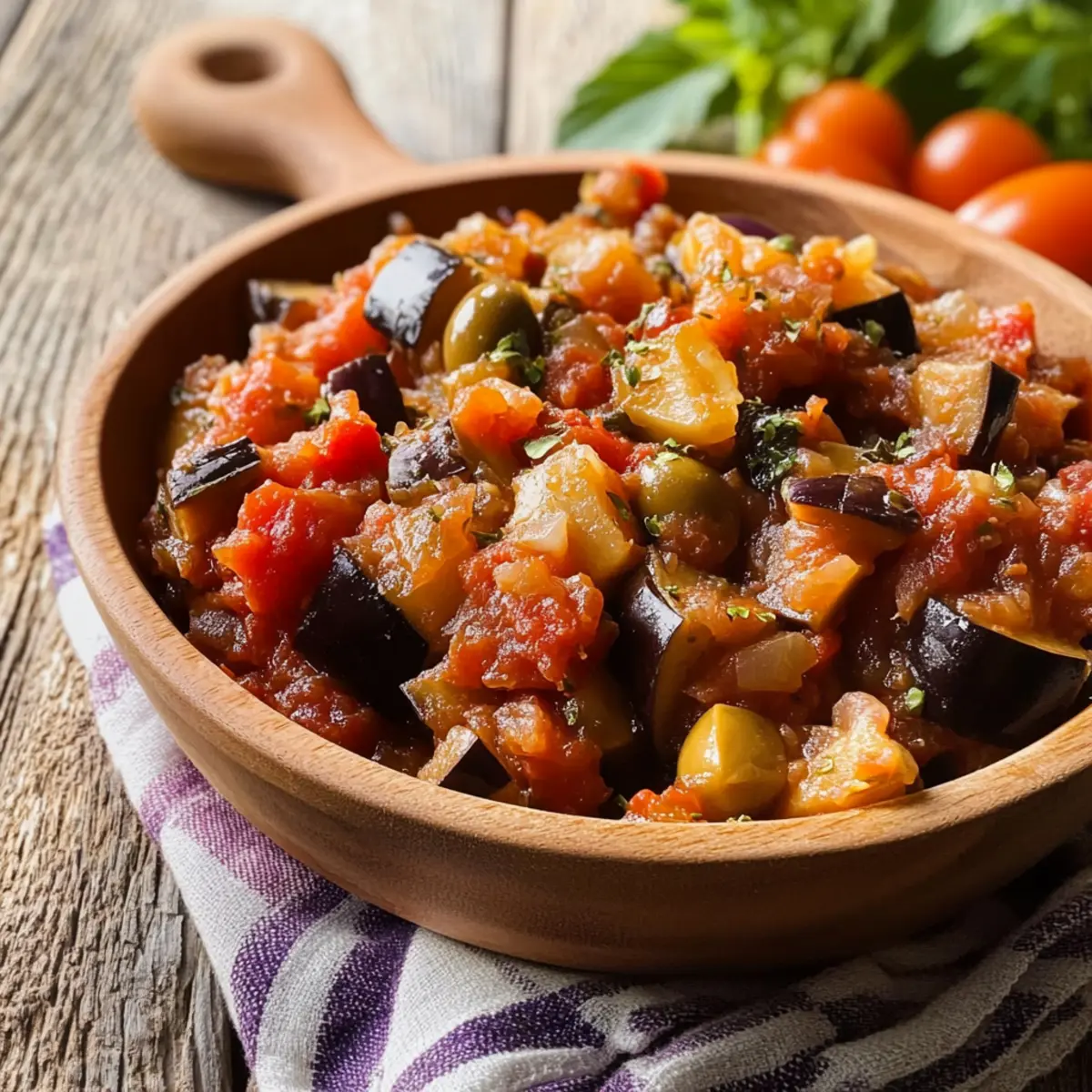
- Prepare the eggplant: Peel and dice the eggplant into 1-inch (2.5 cm) cubes. Sprinkle with a pinch of salt and let sit in a colander for 20 minutes to draw out bitterness. Rinse and pat dry with kitchen towels.
- Toast pine nuts: Heat a small dry skillet over medium heat. Add pine nuts and toast, stirring often, until golden and fragrant (about 2-3 minutes). Set aside.
- Fry eggplant: In a large skillet, heat ¼ cup (60 ml) olive oil over medium heat. Add eggplant cubes in batches to avoid overcrowding. Fry until golden on all sides, about 5-7 minutes per batch. Remove and drain on paper towels.
- Sauté aromatics: In the same skillet, add chopped onion and celery. Cook over medium heat until softened and translucent, about 5 minutes. Stir in minced garlic and cook 1 more minute until fragrant.
- Add tomatoes and seasonings: Stir in crushed tomatoes, red wine vinegar, sugar, salt, and pepper. Simmer gently for 10 minutes, letting the flavors meld and sauce thicken slightly.
- Combine caponata: Return fried eggplant to the skillet, add capers, chopped olives, raisins, and toasted pine nuts. Stir gently to combine and cook for another 5 minutes over low heat.
- Finish with fresh basil: Remove from heat and stir in chopped basil. Taste and adjust seasoning if needed.
- Cool and serve: Let the caponata cool to room temperature or chill in the fridge for a few hours to deepen flavors. Serve as a relish with crusty bread or alongside grilled meats.
Note: If the caponata seems too thick, add a splash of water or more vinegar to loosen it up. If it’s too acidic, a bit more sugar balances it out nicely. The eggplant should be tender but not mushy, and the relish should have a lively mix of sweet, salty, and tangy notes.
Cooking Tips & Techniques
One thing I’ve learned making this eggplant caponata is patience pays off. Frying the eggplant until golden before simmering helps keep the cubes intact—if you skip this step, you risk a watery, bland stew instead of a vibrant relish. Also, salting the eggplant early draws out bitterness, but don’t forget to rinse and dry it well; otherwise, the dish can get soggy.
When simmering the sauce, keep the heat low enough to avoid burning the garlic or drying out the mixture. Stir frequently to prevent sticking, especially if you use a stainless steel pan. Toasting the pine nuts separately allows you to control their crunch perfectly, and it adds a lovely nutty aroma that’s easy to miss otherwise.
Since caponata tastes best after resting, making it a day ahead is a smart move. Flavors meld and mellow, turning this simple relish into something downright addictive. If you want to multitask, try prepping your creamy garlic parmesan orzo at the same time for a lovely Mediterranean meal pairing.
Variations & Adaptations
- Spicy twist: Add ¼ teaspoon red pepper flakes or a diced fresh chili during the tomato simmer for subtle heat.
- Seasonal swap: In fall or winter, swap fresh tomatoes with canned San Marzano tomatoes for deeper flavor.
- Nut-free version: Omit pine nuts and add extra chopped olives or toasted pumpkin seeds for crunch.
- Low-sodium option: Reduce or omit added salt, rinse capers thoroughly, and choose low-sodium olives.
- Slow cooker method: After frying eggplant, combine all ingredients in a slow cooker on low for 2-3 hours, stirring occasionally.
I once tried a version with smoked paprika and it added a subtle smoky depth that was surprisingly good—just a pinch will do. Feel free to experiment with fresh herbs like oregano or parsley for a different herbal twist, depending on your mood or pantry.
Serving & Storage Suggestions
Eggplant caponata is a versatile dish best served at room temperature or slightly chilled. Spread it generously on toasted slices of crispy garlic parmesan focaccia bread for an irresistible starter. It also pairs beautifully with grilled chicken or fish, or even dolloped over roasted potatoes.
To store, transfer the caponata into an airtight container and refrigerate for up to 5 days. It also freezes well—just thaw in the fridge overnight and stir before serving. Reheat gently on the stovetop or enjoy cold as a vibrant relish. Over time, the flavors develop even more depth, making leftovers a treat.
Nutritional Information & Benefits
This flavorful eggplant caponata is naturally low in calories and packed with fiber from the eggplant and celery. The olive oil provides heart-healthy monounsaturated fats, while capers and olives add antioxidants and trace minerals. Tomatoes contribute lycopene, a powerful antioxidant linked to several health benefits.
At roughly 150 calories per serving (about ½ cup/120g), it’s a guilt-free condiment or side. It’s gluten-free, vegan, and can easily fit into low-carb or Mediterranean diets. Just watch the portion size if you’re mindful of sodium from olives and capers. Personally, I love this relish because it satisfies my craving for something flavorful and wholesome without any heavy guilt.
Conclusion
Flavorful eggplant caponata is one of those dishes that surprises you with its balance of sweet, sour, and savory all at once. It’s simple enough for a weeknight meal but impressive enough to serve when company drops by unexpectedly. The recipe invites you to customize and make it your own, whether by adding a spicy kick or swapping nuts.
For me, it’s become a quiet favorite—comforting yet vibrant, easy yet special. If you’re up for a little Mediterranean charm in your kitchen, this caponata won’t let you down. I’d love to hear how you tweak it or what you serve it with, so don’t hesitate to share your stories and tweaks in the comments below. Cooking is a journey, and this relish just might be your next delicious stop.
Frequently Asked Questions
What is the best eggplant to use for caponata?
Choose firm, medium-sized eggplants with smooth skin. Globe or Italian varieties work well. Avoid overly large or spongy ones, as they tend to be bitter or watery.
Can I make eggplant caponata ahead of time?
Absolutely! It tastes even better after resting for a few hours or overnight in the fridge, which allows the flavors to meld beautifully.
Is caponata served hot or cold?
Caponata can be served warm, at room temperature, or chilled. Each way offers a slightly different experience, but room temperature is most common.
How should I store leftover caponata?
Store leftovers in an airtight container in the refrigerator for up to 5 days. It also freezes well—just thaw and stir before serving.
Can I use balsamic vinegar instead of red wine vinegar?
Yes, balsamic vinegar adds a sweeter, more mellow flavor. Adjust the sugar accordingly to keep the balance perfect.
Pin This Recipe!
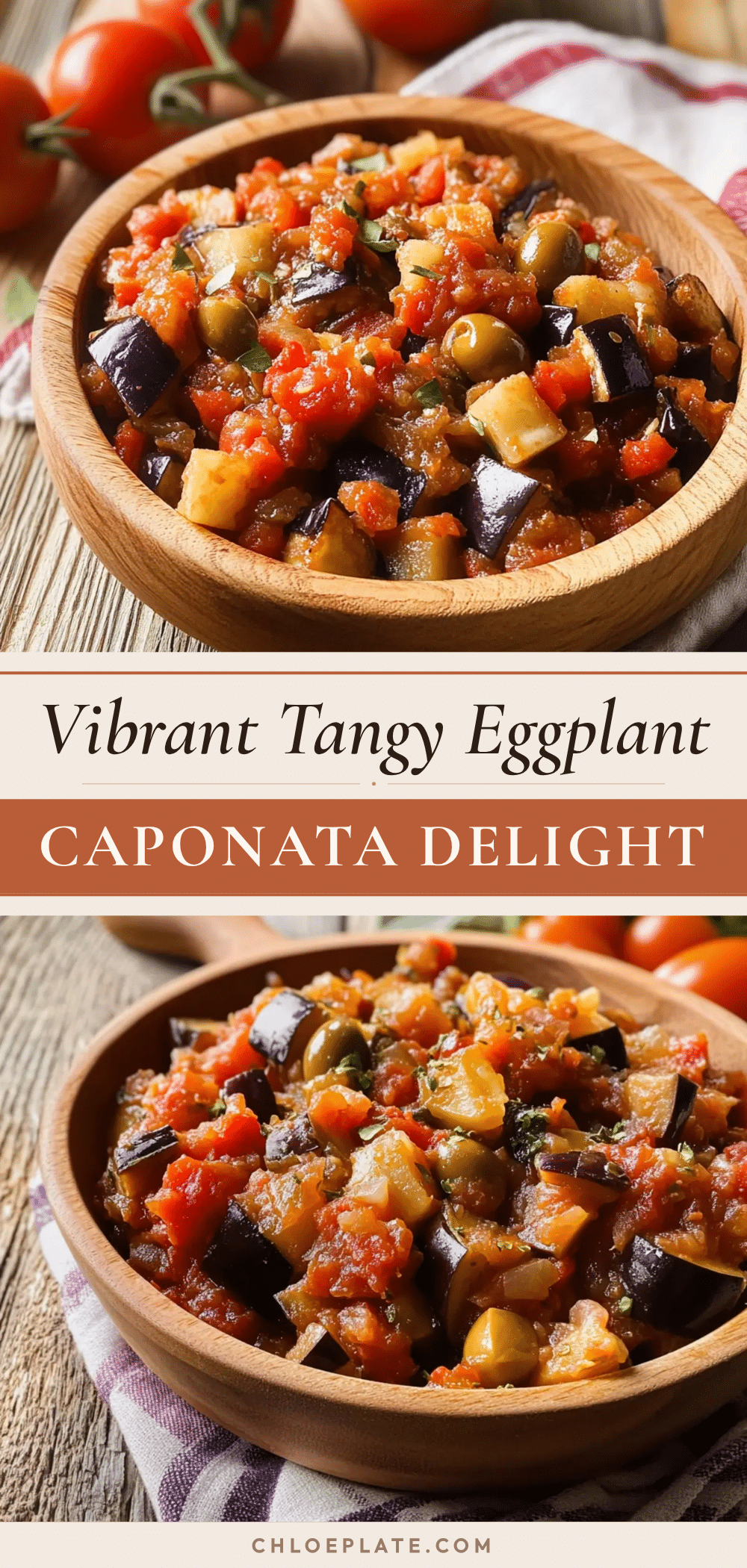
Flavorful Eggplant Caponata Recipe Easy Homemade Mediterranean Relish
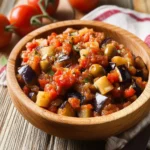
A vibrant and easy-to-make Mediterranean relish featuring tender eggplant, sweet and tangy tomatoes, crunchy pine nuts, and a blend of savory flavors. Perfect as a side, appetizer, or spread.
- Prep Time: 25 minutes
- Cook Time: 15 minutes
- Total Time: 40 minutes
- Yield: 6 servings 1x
- Category: Side Dish
- Cuisine: Mediterranean
Ingredients
- 2 medium eggplants (about 1.5 lbs / 700g), peeled and diced into 1-inch cubes
- 1/4 cup (60 ml) olive oil, for frying
- 1 medium onion, finely chopped
- 2 celery stalks, diced
- 3 cloves garlic, minced
- 1 cup (240 ml) canned crushed tomatoes or fresh chopped tomatoes
- 3 tablespoons red wine vinegar
- 2 tablespoons capers, rinsed
- 1/2 cup (about 75g) green olives, pitted and chopped
- 2 tablespoons raisins
- 2 tablespoons pine nuts, toasted
- Handful fresh basil, chopped
- 1 teaspoon granulated sugar
- Salt and freshly ground black pepper, to taste
Instructions
- Peel and dice the eggplant into 1-inch cubes. Sprinkle with a pinch of salt and let sit in a colander for 20 minutes to draw out bitterness. Rinse and pat dry with kitchen towels.
- Toast pine nuts in a small dry skillet over medium heat, stirring often, until golden and fragrant (about 2-3 minutes). Set aside.
- Heat 1/4 cup olive oil in a large skillet over medium heat. Fry eggplant cubes in batches until golden on all sides, about 5-7 minutes per batch. Remove and drain on paper towels.
- In the same skillet, sauté chopped onion and celery over medium heat until softened and translucent, about 5 minutes. Stir in minced garlic and cook 1 more minute until fragrant.
- Add crushed tomatoes, red wine vinegar, sugar, salt, and pepper. Simmer gently for 10 minutes, letting flavors meld and sauce thicken slightly.
- Return fried eggplant to the skillet. Add capers, chopped olives, raisins, and toasted pine nuts. Stir gently to combine and cook for another 5 minutes over low heat.
- Remove from heat and stir in chopped fresh basil. Taste and adjust seasoning if needed.
- Let the caponata cool to room temperature or chill in the fridge for a few hours to deepen flavors. Serve as a relish with crusty bread or alongside grilled meats.
Notes
Frying the eggplant until golden before simmering helps keep the cubes intact and prevents mushiness. Salting the eggplant draws out bitterness but be sure to rinse and dry well to avoid sogginess. Toast pine nuts carefully as they burn quickly. The caponata tastes best after resting for a few hours or overnight. Adjust sugar and vinegar to balance acidity and sweetness. Can be served warm, at room temperature, or chilled.
Nutrition
- Serving Size: About 1/2 cup (120g)
- Calories: 150
- Sugar: 7
- Sodium: 350
- Fat: 11
- Saturated Fat: 1.5
- Carbohydrates: 14
- Fiber: 4
- Protein: 2
Keywords: eggplant caponata, Mediterranean relish, easy caponata recipe, eggplant recipe, vegetarian relish, vegan side dish, healthy relish