Love this? Save it for later!
Share the inspiration with your friends
“Hey, what’s for dinner?” That text came just as I was staring blankly into my fridge, half-expecting to find inspiration but mostly just an odd collection of odds and ends. I had some leftover salmon from the weekend, a frozen bag of peas, and a bunch of dill wilting faster than I wanted to admit. Honestly, I wasn’t convinced these scraps could turn into anything worth writing home about.
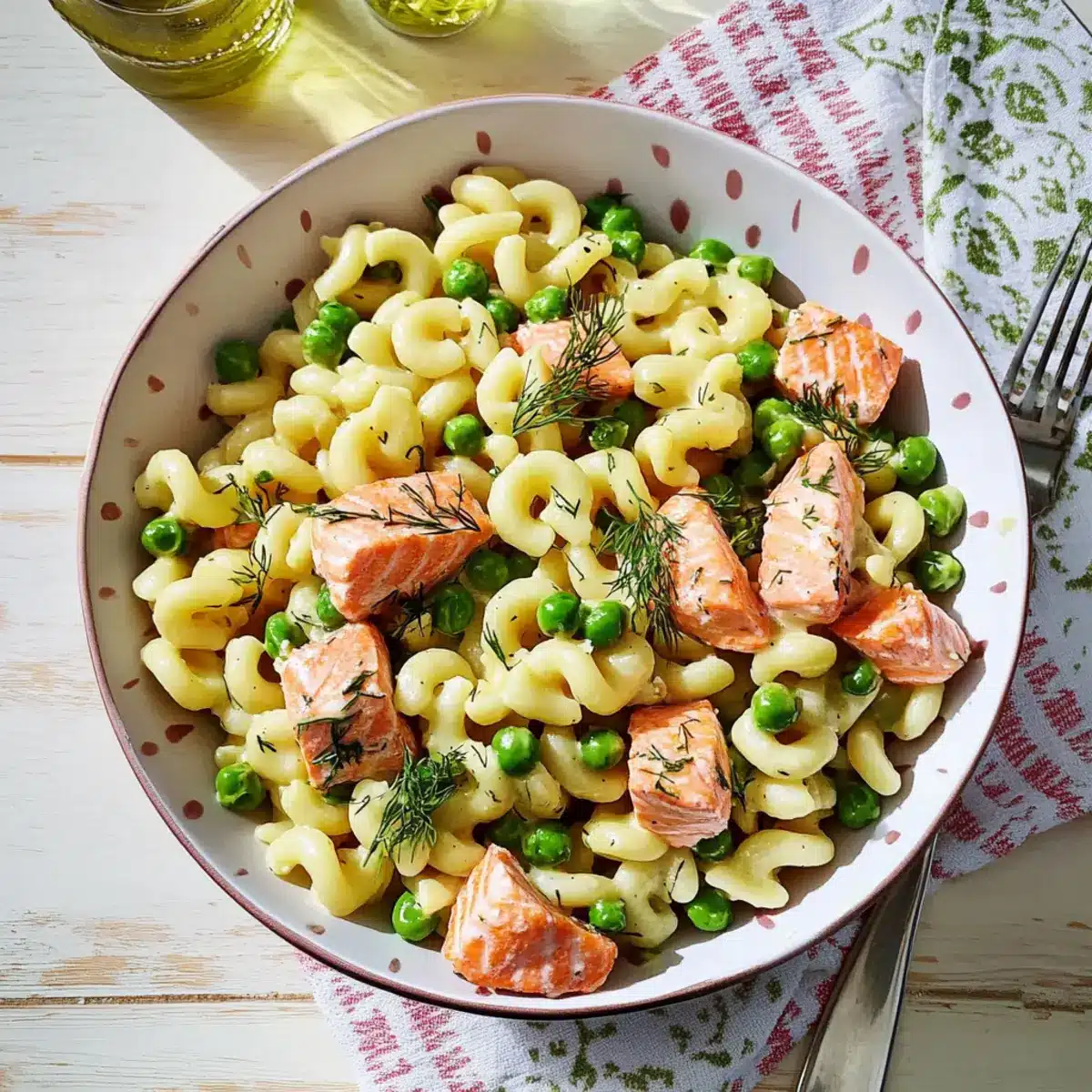
But sometimes the best meals come from these kind of “let’s just see what happens” moments — you know, when you throw things together with zero stress and, surprise, it actually works. I grabbed some pasta, tossed everything in a skillet, and before long, my kitchen was filled with that fresh, herby scent of dill mingling with the richness of salmon. The peas added a sweet pop, and the pasta soaked it all up like a charm.
I made this fresh spring pasta with salmon, peas, and dill three times that week alone, tweaking the balance here and there, until it felt just right. It’s light but satisfying, bright but comforting — the kind of dish that makes you want to linger at the table longer, even on a busy weeknight. Something about it just clicked with the season and my mood, and it’s stuck with me ever since.
So here’s the thing: this recipe isn’t fancy or complicated. It’s a little bit of fresh, a little bit of cozy, and honestly, it’s the kind of meal that reminds me why simple ingredients and a bit of patience can bring out magic. If you’re looking for something that feels like spring on a plate — easy, fresh, and just plain good — this might be the one you turn to again and again.
Why You’ll Love This Recipe
Coming from someone who’s definitely not a “fancy cook,” this fresh spring pasta with salmon, peas, and dill recipe quickly became a favorite because it nails the balance between effort and reward. You don’t have to spend hours or hunt down rare ingredients to get a meal that tastes like you put in way more work than you did.
- Quick & Easy: Ready in about 30 minutes, it’s perfect for those nights when you want something fresh but don’t want to slave over the stove.
- Simple Ingredients: You probably already have salmon (or can grab a fillet easily), frozen peas, and fresh dill — no special trips needed.
- Perfect for Spring and Beyond: The light flavors and bright herbs make it ideal for spring dinners, but honestly, it’s a dish I crave year-round.
- Crowd-Pleaser: Family and guests alike tend to ask for seconds — the creamy yet fresh flavor combo hits just right.
- Unbelievably Delicious: The tender salmon flakes, the sweet pop of peas, and the fresh dill all come together to create a comforting but lively experience.
Unlike other pasta dishes that can feel heavy or dull, this recipe uses a subtle touch of fresh dill and a quick pan-sear on the salmon for flavor that’s layered and bright. The peas add just enough sweetness and texture without overpowering the delicate fish. Plus, the sauce is light but creamy enough to coat every strand of pasta perfectly — no clumps or heaviness.
This is the kind of recipe that makes you close your eyes for a second after the first bite, savoring the freshness and just how satisfying it is. It’s simple enough to whip up any night but special enough for casual dinner parties or a lazy weekend lunch. Honestly, it’s become a go-to in my kitchen, right alongside dishes like the sesame garlic beef and broccoli noodles that I love for quick weeknight flavor.
What Ingredients You Will Need
This recipe relies on straightforward, wholesome ingredients that come together for a fresh and flavorful result. These are mostly pantry staples or easy-to-find fresh items — no mystery components here.
- For the Pasta:
- 8 ounces (225 g) dry pasta (I recommend linguine or fettuccine for the best texture)
- Salt, for pasta water
- For the Salmon and Sauce:
- 12 ounces (340 g) salmon fillet, skin removed and cut into chunks (wild-caught if possible for flavor)
- 2 tablespoons olive oil or unsalted butter (for cooking the salmon)
- 1 cup (150 g) frozen peas, thawed
- 1/2 cup (120 ml) heavy cream or half-and-half (adds creaminess without heaviness)
- 1/4 cup (60 ml) chicken or vegetable broth (optional, for a lighter sauce)
- 1/4 cup (10 g) fresh dill, roughly chopped (feel free to add more if you love that herby punch)
- 1 small shallot, minced (adds gentle sweetness)
- 2 cloves garlic, minced
- Juice of half a lemon (brightens the whole dish)
- Salt and freshly ground black pepper, to taste
- Optional Garnishes:
- Freshly grated Parmesan cheese
- Lemon zest for extra brightness
For best results, choose firm, fresh salmon with a mild aroma — it should never smell fishy. Frozen peas are a great stand-in when fresh aren’t in season, and they keep their sweetness well. If you want a lighter version, swap the cream for Greek yogurt stirred in off the heat, or use dairy-free cream alternatives.
Equipment Needed
- Large pot for boiling pasta — a wide pot helps prevent sticking
- Large skillet or sauté pan with a lid — one that holds the salmon and sauce comfortably
- Colander to drain pasta
- Sharp knife and cutting board for prepping salmon and herbs
- Measuring cups and spoons
- Wooden spoon or spatula for stirring
If you don’t have a large skillet, a heavy-bottomed saucepan works fine, just be sure to adjust cooking times slightly. A non-stick pan makes flipping the salmon easier, but a well-seasoned cast iron skillet gives a wonderful sear. I’ve found that using a sharp knife saves time and avoids tearing the fish. If you want to keep things budget-friendly, a sturdy stainless steel pan and a basic colander from your local store will do just fine.
Preparation Method
- Cook the Pasta: Bring a large pot of salted water to a boil. Add 8 ounces (225 g) of your chosen pasta and cook according to package instructions until al dente (usually 8–10 minutes). Reserve 1/2 cup (120 ml) of pasta cooking water, then drain the pasta and set aside.
- Prepare the Salmon: While pasta cooks, heat 2 tablespoons olive oil or butter in a large skillet over medium-high heat. Season the salmon chunks with salt and pepper. Add salmon to the pan and cook for about 3–4 minutes per side, until golden and cooked through but still tender inside. Remove salmon to a plate and set aside.
- Sauté Aromatics: Reduce heat to medium. In the same skillet, add the minced shallot and garlic. Sauté for 1–2 minutes until fragrant and translucent, careful not to let garlic burn.
- Add Peas and Liquids: Stir in the peas, then pour in 1/4 cup (60 ml) broth if using, and 1/2 cup (120 ml) heavy cream or half-and-half. Bring to a gentle simmer, stirring to combine.
- Combine Pasta and Sauce: Return the cooked pasta to the skillet. Toss gently to coat with sauce, adding reserved pasta water a little at a time if the sauce seems too thick.
- Add Salmon and Dill: Gently fold in the cooked salmon chunks and chopped fresh dill. Squeeze in juice of half a lemon, season with salt and pepper to taste. Warm through for 1–2 minutes, letting flavors meld but avoiding breaking up the salmon too much.
- Final Touches: Remove from heat. Taste and adjust seasoning as needed. If you like, sprinkle freshly grated Parmesan cheese and lemon zest over the top for extra flavor.
Cooking times may vary based on your stovetop and equipment, so keep an eye on the salmon to avoid overcooking. The salmon should flake easily but still be moist — dry fish is no fun! The peas should pop with sweetness, and the sauce should be silky, not watery or clumpy.
Cooking Tips & Techniques
One thing I learned the hard way is that overcooked salmon turns crumbly and dry, which dulls the whole dish. To avoid this, watch carefully once the salmon hits the pan and flip it just once. A hot pan and moderate oil help get a nice golden crust without sticking.
Also, don’t skip reserving pasta water — it’s the secret weapon for adjusting sauce consistency. The starch in the water helps the sauce cling to the noodles without thinning it out too much.
When stirring in the dill, add most of it at the end so it stays bright and fresh. Cooking herbs too long can mute their flavor, and dill is especially delicate.
For multitasking, start the pasta water while prepping salmon and aromatics. That way, everything flows smoothly without awkward waiting. I often find myself making a quick cucumber mint lemonade to pair with this pasta — the cool, refreshing drink balances the creamy pasta wonderfully.
Variations & Adaptations
This recipe is super flexible, so feel free to make it your own:
- Vegetarian Version: Swap the salmon for roasted asparagus or grilled zucchini for a light, veggie-centric meal.
- Gluten-Free: Use gluten-free pasta or spiralized zucchini noodles for a grain-free option.
- Dairy-Free: Replace cream with full-fat coconut milk and use olive oil instead of butter.
- Herb Swap: Try fresh tarragon or basil instead of dill for a slightly different herbal note.
- Seafood Mix-Up: Use smoked salmon or canned wild salmon for a pantry-friendly twist; just reduce cooking time accordingly.
I once added a handful of toasted pine nuts for crunch and a drizzle of browned butter — a decadent touch that didn’t overpower the fresh flavors. If you’re after a heartier dish, stirring in a dollop of crème fraîche or mascarpone works well.
Serving & Storage Suggestions
This pasta is best served warm, straight from the skillet, with a light sprinkle of Parmesan and extra dill on top. A wedge of lemon on the side lets everyone brighten their bowl to taste.
It pairs beautifully with crisp green salads or simple roasted vegetables — think something like a savory asparagus and pea ricotta tart for a springtime spread.
Leftovers keep well in the fridge for up to 2 days in an airtight container. Reheat gently on the stove over low heat, adding a splash of broth or water to loosen the sauce. Microwave works too, but watch for drying out the salmon.
Flavors meld overnight, so if you can wait, the dish tastes even better the next day. Just add a fresh squeeze of lemon and a sprinkle of dill before serving to revive that brightness.
Nutritional Information & Benefits
This dish offers a balanced nutritional profile. Salmon is packed with omega-3 fatty acids, great for heart and brain health. Peas add fiber and plant-based protein, plus vitamin C and antioxidants.
The pasta provides energy-boosting carbohydrates, and the dill contributes trace minerals and vitamins A and C. Using light cream or half-and-half keeps the fat content moderate while maintaining creaminess.
It’s naturally gluten-free if you swap the pasta, and dairy-free options are easy to make with simple substitutions. Just watch for seafood allergies if serving guests.
Overall, this meal feels wholesome and satisfying without weighing you down — perfect for anyone who wants fresh flavors with a touch of indulgence.
Conclusion
This fresh spring pasta with salmon, peas, and dill recipe has a way of turning a simple dinner into something kind of special. It’s straightforward enough for busy nights but still carries that fresh, seasonal vibe that feels like a little celebration on your plate.
The best part? You can tweak it however you like — more herbs, different proteins, or even a splash of white wine in the sauce if you’re feeling fancy. It’s flexible, forgiving, and just downright delicious.
For me, it’s become one of those recipes that’s both comforting and refreshing, the kind you come back to whenever salmon is in the fridge and time is short. I hope you find it as satisfying as I do. If you try it, I’d love to hear how you make it your own — feel free to share your spins or questions below!
Here’s to simple meals that bring joy and a little spring sunshine to your table.
FAQs
Can I use frozen salmon for this recipe?
Yes, frozen salmon works fine — just make sure to thaw it completely and pat dry before cooking to avoid excess moisture.
What’s the best pasta shape for this dish?
Linguine, fettuccine, or tagliatelle work best because they hold the sauce nicely, but feel free to use what you have on hand.
Can I make this recipe ahead of time?
You can prep the salmon and sauce components in advance, but it’s best to toss everything together just before serving to keep the pasta from getting soggy.
Is there a substitute for fresh dill?
Dried dill can be used, but fresh dill provides a brighter flavor. Alternatively, fresh tarragon or parsley can add a different but complementary herbal note.
How do I keep the salmon moist and tender?
Cook salmon over medium-high heat for just a few minutes per side and avoid overcooking. Removing it from the heat as soon as it flakes easily helps maintain juiciness.
Pin This Recipe!
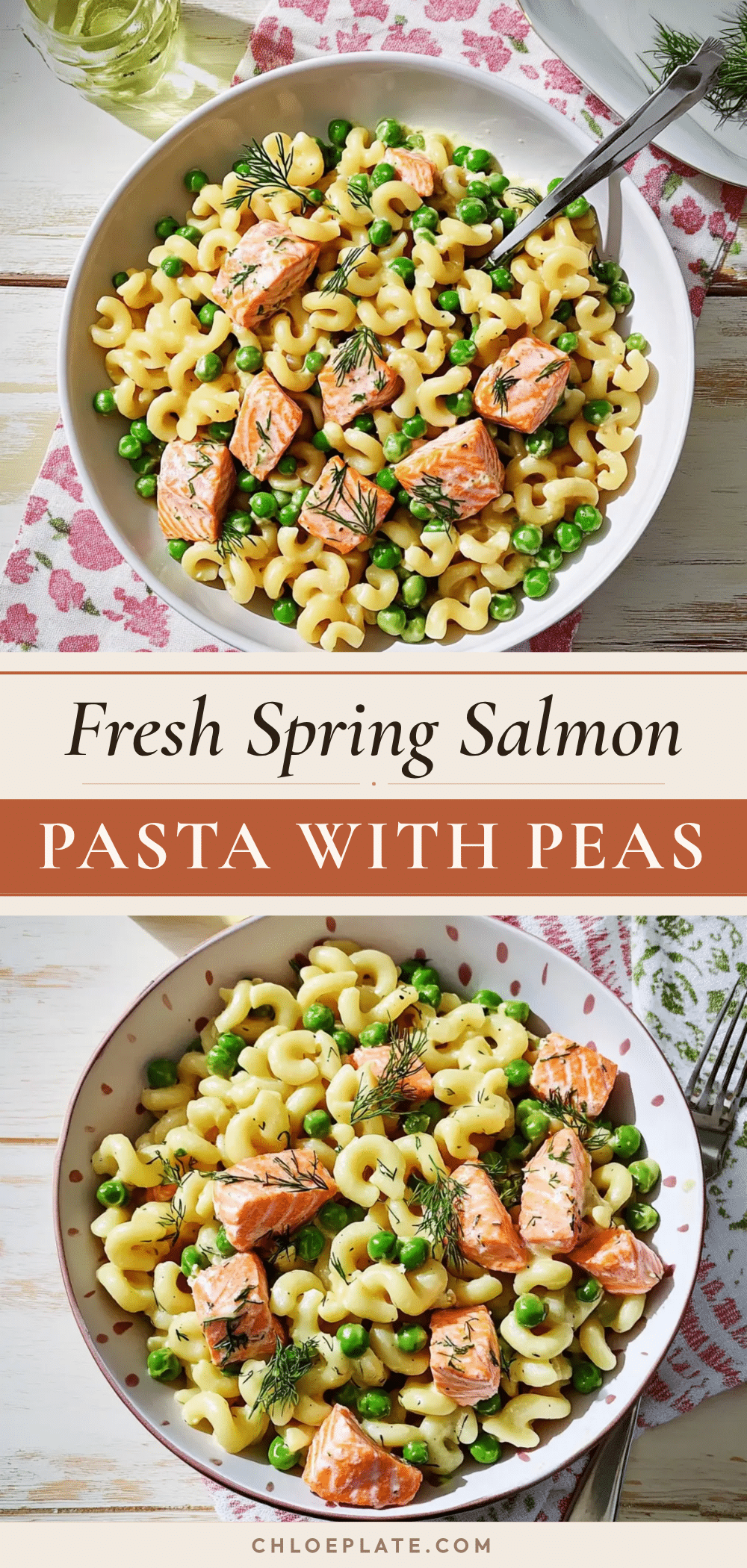
Fresh Spring Pasta with Salmon, Peas, and Dill
A light and satisfying pasta dish featuring tender salmon, sweet peas, and fresh dill in a creamy sauce, perfect for spring or any time of year.
- Prep Time: 10 minutes
- Cook Time: 20 minutes
- Total Time: 30 minutes
- Yield: 4 servings 1x
- Category: Main Course
- Cuisine: American
Ingredients
- 8 ounces dry pasta (linguine or fettuccine recommended)
- Salt, for pasta water
- 12 ounces salmon fillet, skin removed and cut into chunks
- 2 tablespoons olive oil or unsalted butter
- 1 cup frozen peas, thawed
- 1/2 cup heavy cream or half-and-half
- 1/4 cup chicken or vegetable broth (optional)
- 1/4 cup fresh dill, roughly chopped
- 1 small shallot, minced
- 2 cloves garlic, minced
- Juice of half a lemon
- Salt and freshly ground black pepper, to taste
- Optional garnishes: freshly grated Parmesan cheese, lemon zest
Instructions
- Bring a large pot of salted water to a boil. Add 8 ounces of pasta and cook according to package instructions until al dente (8–10 minutes). Reserve 1/2 cup of pasta cooking water, then drain pasta and set aside.
- While pasta cooks, heat 2 tablespoons olive oil or butter in a large skillet over medium-high heat. Season salmon chunks with salt and pepper. Cook salmon for 3–4 minutes per side until golden and cooked through but still tender. Remove salmon to a plate and set aside.
- Reduce heat to medium. In the same skillet, add minced shallot and garlic. Sauté for 1–2 minutes until fragrant and translucent, being careful not to burn the garlic.
- Stir in peas, then pour in 1/4 cup broth if using, and 1/2 cup heavy cream or half-and-half. Bring to a gentle simmer, stirring to combine.
- Return cooked pasta to the skillet. Toss gently to coat with sauce, adding reserved pasta water a little at a time if sauce is too thick.
- Gently fold in cooked salmon chunks and chopped fresh dill. Squeeze in juice of half a lemon, season with salt and pepper to taste. Warm through for 1–2 minutes, letting flavors meld but avoiding breaking up the salmon too much.
- Remove from heat. Taste and adjust seasoning as needed. If desired, sprinkle freshly grated Parmesan cheese and lemon zest over the top before serving.
Notes
Avoid overcooking salmon to keep it moist and tender. Reserve pasta water to adjust sauce consistency. Add most of the dill at the end to preserve its fresh flavor. Use frozen peas if fresh are unavailable. For dairy-free, substitute cream with coconut milk and butter with olive oil.
Nutrition
- Serving Size: 1 serving (about 1/4
- Calories: 480
- Sugar: 5
- Sodium: 320
- Fat: 22
- Saturated Fat: 8
- Carbohydrates: 38
- Fiber: 4
- Protein: 32
Keywords: spring pasta, salmon pasta, peas, dill, easy dinner, quick pasta recipe, creamy pasta, healthy pasta, weeknight dinner