Love this? Save it for later!
Share the inspiration with your friends
I was standing in my kitchen, a mountain of basil threatening to take over my counter, and I had exactly zero plans for it. My neighbor had dropped off a grocery bag of it from her garden—more than I could possibly use in a salad or on a pizza. I remember just staring at those bright green leaves, feeling a little guilty about the potential waste. Then, it hit me. I grabbed my food processor, a hunk of Parmesan, and a handful of pine nuts that were hiding in the back of my pantry. Within five minutes, the whole house smelled like an Italian nonna’s kitchen. That accidental, frantic moment of “what do I do with all this basil?” turned into my now-favorite weeknight secret. I honestly didn’t think it would be this easy. The result was so much brighter and fresher than anything I’d ever bought in a jar. It was a total game-changer for my pasta nights, and honestly, for my confidence in the kitchen. This isn’t just a recipe; it’s a rescue mission for your herbs and a ticket to a really, really good dinner.
Why You’ll Love This Recipe
Let’s be real—store-bought pesto is fine, but it’s never great. It’s usually oily, lacks that punchy basil flavor, and often has a weird, dull color. This recipe changes everything. It’s the kind of sauce that makes you feel like a professional chef without any of the stress.
- Quick & Easy: We’re talking five minutes from start to finish. No cooking, no complicated steps. Just a food processor and a few pulses.
- Simple Ingredients: You probably have most of this in your kitchen right now. Fresh basil, good olive oil, garlic, nuts, and cheese. That’s it.
- Perfect for Weeknights: Toss it with pasta, spread it on a sandwich, or dollop it on grilled chicken. It turns a boring meal into something you actually look forward to.
- Crowd-Pleaser: I’ve brought this to potlucks and dinner parties, and it always gets the same reaction—people asking for the recipe. It’s a universal win.
- Unbelievably Delicious: The flavor is so vibrant and fresh. It’s like tasting summer in a spoonful. The texture is creamy but still has a little bit of a bite from the nuts.
What makes this version different from the rest? It’s all about the technique. I don’t just dump everything in and hope for the best. I pulse the nuts and garlic first to get a perfect base, then add the basil in two batches. This prevents the basil from getting bruised and turning bitter, keeping that beautiful, bright green color intact. It’s a small step that makes a huge difference. This isn’t just another pesto recipe; it’s the one you’ll come back to again and again.
What Ingredients You Will Need
This recipe uses simple, wholesome ingredients to deliver a bold, authentic flavor. The magic is in the quality of each component, so choose wisely when you can.
- Fresh Basil Leaves (2 cups, packed): This is the star of the show. Use the freshest basil you can find. Look for bright green leaves without any dark spots or wilting. I prefer sweet Genovese basil for its classic flavor.
- Pine Nuts (1/3 cup): They add a rich, buttery flavor and a creamy texture. Toast them lightly in a dry pan for a minute to really bring out their nuttiness. (Be careful—they burn fast!)
- Parmesan Cheese (1/2 cup, freshly grated): Please, please don’t use the pre-shredded stuff. It has anti-caking agents that prevent it from melting smoothly. Grate a block of Parmigiano-Reggiano yourself for the best flavor and texture.
- Garlic (2-3 cloves): This gives the pesto its punch. I usually go with 2 large cloves for a milder flavor, but if you’re a garlic lover, add a third. Remove the green germ from the center of the clove if it looks strong—it can be bitter.
- Extra Virgin Olive Oil (1/2 cup): Use a good quality oil here. It’s a key flavor component. Don’t use a super peppery oil, as it can overpower the basil. A smooth, fruity olive oil is perfect.
- Salt & Black Pepper (to taste): A pinch of flaky sea salt and a few cracks of black pepper at the end brighten everything up.
- Lemon Juice (1 tablespoon, optional): This is my secret weapon. A squeeze of fresh lemon juice at the end stops the basil from oxidizing and keeps the pesto a vibrant green. It also adds a little brightness that balances the richness.
Substitution Guidance: If you don’t have pine nuts, don’t stress. Walnuts are a classic and cheaper alternative. You can also use almonds or even pistachios for a different twist. For a dairy-free version, swap the Parmesan for nutritional yeast or a good vegan parmesan. And if you’re out of fresh basil? Well… you kind of need the basil. That’s the one non-negotiable!
Equipment Needed
You don’t need a fancy kitchen to make this pesto. Here’s what you’ll need:
- Food Processor or High-Speed Blender: A food processor is the classic tool, and it’s what I use. It gives you a perfect, slightly chunky texture. A high-speed blender works too, but you might need to scrape down the sides more often. My trusty 7-cup Cuisinart has never let me down.
- Rubber Spatula: Essential for scraping down the sides of the bowl and getting every last bit of that green goodness out.
- Chef’s Knife & Cutting Board: For smashing the garlic and maybe chopping the nuts if you want to be extra precise.
- Measuring Cups & Spoons: For accuracy, especially with the oil and nuts.
- Microplane or Box Grater: For grating the Parmesan cheese. It makes a world of difference in texture.
Budget-Friendly Tip: If you don’t have a food processor, you can absolutely make this by hand using a mortar and pestle. It’s more work, but it’s a great arm workout, and the texture is incredibly rustic and delicious.
Preparation Method
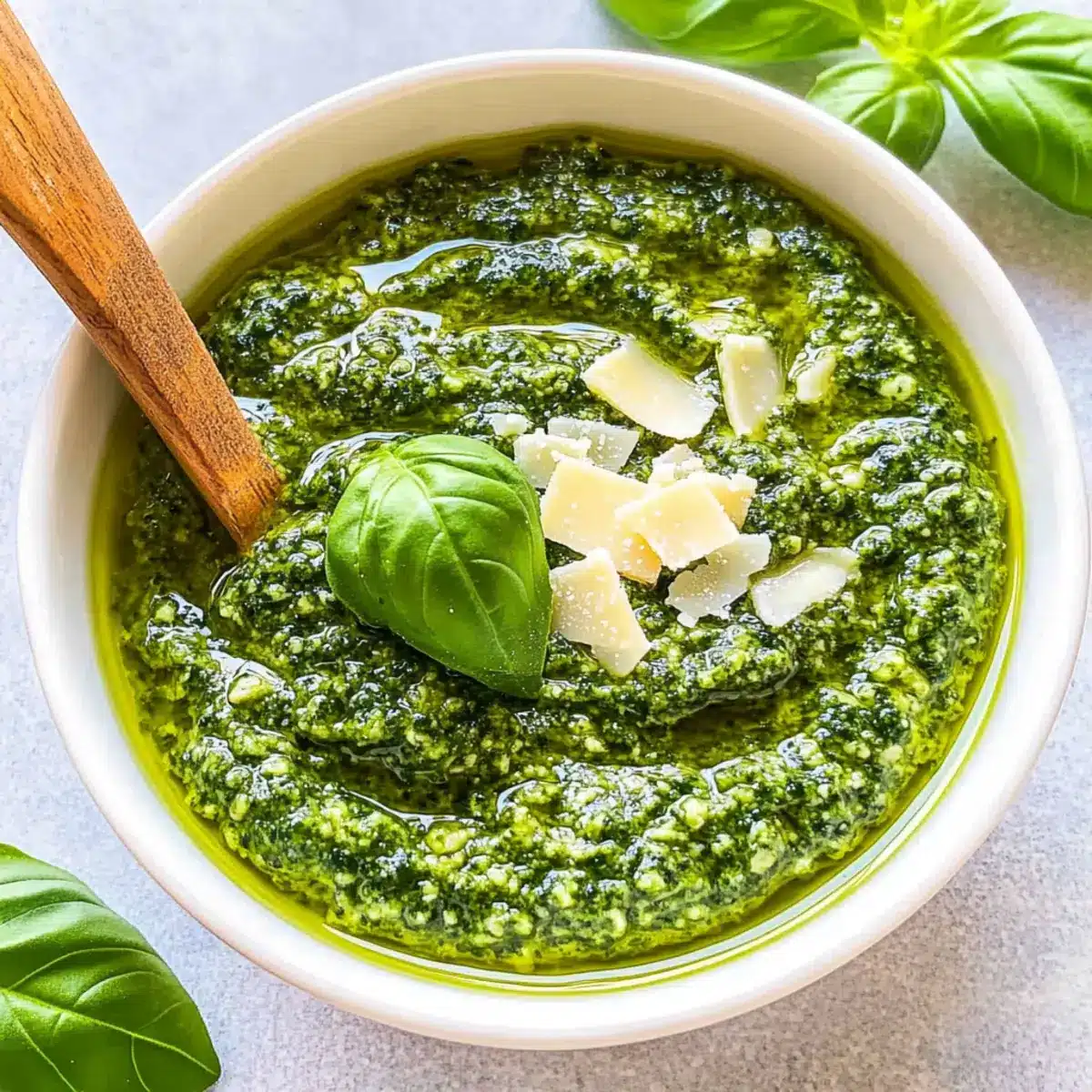
This is the easiest part. Put your food processor on the counter and get ready for five minutes of pure, aromatic bliss.
- Toast the Nuts (Optional but Recommended): In a small, dry skillet over medium heat, add the pine nuts. Shake the pan frequently, toasting for 2-3 minutes until they are lightly golden and smell nutty. Watch them closely—they burn in seconds. Let them cool for a minute.
- Pulse the Base: Add the cooled pine nuts and peeled garlic cloves to the bowl of your food processor. Pulse 5-6 times until they are finely chopped. This creates a solid base and prevents big chunks of garlic in your final sauce.
- Add the Basil (In Batches): Add about half of the fresh basil leaves to the processor. Pulse a few times to break them down. Then, add the remaining basil. This two-step process ensures even chopping and prevents the leaves from getting stuck under the blade.
- Add the Cheese & Oil: Scrape down the sides of the bowl with your spatula. Add the freshly grated Parmesan cheese. With the motor running, slowly drizzle in the extra virgin olive oil through the feed tube. Let it run for about 30-45 seconds, or until the mixture is smooth and creamy. Stop and scrape down the sides once more.
- Season & Finish: Add a pinch of salt, a few cracks of black pepper, and the squeeze of lemon juice (if using). Pulse a couple of times just to combine. Taste it! This is the most important step. Does it need more salt? More cheese? A little more oil? Trust your taste buds.
- Serve or Store: That’s it. You’re done. Transfer the pesto to a bowl or a jar. If you’re not using it immediately, press a piece of plastic wrap directly onto the surface of the pesto to prevent it from turning brown.
Cooking Tips & Techniques
After making this dozens of times, I’ve learned a few things the hard way. Here are my best tips for perfect pesto every time.
- Don’t Over-Process: The biggest mistake people make is turning their food processor on high and walking away. You want a sauce, not a paste. A few pulses and a slow drizzle of oil is all you need. You’re looking for a slightly coarse, almost rustic texture.
- Blanch Your Basil (For Extra Green Color): If you want your pesto to stay a brilliant green for days, blanch the basil first. Drop the leaves in boiling water for 10 seconds, then plunge them into an ice bath. Pat them dry before using. It sounds fussy, but it really works.
- Toast Your Nuts: I know I said it before, but it’s worth repeating. Toasting the nuts adds a depth of flavor that raw nuts just can’t match. It makes the pesto feel richer and more complex.
- Season at the End: Parmesan is salty, so don’t go overboard with the salt at the beginning. Always taste and adjust at the end. You can always add more salt, but you can’t take it away.
- Use a Light Hand with Garlic: Raw garlic is potent. If you’re not sure, start with one clove. You can always add more, but too much raw garlic can ruin the delicate flavor of the basil.
Variations & Adaptations
Once you master the basic recipe, the world is your oyster. Or, you know, your pesto. Here are a few ways to make it your own.
- Nut-Free Version: Swap the pine nuts for sunflower seeds or pumpkin seeds (pepitas). They create a wonderfully creamy texture and a slightly different, earthy flavor. Toast them just like you would the pine nuts.
- Vegan Pesto: Omit the Parmesan and add 2-3 tablespoons of nutritional yeast. It gives you that cheesy, umami flavor without any dairy. You might need an extra tablespoon of olive oil to get the right consistency.
- Spicy Arrabbiata Pesto: Add a pinch of red pepper flakes or a small, seeded red chili pepper to the food processor with the garlic. It gives the pesto a lovely, gentle heat that’s amazing on pasta.
- Sun-Dried Tomato Pesto: Replace half of the basil with oil-packed sun-dried tomatoes. Drain them well first. This creates a sweeter, tangier, and deeply savory sauce that’s incredible on sandwiches or bruschetta.
- Herb Mix-Up: Don’t limit yourself to just basil. Try a mix of basil, parsley, and a little mint for a super fresh, bright sauce. Arugula also works beautifully, giving the pesto a peppery kick.
I once made a version with roasted red peppers and walnuts, and it was so good I ate it straight from the bowl with a spoon. Don’t judge me.
Serving & Storage Suggestions
Pesto is incredibly versatile. Here’s how to make the most of it.
- Serving: Pesto is best served at room temperature. If you’ve stored it in the fridge, let it sit out for 15-20 minutes before using. The cold will make the olive oil solidify and dull the flavor. Toss it with hot pasta, spread it on a crusty baguette for bruschetta, or use it as a marinade for chicken or fish. It’s also amazing on a fresh panzanella salad for a burst of herby flavor.
- Storage: Store leftover pesto in an airtight container in the refrigerator for up to a week. The key is to prevent oxidation. Press a layer of plastic wrap directly onto the surface of the pesto before sealing the lid. You can also pour a thin layer of olive oil on top to create a barrier. It will keep the pesto bright and fresh.
- Freezing: Pesto freezes beautifully. Spoon it into an ice cube tray and freeze until solid. Pop the cubes out and store them in a freezer-safe bag. You can grab a cube or two whenever you need a quick flavor boost for soups, sauces, or pasta. It will keep for up to 3 months.
- Reheating: Don’t microwave pesto directly. The heat can make the cheese separate and become grainy. Instead, toss it with hot pasta, and the residual heat will warm it perfectly. Or, gently warm it in a pan over low heat.
The flavors actually meld and deepen after a day in the fridge. So, making it a day ahead is often a great idea if you’re planning a party.
Nutritional Information & Benefits
While pesto is a treat, it’s also packed with good-for-you ingredients. Here’s a quick look at what you’re getting.
- Estimated Values (per 2-tablespoon serving): Calories: 120-150 | Fat: 12-15g | Carbs: 2-3g | Protein: 3-4g. These are estimates and will vary based on the exact ingredients and amounts you use.
- Health Benefits: Basil is loaded with antioxidants and has anti-inflammatory properties. Olive oil is a fantastic source of healthy monounsaturated fats, which are great for heart health. Pine nuts provide healthy fats and a little bit of protein. Garlic is a natural immune booster.
- Dietary Considerations: This recipe is naturally gluten-free and low-carb. It’s also easy to make vegan and nut-free with the substitutions mentioned above.
- Potential Allergens: Contains tree nuts (pine nuts) and dairy (Parmesan).
I love that this recipe feels indulgent but is actually made from whole, real foods. It’s a win-win in my book. Pair it with a vibrant chickpea salad for a light, healthy, and satisfying meal.
Conclusion
This Quick Basil Pesto Bliss recipe is proof that the best things in life really are simple. It’s fast, foolproof, and packed with so much fresh flavor that you’ll never go back to the jarred stuff. I love how it transforms a simple bowl of pasta into something that feels special, or how it can rescue a sad piece of chicken and make it sing. It’s my go-to for busy weeknights, lazy weekends, and everything in between. I honestly hope you make this and fall in love with it just like I did. Don’t be afraid to tweak it, make it your own, and use it on everything. I’d love to hear how it turns out for you! Drop a comment below and let me know your favorite way to use pesto, or share a photo of your creation. Happy cooking!
Frequently Asked Questions
Can I use dried basil instead of fresh?
No, I wouldn’t recommend it. Dried basil has a completely different, much more concentrated and slightly musty flavor. The whole point of this recipe is the bright, fresh taste of the herb. Using dried basil will give you a very different (and not as good) result.
Why is my pesto turning brown?
Oxidation is the culprit! When basil is cut, it reacts with the air and starts to turn brown. To prevent this, make sure you press plastic wrap directly onto the surface of the pesto before storing it. Adding a squeeze of lemon juice also helps slow down this process.
Can I make this pesto without a food processor?
Absolutely! A mortar and pestle is the traditional way to make pesto. It takes a bit more elbow grease, but the texture is incredibly rustic and delicious. Start by grinding the garlic and a pinch of salt into a paste, then add the nuts and grind them down. Gradually add the basil leaves, grinding them in a circular motion, and slowly drizzle in the olive oil. Finish by stirring in the cheese.
How long does homemade pesto last in the fridge?
If stored properly in an airtight container with a layer of plastic wrap pressed onto the surface, your pesto will stay fresh and vibrant for up to one week. Always check for any off smells or mold before using.
What can I use pesto for besides pasta?
So many things! It’s amazing spread on sandwiches or wraps, dolloped onto grilled chicken or fish, used as a pizza sauce, stirred into soups for a flavor boost, or mixed into mayonnaise for a quick aioli. It’s also fantastic on a tomato and bread salad or drizzled over roasted vegetables.
Pin This Recipe!
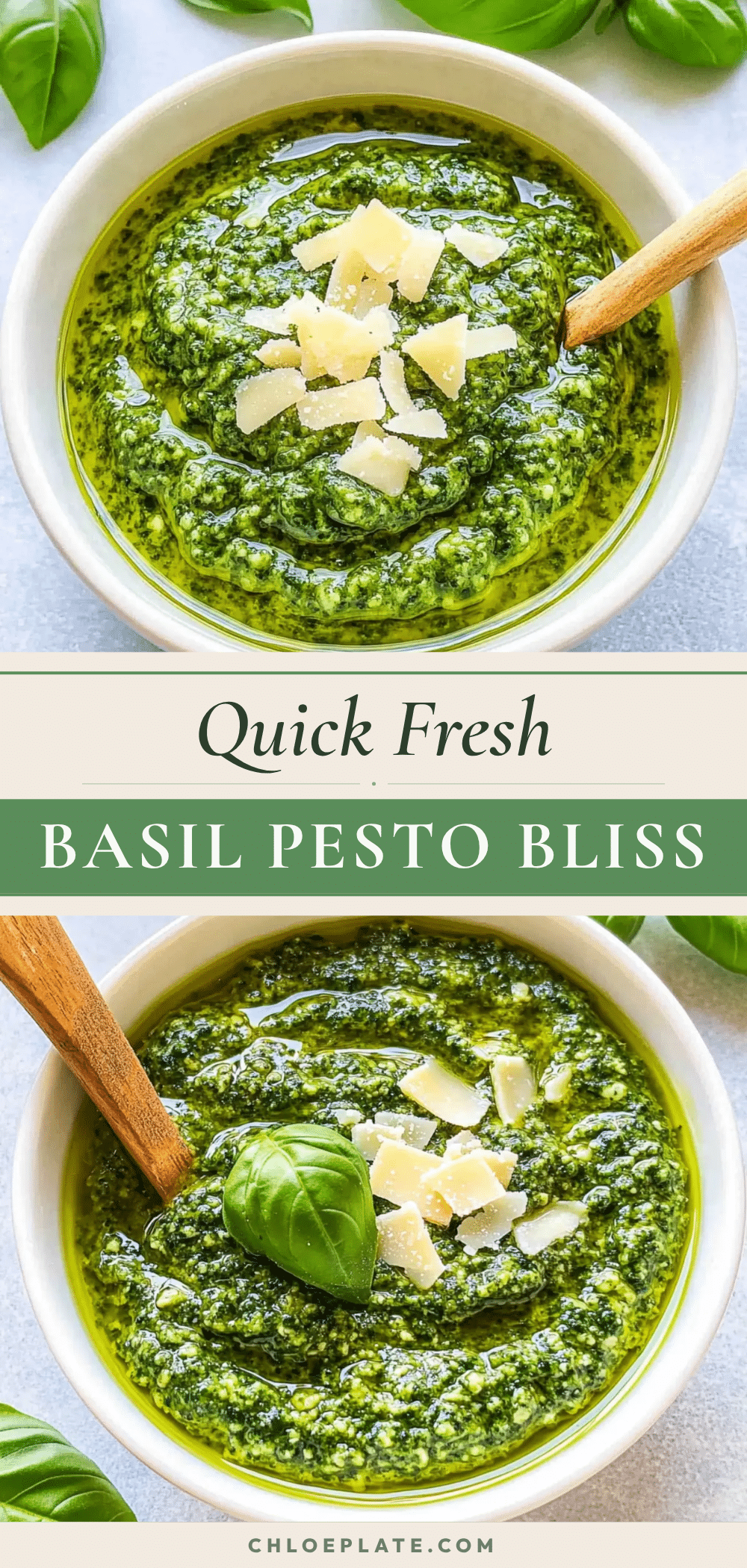
Quick Basil Pesto Bliss – Easy 5-Minute Homemade Sauce
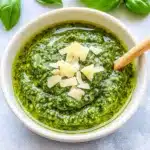
This quick and easy homemade basil pesto is ready in just 5 minutes, using fresh basil, pine nuts, Parmesan, and garlic. It’s a vibrant, flavorful sauce perfect for pasta, sandwiches, and more, and it’s a game-changer for busy weeknights.
- Prep Time: 5 minutes
- Cook Time: 0 minutes
- Total Time: 5 minutes
- Yield: 4 servings 1x
- Category: Sauce
- Cuisine: Italian
Ingredients
- 2 cups fresh basil leaves, packed
- 1/3 cup pine nuts
- 1/2 cup freshly grated Parmesan cheese
- 2–3 cloves garlic
- 1/2 cup extra virgin olive oil
- Salt and black pepper to taste
- 1 tablespoon lemon juice (optional)
Instructions
- Toast the nuts (optional but recommended): In a small, dry skillet over medium heat, add the pine nuts. Shake the pan frequently, toasting for 2-3 minutes until they are lightly golden and smell nutty. Let them cool for a minute.
- Pulse the base: Add the cooled pine nuts and peeled garlic cloves to the bowl of your food processor. Pulse 5-6 times until they are finely chopped.
- Add the basil (in batches): Add about half of the fresh basil leaves to the processor. Pulse a few times to break them down. Then, add the remaining basil and pulse again.
- Add the cheese & oil: Scrape down the sides of the bowl with your spatula. Add the freshly grated Parmesan cheese. With the motor running, slowly drizzle in the extra virgin olive oil through the feed tube. Let it run for about 30-45 seconds, or until the mixture is smooth and creamy. Stop and scrape down the sides once more.
- Season & finish: Add a pinch of salt, a few cracks of black pepper, and the squeeze of lemon juice (if using). Pulse a couple of times just to combine. Taste and adjust seasoning as needed.
- Serve or store: Transfer the pesto to a bowl or a jar. If not using immediately, press a piece of plastic wrap directly onto the surface of the pesto to prevent browning.
Notes
For extra green color, blanch basil leaves in boiling water for 10 seconds, then plunge into an ice bath before using. Toast nuts for deeper flavor. Season at the end as Parmesan is salty. Use a light hand with garlic. Pesto can be stored in the fridge for up to a week or frozen for up to 3 months.
Nutrition
- Serving Size: 2 tablespoons
- Calories: 135
- Sugar: 0.5
- Sodium: 180
- Fat: 13.5
- Saturated Fat: 3
- Carbohydrates: 2.5
- Fiber: 0.5
- Protein: 3.5
Keywords: basil pesto, homemade pesto, easy pesto, 5-minute pesto, quick pesto, fresh pesto, Italian sauce, vegetarian, gluten-free